
Rubio Monocoat vs. Polyurethane for White Oak Built-Ins in the Inland Empire: Color, Protection and Maintenance
Quick Answer
For white oak built-ins and mantels in Inland Empire homes where you want the oak to stay light and natural, we recommend a hardwax oil like Rubio Monocoat Oil Plus 2C. Water-based polyurethane is the better pick for surfaces that see heavy wear and spills, and oil-based polyurethane is the one to avoid if you don't want white oak to turn amber.
Key Takeaways
- Rubio Monocoat Oil Plus 2C goes on in a single coat and keeps white oak close to its natural color
- Oil-based polyurethane adds an amber tone; water-based polyurethane dries clear
- Rubio's Pure is non-pigmented; Natural is lightly pigmented with yellow and white tones, so sample both on your boards
- No finish stops wood from changing color with light and age; it only changes how much and how fast
- See this in action: the Winchester fireplace wall project
Here's my recommendation: for white oak cabinets, mantels and shelves you mostly look at and handle lightly, use a hardwax oil. Rubio Monocoat Oil Plus 2C is the one we use most. It goes on in one coat, it doesn't build a plastic-looking film, and it keeps light oak looking like light oak.
If the white oak is a kitchen counter next to the sink or a desk that takes a beating every day, water-based polyurethane earns its place. And if anyone suggests oil-based poly on white oak you want to keep pale, ask them to show you a sample first. It will look warmer, often a lot warmer, than the raw board.
The Direct Recommendation
Hardwax oil for most white oak built-ins; water-based polyurethane for high-wear horizontal surfaces. The reason is color and repair. Oil keeps the oak close to raw and can be refreshed in spots. Poly protects more against spills and scratches but builds a film that's harder to repair invisibly.
The Five Finishes Worth Considering
Rubio Monocoat Oil Plus 2C (hardwax oil)
What it is: A two-part oil that bonds to the wood surface. Per Rubio's technical data sheet, it "colours and protects in 1 layer," reaches about 80% cure in 2 days, and fully cures in 5. Excess is wiped off, so there's no film sitting on top.
Where it performs best: Stain-grade cabinets, mantels, shelving, paneling. Anywhere you want the wood to look and feel like wood. Where it falls short: It isn't as spill-proof as a cured film finish on a heavily used counter. My take: For white oak built-ins, it's the best balance of look and practicality I've used.
Osmo Polyx-Oil (hardwax oil)
What it is: Another hardwax oil, made from natural oils and waxes. Osmo's product information calls for two coats on new wood and lists finishes from matte to glossy. Where it performs best: Furniture and floors where you want an oiled look with a choice of sheen. Where it falls short: Two coats means more application time than a one-coat oil. My take: A good product. If a shop you trust uses Osmo, I wouldn't argue.
Water-based polyurethane
What it is: A film finish that dries clear. Family Handyman notes that water-based poly doesn't yellow, which is why it's used on pale woods. Where it performs best: Countertops, desks and tabletops that see water and daily wear. Where it falls short: It can look a little cooler and flatter than oil, and a deep scratch in a film is hard to blend. My take: The right answer when protection matters more than feel.
Oil-based polyurethane
What it is: The classic hardware-store film finish. Tough, but it leaves an amber glow, per the same Family Handyman comparison. Where it performs best: Darker woods or when you want that warm color. Where it falls short: On white oak you want to keep pale, that amber is the problem. My take: Not on white oak in a modern or light-and-natural room.
Shop-sprayed lacquer or conversion varnish
What it is: The sprayed film finishes most factory cabinets get. Where it performs best: Production cabinetry and kitchens where a durable, even film is the goal. Where it falls short: It needs spray equipment, and touch-ups at home rarely disappear. Clear versions can still shift white oak's color slightly. My take: Fine for a kitchen run. Less suited to a one-off built-in you want to look hand-finished.
How They Compare
| Finish | Color on White Oak | Protection | Spot Repair | Best For |
|---|---|---|---|---|
| Rubio Monocoat Oil Plus 2C | Pure: no pigment, shows the wood's own color; Natural: light yellow and white pigment | Good | Yes, refresh in spots | Built-ins, mantels, shelves |
| Osmo Polyx-Oil | Clear versions stay close to raw | Good | Yes, recoat areas | Furniture, floors, built-ins |
| Water-based polyurethane | Clear, can read slightly cool | Very good | Hard to blend | Counters, desks, tables |
| Oil-based polyurethane | Noticeable amber | Very good | Hard to blend | Dark woods, warm looks |
| Sprayed lacquer or conversion varnish | Slight shift, varies by product | Very good | Hard to blend | Production cabinets |
Color behavior varies by board and by product. Always finish a sample on the actual wood from your project.
The Questions Homeowners Actually Ask
Will white oak cabinets turn yellow?
White oak darkens and warms somewhat with light and age no matter what's on it. What the finish controls is the starting color and how much extra amber you add. Oil-based poly adds the most. Water-based poly and hardwax oils add the least. Anyone who promises the color will never change is overselling.
What's the difference between Rubio Pure and Natural?
Per Oak Tree Supply's Rubio product listing, Pure is non-pigmented and Natural is pigmented with yellow and white tones. In our experience, Natural keeps white oak looking closer to unfinished, while Pure shows the wood's own color with an oiled tone. The only way to know which you like is a sample on your boards.
Can you put polyurethane over Rubio Monocoat?
Rubio sells Oil Plus 2C as a complete one-layer system, and we don't put film finishes over oil. If you want polyurethane protection, choose polyurethane from the start rather than stacking finishes.
If you're still choosing the species itself, start with the best wood for floating shelves. And because the finish has to sit well next to the wall, read how Roman Clay and paint compare on a fireplace wall (Roman Clay vs. Paint).
How to Choose
- How will it be used? Looked at and lightly handled: oil. Wiped daily and set on: water-based poly.
- What color do you want in five years? Pale and natural: oil or water-based poly. Warm and amber: oil-based poly.
- Who will maintain it? Oil can be refreshed by a homeowner in spots. Film finishes usually need a pro to repair cleanly.
- What's next to it? Matching existing oak in the house matters more than any spec sheet. Sample against the real thing.
Before you sign, ask the builder exactly which finish and color they'll use. It's one of the questions to ask about material specification (Stain-Grade Quality Checklist).
See This In Action — Winchester Fireplace Wall
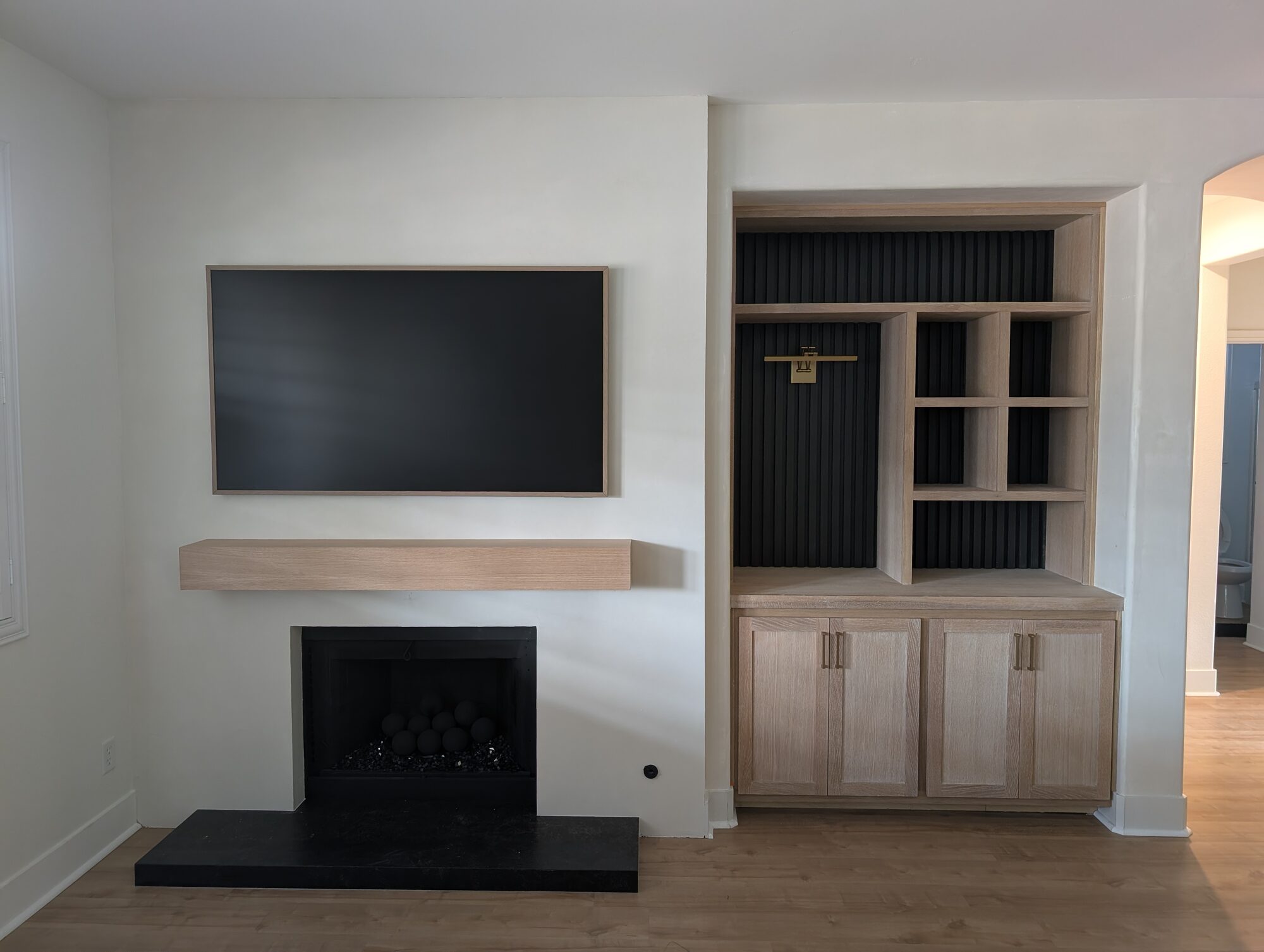
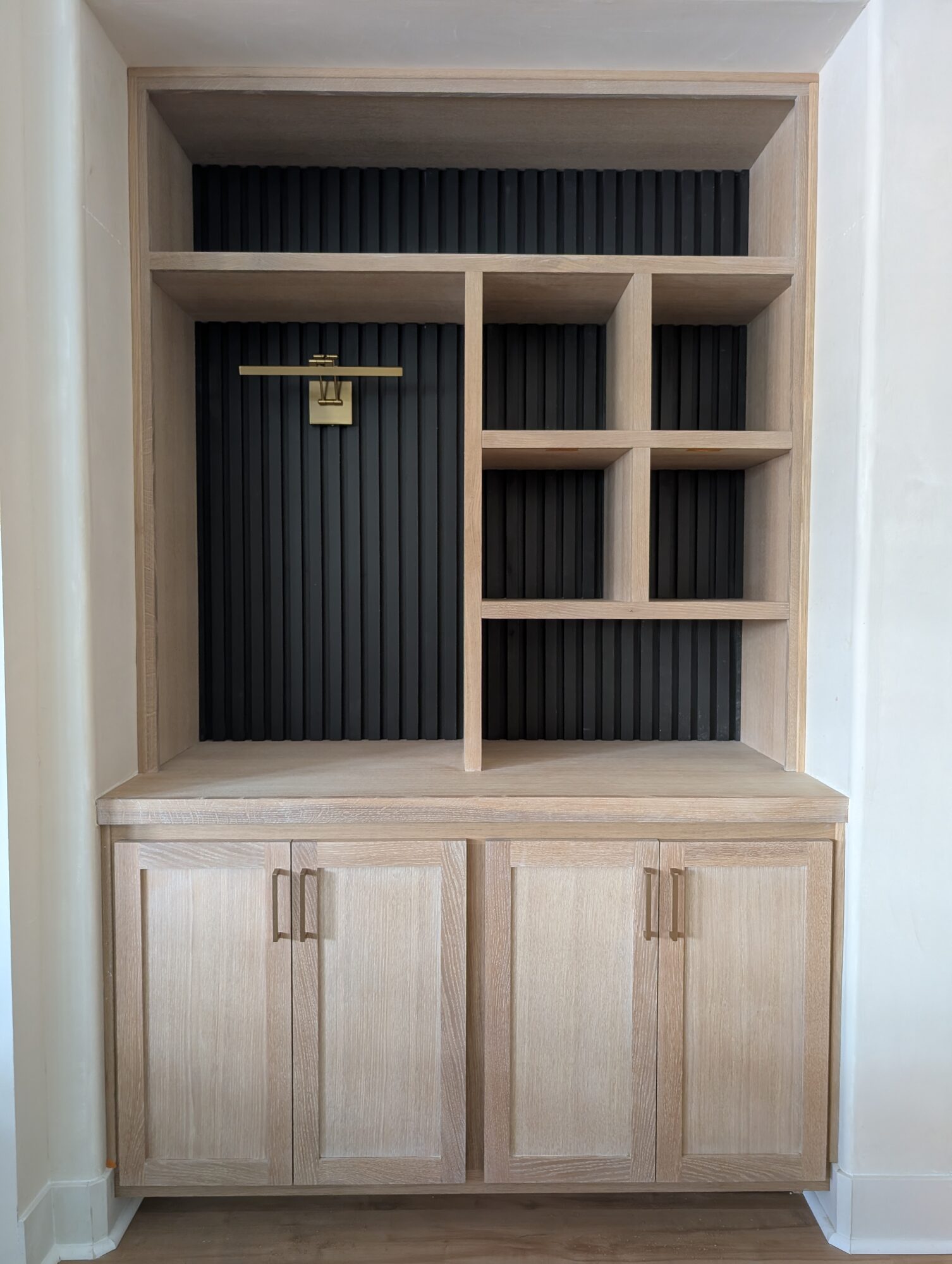
The homeowner's new kitchen has two small rift white oak accents, and the fireplace wall across from it had to look like the same wood. We finished every piece of white oak on the wall in Rubio Monocoat Oil Plus 2C in Natural, because a film finish would have pulled the color away from the kitchen.
What we used on this project:
- Rubio Monocoat Oil Plus 2C, Natural, on the mantel, face frame, doors, countertop and cubby nosing
- Rift-sawn white oak for every visible wood surface
- Brass bar pulls on four shaker doors
- Portola Roman Clay in Mariposa on the wall behind it
Photos, the full investment and construction details are in the project post: Winchester fireplace wall project.
How These Finishes Hold Up in the Inland Empire
Two things in this climate matter for wood finishes. First, the air is dry for long stretches, then swings with the seasons and the air conditioning. Wood moves with those swings no matter what's on it, so the joinery and acclimation matter more than the finish. A film finish can show a crack line where a joint moves; an oil finish just moves with the wood.
Second, light. A lot of Inland Empire living rooms get hard afternoon sun through big sliders. Wherever sun hits oak every day, expect it to change color faster. That's true for every finish. If a built-in sits in direct sun, sample with that in mind. We covered the broader material side of this in our built-in materials guide.
The Holland & Sons Angle
On the Winchester wall, the finish decision came down to two small pieces of oak in a kitchen across the room. A clear film would have been tougher, but it would have shifted the color just enough to look like a different wood, so Rubio Natural it was. Thirty-five years of finishing oak has taught me to make that call with a sample board held up against the real thing, never a photo. Wyatt's proudest piece so far is white oak paneling he installed above a staircase on another job, with tricky fits and angles the whole way up. He'll tell you the finish is the last thing you do and the first thing anybody notices.
Related Resources — Winchester Fireplace Wall Guide
This post is one part of a set of guides built around a real fireplace wall Holland & Sons finished in Winchester. Start with the project, then go wherever your next question is.
- Custom Fireplace Wall in Winchester, CA: White Oak Built-In with a Record-Player Cubby — The full project: photos, the complete $17,590 investment, timeline and construction details.
- How Much Does It Cost to Update a Builder-Grade Fireplace in Winchester, Temecula and Murrieta? — Real investment ranges for a reface, a new surround and mantel, or a full fireplace wall, and what moves the number.
- Can You Remove a Builder-Grade Fireplace Surround and TV Niche Without Replacing the Fireplace? — What comes off, what stays, mantel clearances over gas, and the permit questions to settle before demo.
- Roman Clay vs. Paint on a Fireplace Wall: Is It Worth It in Inland Empire Homes? — A straight comparison of look, prep, durability and investment, with limewash and Venetian plaster in the mix.
- How to Tell If Stain-Grade Built-Ins Are Well Made: A White Oak Quality Checklist for Riverside County — What excellent stain-grade work looks like up close, the questions to ask, and what a complete quote includes.
- How to Design a Built-In for Vinyl Records and a Turntable in Your Inland Empire Home — Shelf heights, depths, weight, power and placement for a listening corner that works.
Frequently Asked Questions
What is the best clear finish for white oak?
The best clear finish for white oak depends on use: hardwax oil like Rubio Monocoat for built-ins and furniture, water-based polyurethane for high-wear surfaces. Both keep white oak close to its natural color. Oil-based polyurethane adds an amber tone, so avoid it if you want the oak to stay pale.
Is Rubio Monocoat better than polyurethane?
Rubio Monocoat is better than polyurethane for keeping white oak natural-looking and for spot repairs, while polyurethane is better for spill and scratch protection. Rubio bonds in one coat without a film. Polyurethane builds a protective layer that's harder to repair invisibly. Choose by how the surface gets used.
How do you finish white oak without changing the color?
To finish white oak with the least color change, use a non-pigmented hardwax oil like Rubio Pure or a lightly pigmented one like Rubio Natural, or a water-based polyurethane. Test on offcuts of your actual boards first. No finish keeps wood exactly raw forever, since light and age warm it over time.
Will white oak cabinets turn yellow?
White oak cabinets warm somewhat over time with light exposure regardless of finish, but oil-based polyurethane makes them noticeably more amber. Water-based polyurethane dries clear and hardwax oils stay close to raw. Direct sun speeds up any color change.
Does polyurethane change the color of wood?
Yes, polyurethane changes the color of wood, and oil-based polyurethane changes it most by adding an amber tone. Water-based polyurethane dries clear and changes color much less, according to Family Handyman. Any finish will deepen the grain somewhat compared with bare wood.
Can Rubio Monocoat be used on cabinets?
Yes, Rubio Monocoat can be used on cabinets. Rubio's technical data sheet says Oil Plus 2C can go on all interior wood surfaces, including furniture, countertops and walls. It's our go-to for stain-grade white oak cabinet doors, face frames and built-ins.
Can you apply polyurethane on top of Rubio Monocoat?
Rubio Monocoat Oil Plus 2C is sold as a complete one-layer system, and we don't recommend stacking a film finish over it. If you want the protection of polyurethane, choose polyurethane from the start. If you want the oiled look, maintain it with Rubio's own maintenance products.
Does Rubio Monocoat need two coats?
No, Rubio Monocoat Oil Plus 2C is designed as a single-coat finish. It's applied, worked in, and the excess is wiped off. It reaches about 80% cure in 2 days and full cure in 5, per Rubio's technical data sheet. Gentle use only until it's fully cured.
What's better than Rubio Monocoat?
For heavy-wear surfaces like kitchen counters and desks, water-based polyurethane or a sprayed conversion varnish protects better than Rubio Monocoat. For a hardwax oil with sheen options, Osmo Polyx-Oil is a strong alternative. For a light, natural look on white oak built-ins, we still reach for Rubio first.
Planning White Oak Built-Ins?
If you're planning white oak cabinets, a mantel or shelving in Winchester, Menifee, Murrieta, Temecula, Perris, Riverside or anywhere in the Inland Empire, start at hsconstruct.com/contact. Fill out the form, describe the project, and upload photos of the room and any wood already in the house that it needs to match. We'll bring finish samples on real oak when we come out.
Want to see this advice applied to a real project? Here's the full breakdown: Winchester fireplace wall project.
Follow Holland & Sons on our social channels to see what's on the bench this week.
951-338-8058 | brian@hsconstruct.com | hsconstruct.com | CSLB #1123738
More Than Just White Oak Built-Ins
A well-finished white oak built-in is often where a room starts to come together, but it's rarely the only thing a house needs. Brian has been a finish carpenter since 1991, and his sons now build alongside him, which means every room in your home is fair game.
If your space needs more than a white oak built-in, here's what else we build:
- Kitchen and bathroom remodels — full custom cabinetry, tile work, and finish carpentry from demo to done
- Coffered ceilings — grid beam systems that add architectural depth to any room, sized and proportioned to the space
- Wainscoting and wall paneling — classic raised panel, flat panel, board-and-batten, and shiplap applications
- Reclaimed wood accents — feature walls, fireplace surrounds, and detail work using salvaged material with real character
- Beam wraps — hollow wood wraps that give exposed beams the look of solid timber without the structural engineering
- Crown molding, baseboards, and trim carpentry — the details that make a house feel finished, from a single room to a whole home
- Cased openings and interior door replacements — clean transitions between spaces that most contractors overlook
- Custom built-in entertainment walls and bookshelves — designed by hand, built in the shop, installed to last
Wood, proportion, and rooms that feel right — that's what we do.
hsconstruct.com
About the Author
Brian Holland is the owner and lead carpenter of Holland & Sons Construction, a family-run finish carpentry and general contracting company serving Riverside County and the Inland Empire. He entered the trade at 17 in 1991, learned on the job, and has spent 35 years building the kind of work that makes rooms feel right — often before a homeowner can articulate why. Every project starts at his vintage drafting table, where he sketches the layout by hand with pencil and paper using a Vemco drafting machine before anything gets built. His sons now apprentice alongside him on every project. Holland & Sons is based in Perris, CA and licensed by the CSLB (#1123738).
Related project
This guide is part of our custom built-ins & cabinetry series.
Learn more about Custom Built-Ins & CabinetryHave a project in mind? Let's start a conversation.
Tell us what you are thinking about and we will give you a straight answer about scope, timeline, and investment.
Start a Conversation