
Why Painted Built-Ins Chip in Inland Empire Homes: Cure Time, Tape, Primer and Early-Use Mistakes
Quick Answer
Most chipping on new painted built-ins in Temecula, Murrieta and Winchester homes happens because the paint was dry but not cured. Waterborne enamels feel dry in about an hour, but Sherwin-Williams says acrylic and latex paints take two to three weeks to cure. Tape, bins, hardware and closed doors in those first weeks are what pull it off.
Key Takeaways
- Dry and cured are not the same thing. Dry means you can touch it; cured means it can take wear
- Sherwin-Williams lists Emerald Urethane at 1 hour to touch and 4 hours to recoat, and says latex and acrylic paints take two to three weeks to cure
- Tape, heavy bins and doors closed against fresh paint are the most common causes of early chips
- Bare wood needs primer under Emerald Urethane, per the manufacturer’s data sheet
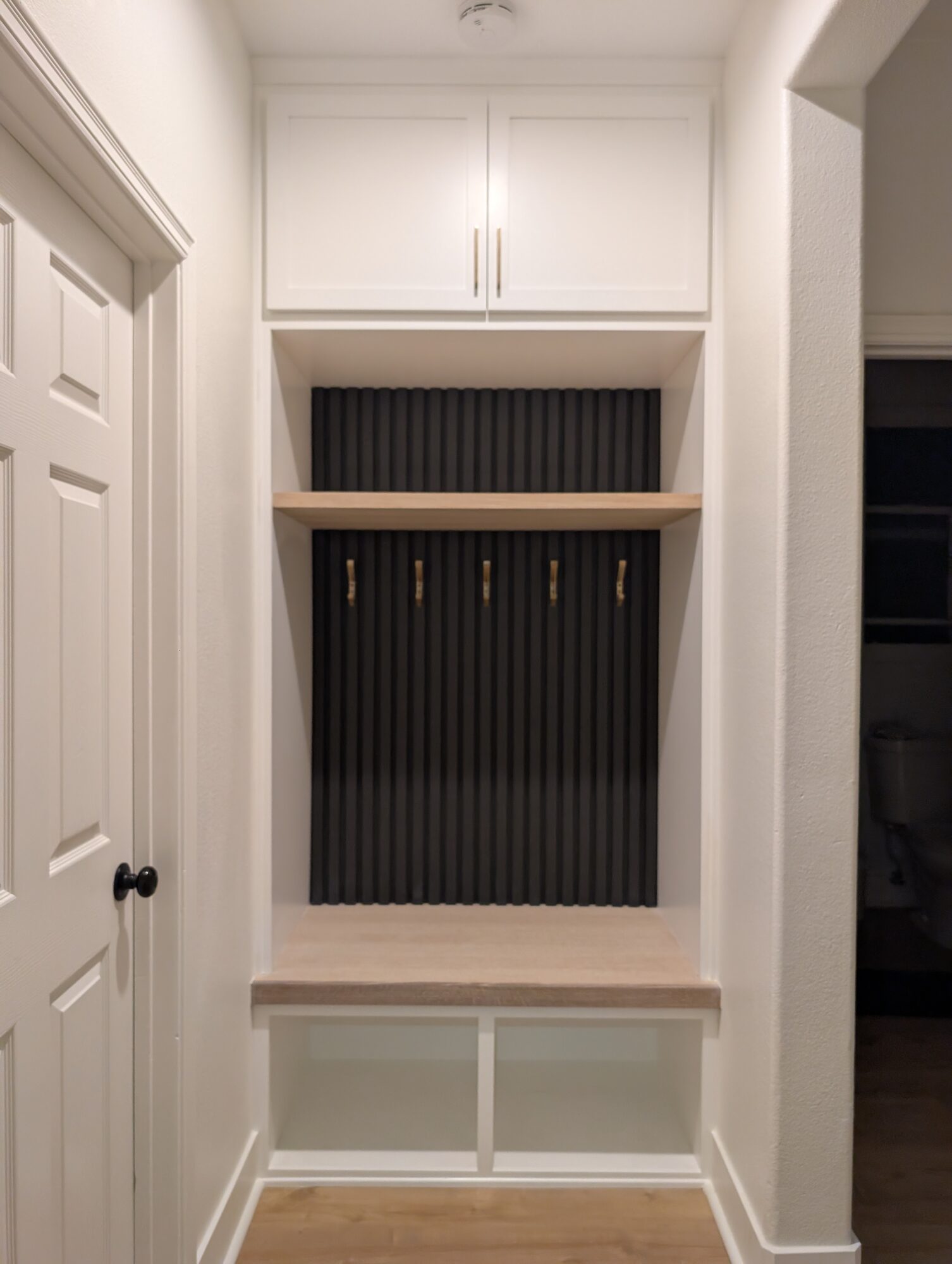
- See this in action: Winchester Built-In Mudroom project
If a brand-new painted built-in chips in the first month, it usually isn’t the paint and it usually isn’t the carpenter. It’s timing. The finish got used before it was ready.
That’s the honest answer, and it’s good news, because timing is something you can control. A quality enamel on a well-built cabinet can hold up for years in a busy family entry in Winchester, Menifee or Temecula. It just needs the first few weeks to harden.
Here’s what actually goes wrong, why, and how to avoid it.
The Direct Answer: Dry Is Not Cured
Paint goes through two stages. Sherwin-Williams puts it plainly: dry time is how long paint takes to be dry to the touch; cure time is how long it needs to perform at its best. The same article says acrylic and latex paints take two or three weeks to cure.
Sherwin-Williams Emerald Urethane Trim Enamel, the paint we use on most painted built-ins, is a waterborne enamel. Its product data sheet lists 1 hour to touch and 4 hours to recoat at 77°F and 50% humidity. It does not publish a full-cure time. So when someone tells you a cabinet is “done” the next day, they mean dry. Cured comes later.
What Homeowners Worry About
“Will my new cabinets chip right away?” Not if you give the paint time before heavy use. Most early chips come from tape, bins or doors in the first few weeks.
“Did my painter do something wrong?” Maybe, maybe not. A chip that shows primer underneath after tape came off usually means the finish wasn’t cured yet, not that it was applied badly.
“Can a chip be fixed without it showing?” Yes. A good painter fills, sands, blends and repaints the area, and on a solid-color enamel the repair can disappear.
“Should I just avoid painted cabinets?” We’ll answer that one straight below.
What Has to Be Decided Before Painting Starts
Most early paint damage can be prevented by deciding a few things before the first coat goes on. Here’s the order we follow on painted built-ins:
| Decision | Must Be Locked In Before Painting? |
|---|---|
| Paint product and sheen | Yes — the product sets the dry, recoat and cure schedule |
| Primer for bare wood or patched areas | Yes — the data sheet calls for primer on bare interior wood |
| Interior of closed storage: paint or clear coat | Yes — insides take scrapes from bins, so choose the finish that holds up |
| Hardware locations and drilling | Yes — drill before paint so nothing gets chipped after |
| When doors get hung and hardware goes on | Yes — schedule it, don’t rush it |
| When tape can touch the new finish | Yes — agree on it with your painter in writing |
| Felt bumpers on doors | No — add them anytime, but before the doors get daily use |
| Baskets, bins and loading shelves | No — but wait out the cure window first |
Your Questions, Answered
Do painted cabinets chip over time?
Painted cabinets can chip over years of use, mostly on edges and around handles where hands, bags and shoes hit. That’s normal wear, and the fix is touch-up, not replacement. Early chipping, in the first weeks or months, is different. That usually points to curing, priming or prep.
How long does Emerald Urethane take to fully cure?
Sherwin-Williams’ data sheet for Emerald Urethane gives dry times, 1 hour to touch and 4 hours to recoat, but no full-cure number. Its general guidance for latex and acrylic paints is two to three weeks. Temperature, humidity and film thickness all slow things down. Treat the first few weeks as gentle-use time, and ask your painter what window they want you to respect.
Why is my paint still tacky after 4 days?
Tacky paint after several days usually means a thick coat, cool or humid conditions, or a second coat applied before the first had dried. Sherwin-Williams notes that drying times depend on temperature, humidity and film thickness. Give it more time and air. If it’s still tacky after a couple of weeks, call your painter.
Do I need to prime before Emerald Urethane?
On bare interior wood, yes. The product data sheet calls for one coat of primer before two coats of enamel. On previously painted surfaces in good shape, primer mainly helps with a big color change, and glossy surfaces should be sanded dull first.
Is it a mistake to paint cabinets?
No, as long as you’re honest about what paint is. Paint gives you a clean, bright color and is easy to touch up. It can chip on edges over time; a clear finish over wood shows wear differently. On a built-in that takes daily traffic, paint is a great choice when it’s applied over good material, primed right and allowed to cure. If you want wood that ages without chips, that’s a different finish system, and we explain how material choice affects the finish system (White Oak Cuts) in our white oak guide.
The Most Common Early Paint Mistakes
Taping too soon. Painter’s tape grabs uncured enamel. Even delicate-surface tapes are rated for walls painted at least 24 hours ago, and cabinet enamel needs much longer before it’s fully hard. On our Winchester mudroom, tape on the face frame within a couple of days lifted a small spot of fresh enamel. We repaired it and changed our process. The details are in the project post (see the full project).
Closing doors and loading shelves right away. Fresh paint pressed against fresh paint can stick together, which painters call blocking. Dunn-Edwards lists premature contact as a main cause, and Benjamin Moore points to not letting paint cure before closing doors.
Skipping primer on bare wood. Enamel over bare wood without primer can lose adhesion. The manufacturer’s system calls for primer first.
Painting surfaces that should be clear-coated. The inside of closed storage gets bins dragged across it daily. Paint there scuffs; a clear coat over hardwood holds up and wipes clean.
Rushing coats. Heavy coats or recoating too soon trap solvent and water, and that’s when paint stays soft and tacky.
How to Keep New Paint From Chipping
- Ask your painter for their cure window, and write it down
- No tape, sticky notes or hooks on fresh enamel until that window passes
- Put felt bumpers on doors and wait before stacking anything heavy
- Hang doors and install hardware gently, and don’t overtighten
- Make sure bare wood and patched areas were primed
- Keep the inside of storage in a durable clear coat or fully cured enamel
If you’re comparing bids, the paint system and schedule belong in the quote. It’s one of the checks in our guide on how to judge what you’re being quoted (Is It Really Custom). For choosing the product itself, our post on the best paint and finish system for wainscoting walks through the options.
See This In Action — Winchester Built-In Mudroom
Inside the upper cabinet of this Winchester mudroom, the maple wasn’t painted at all. It was clear-coated, because closed storage takes bumps and scrapes from bins and boxes, and a clear coat over hardwood holds up and stays clean where paint would scuff.
What we used on this project:
- Sherwin-Williams Emerald Urethane Trim Enamel in white on the cubbies, face frames and doors
- Clear-coated domestic maple inside the closed upper cabinet
- Hard maple face frames and maple Shaker doors, chosen for tight grain that paints smooth
- Two days of paint on site, including a touch-up repair
Photos, the complete investment and the full build story are in the project post: Winchester Built-In Mudroom.
Painting Built-Ins Yourself? Read This First
Plenty of homeowners paint their own cabinets, and some do it well. Here’s where it usually goes wrong: skipping the scuff-sand on glossy surfaces, skipping primer on bare wood, putting on thick coats to save time, and loading the shelves the next day. If you’re doing it yourself, follow the data sheet for your product, keep coats thin, and give it the full cure window before real use. The point where most people hand it off is spraying doors and face frames to a smooth finish. That takes equipment and practice.
Paint in the Inland Empire
Our climate helps with dry time and hurts with patience. On a warm, dry day in Perris or Murrieta, enamel feels dry fast, and that’s exactly when people start using cabinets too soon. A busy garage entry in a Winchester or Menifee tract home, with the door opening a dozen times a day, puts paint to work immediately. Give it the weeks it needs. For more on what goes wrong with entry built-ins in general, see what goes wrong with mudroom built-ins.
The Holland & Sons Angle
The inside of the Winchester upper cabinet got a clear coat over maple instead of paint, and that’s the kind of decision nobody notices until it’s wrong. Bins get dragged across that surface every week. Paint would have scuffed by spring. Thirty-five years of seeing cabinets after a few years of family use teaches you where paint belongs and where it doesn’t. It’s one of the things I want both of my boys to understand early: the inside of a cabinet deserves the same thought as the outside, because that’s the part the family lives with.
Related Resources — Winchester Mudroom Guide
This post is one part of a four-part guide built around a real Holland & Sons project, a fully custom mudroom built-in in Winchester. Here’s where to go next.
- Custom Built-In Mudroom in Winchester, CA — the full project: photos, materials, timeline and the complete investment breakdown.
- How Much Does a Custom Wood Slat Accent Wall Cost in Temecula, Murrieta and Winchester? — real investment ranges for hand-built slats, from a small section inside a built-in to a full wall.
- Custom-Built Wood Slat Wall vs. Prefab Slat Panels — a straight answer on when hand-built slats earn their place and when prefab panels are the smarter call.
- Rift-Sawn, Quarter-Sawn or Plain-Sawn White Oak for Built-Ins and Benches — how the way a log is sawn changes the look, stability and investment of white oak.
- Is Your “Custom” Built-In Really Custom? 8 Ways to Tell — an eight-point checklist for judging whether the built-in on your quote is truly made for your room.
Frequently Asked Questions
Do painted cabinets chip over time?
Painted cabinets can chip over years of use, mostly on edges and around handles. That’s normal wear and is fixed with touch-up. Chipping in the first weeks is different and usually points to paint that wasn’t cured, missing primer, or poor prep.
How do I keep my painted cabinets from chipping?
Keep painted cabinets from chipping by respecting the cure window. Avoid tape, heavy loads and closed doors on fresh enamel, add felt bumpers to doors, make sure bare wood was primed, and touch up small chips early before they spread.
How long does it take for Sherwin-Williams Emerald Urethane to fully cure?
Sherwin-Williams doesn’t publish a full-cure time on the Emerald Urethane data sheet. It lists 1 hour to touch and 4 hours to recoat at 77°F and 50% humidity. The company’s general guidance is that latex and acrylic paints take two to three weeks to cure, so plan on gentle use for that long.
Why is my paint still tacky after 4 days?
Paint that’s still tacky after 4 days is usually a thick coat, cool or humid air, or a recoat applied too soon. Drying and curing slow down with thicker film and higher humidity. Give it time and airflow, and call your painter if it’s still tacky after a couple of weeks.
Do I need to prime before Emerald Urethane?
Yes, on bare interior wood. Sherwin-Williams’ data sheet calls for one coat of primer, then two coats of Emerald Urethane. On sound, previously painted surfaces, sand glossy areas dull; primer mainly helps when you’re making a big color change.
What not to do when painting cabinets?
Don’t skip cleaning and scuff-sanding, don’t skip primer on bare wood, don’t put on thick coats to save time, and don’t load shelves, close doors or apply tape before the paint has cured. Most early failures trace back to one of those.
How do you fix chipped paint on kitchen cabinets?
Fix a chip by filling the divot, sanding it smooth and level, cleaning it, and repainting with the same product and sheen, feathering the edges. On a solid-color enamel, a careful repair can be invisible. Wait for the repair to cure before using the area hard.
Is it a mistake to paint kitchen cabinets?
It isn’t a mistake to paint cabinets if the material, primer and cure time are right. Paint gives clean color and easy touch-ups, but edges can chip over the years. If you’d rather have wear blend into wood grain, a clear finish over hardwood is the alternative.
Planning Painted Built-Ins?
If you’re planning painted cabinetry or a built-in anywhere in Winchester, Menifee, Murrieta, Temecula, Perris, Riverside or the greater Inland Empire, start at hsconstruct.com/contact. Fill out the form, describe the space, and upload photos and any inspiration pictures you’ve saved. We’ll walk you through the paint system and the schedule before anything is built.
Want to see this advice applied to a real project? Here’s the full breakdown: Winchester Built-In Mudroom.
Follow Holland & Sons on our social channels to see what’s on the bench each week.
951-338-8058 | brian@hsconstruct.com | hsconstruct.com | CSLB #1123738
More Than Just Painted Built-Ins
A painted built-in that holds up is often where a room starts working, but it’s rarely the only thing a house needs. Brian has been a finish carpenter since 1991, and his sons now build alongside him, which means every room in your home is fair game.
If your space needs more than a painted built-in, here’s what else we build:
- Kitchen and bathroom remodels — full custom cabinetry, tile work, and finish carpentry from demo to done
- Coffered ceilings — grid beam systems that add architectural depth to any room, sized and proportioned to the space
- Wainscoting and wall paneling — classic raised panel, flat panel, board-and-batten, and shiplap applications
- Reclaimed wood accents — feature walls, fireplace surrounds, and detail work using salvaged material with real character
- Beam wraps — hollow wood wraps that give exposed beams the look of solid timber without the structural engineering
- Crown molding, baseboards, and trim carpentry — the details that make a house feel finished, from a single room to a whole home
- Cased openings and interior door replacements — clean transitions between spaces that most contractors overlook
- Custom built-in entertainment walls and bookshelves — designed by hand, built in the shop, installed to last
Wood, proportion, and rooms that feel right — that’s what we do.
hsconstruct.com
About the Author
Brian Holland has worked in finish carpentry since 1991. Today he owns and leads Holland & Sons Construction, a family-run finish carpentry and general contracting company serving Riverside County and the Inland Empire. He entered the trade at 17, learned on the job, and has spent 35 years building the kind of work that makes rooms feel right — often before a homeowner can articulate why. Every project starts at his vintage drafting table, where he sketches the layout by hand with pencil and paper using a Vemco drafting machine before anything gets built. His sons now apprentice alongside him on every project. Holland & Sons is based in Perris, CA and licensed by the CSLB (#1123738).
This guide is part of our custom built-ins & cabinetry series.
Learn more about Custom Built-Ins & CabinetryHave a project in mind? Let's start a conversation.
Tell us what you are thinking about and we will give you a straight answer about scope, timeline, and investment.
Start a Conversation