
What Paint Finish Should You Use on Custom Interior Trim? A Finish Carpenter Compares the Options
Quick Answer
Holland & Sons Construction finishes custom interior trim in Menifee and the Inland Empire with Sherwin-Williams Emerald Urethane Trim Enamel in semi-gloss, a water-based urethane-modified alkyd that cures to a hard film, resists blocking, and wipes clean. Benjamin Moore Advance is the comparable waterborne alkyd. Sherwin-Williams ProClassic is a well-regarded acrylic enamel option. Standard acrylic wall-and-trim paint is the one to avoid on anything that gets touched. The right question is not which brand, but whether the product is formulated for trim: a film that cures hard, adheres well, and holds up to cleaning, over proper prep. Hardness is the part a homeowner feels first; it is not the whole story.
Key Takeaways
-
Trim needs a hard film, not a pretty one. Scuff resistance, blocking resistance, and wipe-clean performance depend heavily on cure hardness, along with adhesion, prep, and cure conditions.
-
The deciding factor is where the trim lives: casing, jambs, and doors get touched every day and need an enamel; crown nine feet up is forgiving.
-
Inland Empire heat dries paint fast. That helps the schedule and punishes brush marks, so leveling matters more here than in a cool, damp climate.
-
Holland & Sons has used Emerald Urethane on its trim projects and names it on the quote. The rest of this comparison is from the manufacturers' published data, labeled as such.
-
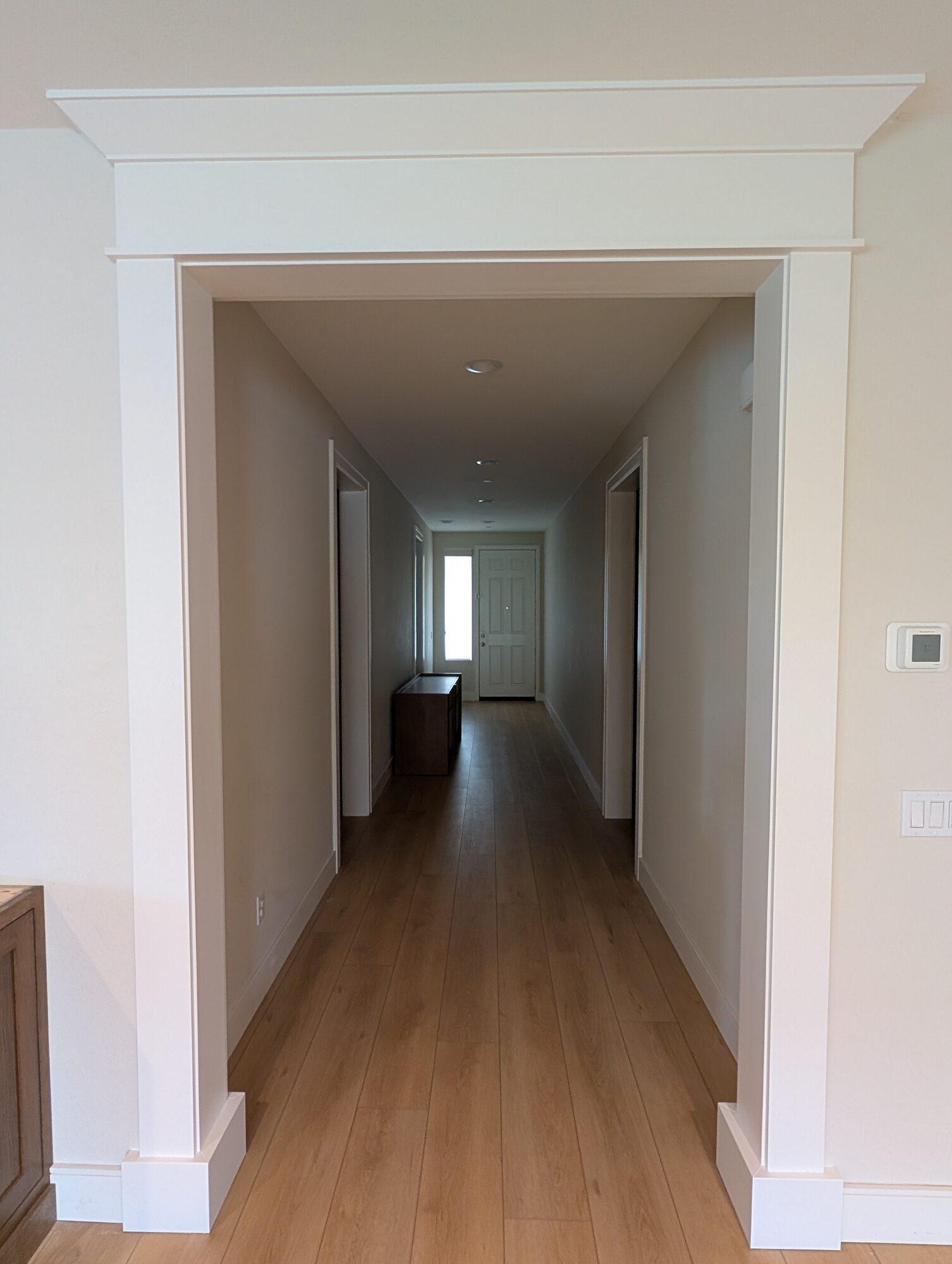
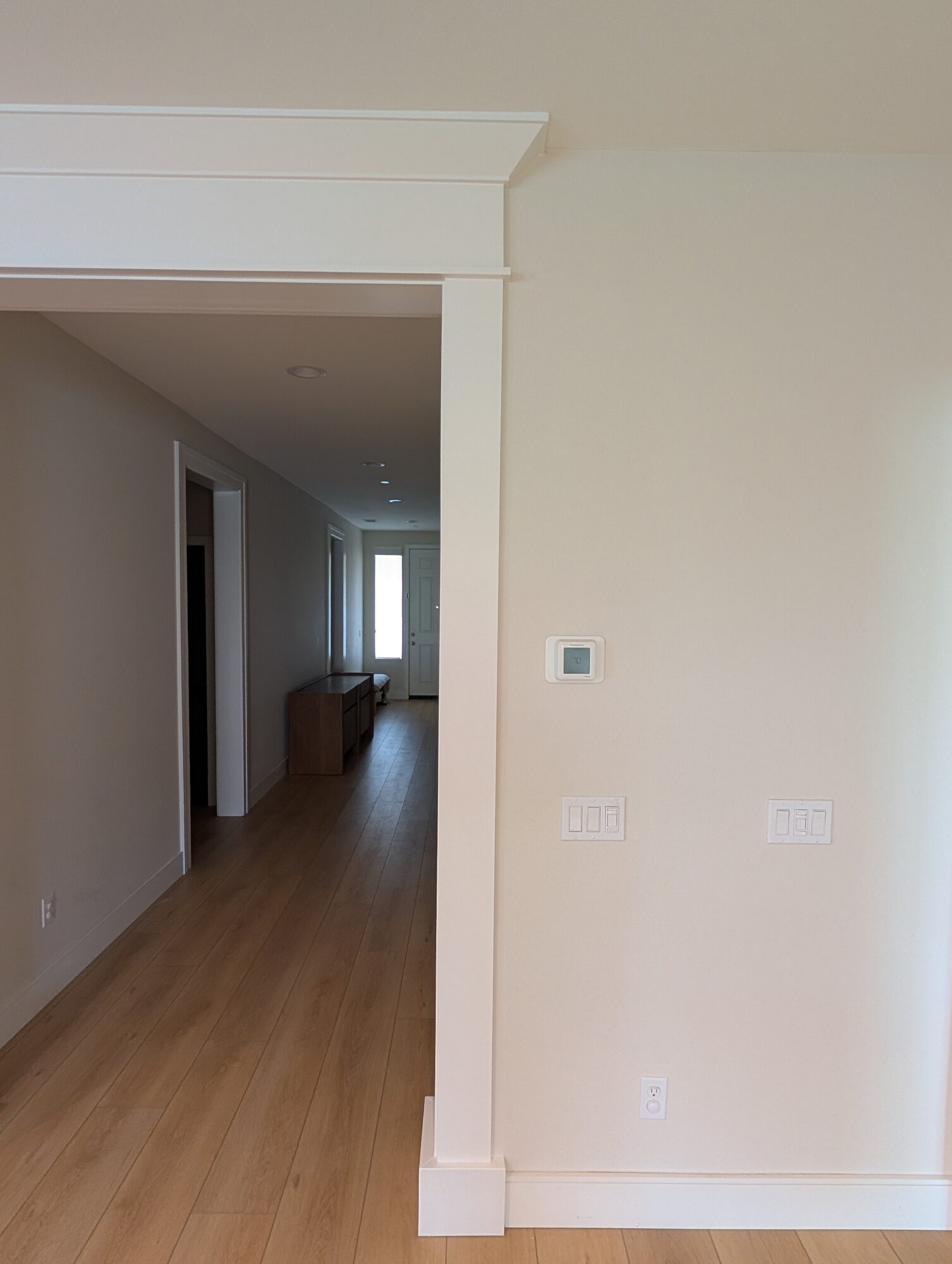
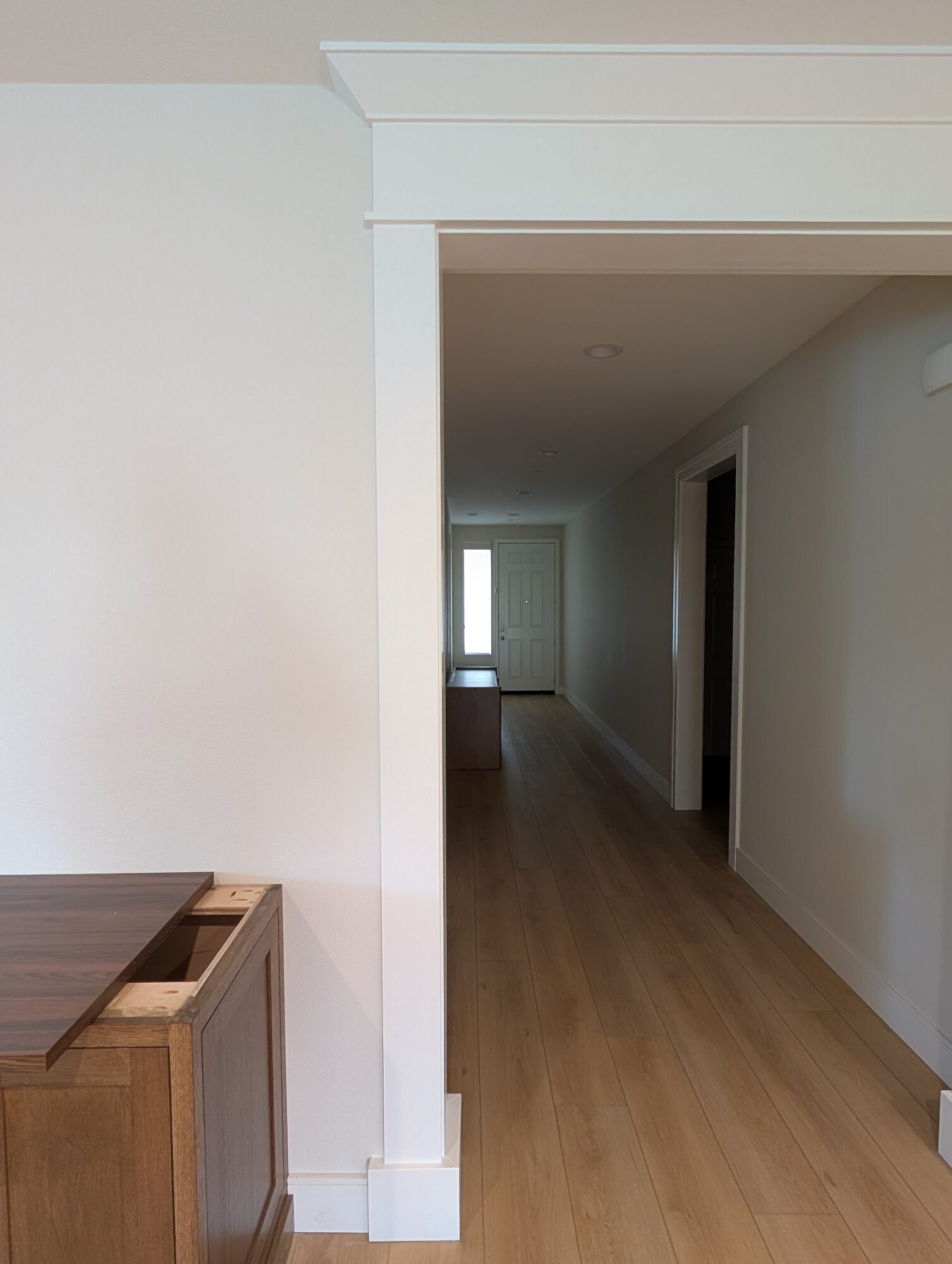
See this in action: two days of Emerald Urethane over pine and MDF on five openings in Menifee: Painted Trail Cased Openings
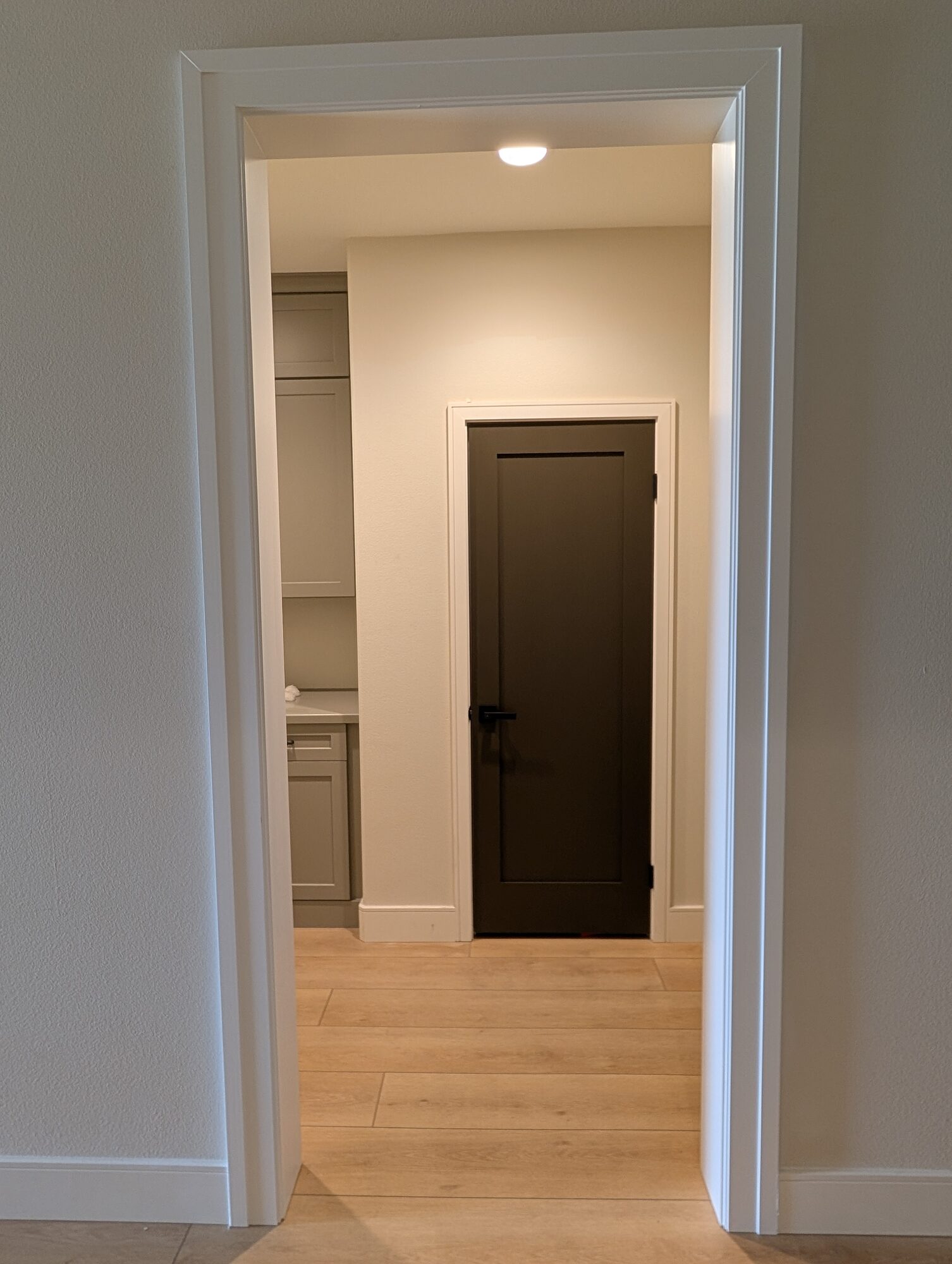
A cased opening is the most touched surface in a house. Every grocery bag, laundry basket, hip, and backpack brushes past it. The paint on it is not decoration; it is the wear layer. That is why the question of which paint to put on custom trim is worth more than a brand name, and why Holland & Sons specifies the product on the quote instead of writing "paint."
This is a finish carpenter's comparison, not a painter's review. It starts from what installed trim has to survive, works through the four products a homeowner in Menifee or Murrieta is most likely to be offered, and ends with a decision framework by location. One honesty note up front: Holland & Sons has field experience with Emerald Urethane. The other products are compared from the manufacturers' own published descriptions, and the post says so where it matters.
The Direct Recommendation
For casing, jambs, doors, baseboard, and built-up headers in an Inland Empire home, Holland & Sons uses Sherwin-Williams Emerald Urethane Trim Enamel in semi-gloss. Two reasons. The manufacturer describes it as a water-based urethane-modified alkyd that creates a hard, durable finish with excellent blocking resistance, and that matches what we see on the wall: fingerprints at a main opening come off with a damp rag, and doors do not stick to their stops. Where the trim is wide and flat and glare would bother you, the same product in satin.
What Installed Trim Actually Has to Survive
Before the products, the requirements. Cured hardness is the factor this post leans on because it is the one a homeowner feels, but it is not the only one: adhesion to the primer, the prep underneath, impact and chemical resistance, and the temperature and humidity during cure all decide how a trim finish ages. Any trim finish in a family home in Menifee has to handle:
-
Scuffs and impact. A hard film takes a hit and keeps its sheen; a soft one burnishes and shows every shoe.
-
Blocking. Two painted surfaces pressed together before full cure bond and tear apart. Door stops, window sashes, and anything stacked against fresh trim. Trim enamels are formulated to resist it; wall paints are not.
-
Cure time versus the schedule. Dry to the touch is hours; full hardness is days to weeks. The family moves back in long before the film is done curing.
-
Touch-up. Trim gets nicked. The finish has to accept a brushed touch-up without a visible patch, which depends on the sheen matching and the film leveling.
-
Sheen. Semi-gloss shows the shadow lines on a built-up header; flat swallows them. It also wipes clean. Satin is the compromise on wide, flat trim.
-
Prep. No finish survives bad prep. Filled nail holes, caulked joints, sanded primer, dust removed. The paint is the last two days of a four-day job for a reason.
The Four Options, Evaluated
Sherwin-Williams Emerald Urethane Trim Enamel. Water-based urethane-modified alkyd. The product page lists a hard, durable finish for frequently cleaned areas, excellent blocking resistance, fewer coats, and resistance to yellowing compared with oil. Sheens: satin, semi-gloss, gloss. Field assessment from Holland & Sons projects: it brushes out well if you do not overwork it, levels to a hard film, and holds up at hand height. It is what went on every piece of the Painted Trail job. Best for casing, jambs, doors, headers, baseboard.
Benjamin Moore Advance. Waterborne alkyd. The product page describes it as matching the flow and leveling of a conventional alkyd, curing to a hard, furniture-quality finish, with a 16-hour recoat. Sheens: satin, semi-gloss, high gloss. Holland & Sons has not used it on a project, so this is the manufacturer's description, not a field report; it is widely specified for the same jobs as Emerald Urethane and belongs in the same class. Best for the same hand-height trim, especially where a long open time for brushing is wanted.
Sherwin-Williams ProClassic Waterborne Interior Acrylic Enamel. Acrylic enamel. The product page lists it for trim, doors, cabinets, and furniture, with flow and leveling to reduce brush marks, strong hide, and a non-yellowing finish; it does not list blocking resistance. Sheens: satin, semi-gloss, gloss, high gloss. Manufacturer description only. Best for trim where an acrylic is preferred for its easier cleanup and faster recoat and the surface is not a door stop or a high-traffic edge.
Standard acrylic wall-and-trim paint. The all-purpose product sold for walls and trim together. Easiest to apply, fastest to dry, and generally the softest cured film of the four, though that varies by product line; check the technical data sheet for the specific can. Best for crown and other trim nobody touches, and for matching trim to a wall color in a low-traffic room. On casing and doors it scuffs sooner and blocks longer than the enamels, which is the reason the enamels exist.
Comparison Table: Trim Finishes by What Matters
| Factor | Emerald Urethane (field) | BM Advance (spec) | ProClassic (spec) | Acrylic wall/trim |
|---|---|---|---|---|
| Resin type | Water-based urethane-modified alkyd | Waterborne alkyd | Acrylic enamel | Acrylic latex |
| Cured hardness | Hard, enamel-like | Hard, furniture-quality (manufacturer) | Enamel; hardness not specified | Soft to moderate |
| Blocking resistance | Listed as excellent | Not listed on page | Not listed on page | Lowest of the four |
| Recoat | Next day in practice | 16 hours (manufacturer) | Not listed on page | A few hours |
| Leveling in dry heat | Good; do not overwork | Long open time (manufacturer) | Leveling listed | Dries fast, shows brush marks |
| Sheens | Satin, semi-gloss, gloss | Satin, semi-gloss, high gloss | Satin to high gloss | Varies |
| Best for | Casing, jambs, doors, headers, base | Same hand-height trim | Trim off the traffic path | Crown and untouched trim |
The Questions Homeowners Ask About Trim Paint
Is the expensive enamel really different? In the one way that matters on trim, yes: it cures harder. On a crown molding you will never see the difference. On a cased opening into the kitchen you will see it within a year, in scuffs that wipe off instead of staying. Buy the hard film where things get touched and save where they do not.
Semi-gloss or satin? Semi-gloss on casing, doors, and base. Satin on wide flat pieces where glare would bother you. Not flat, not eggshell, on anything you will wipe.
Why does my trim feel tacky a week later? Enamels cure slowly even after they feel dry, and in cool weather slower still. Keep doors cracked and nothing leaning against the trim for the first week or two. In a Menifee summer, cure runs faster; the issue flips to brush marks from paint that sets before it levels.
Spray or brush? On new trim in an occupied house, Holland & Sons brushes and rolls: two days of on-site paint on the Painted Trail job. Spraying lays a flawless film and makes sense on a whole-house package in an empty house, with masking that takes as long as the painting.
Decision Framework: Which Finish Goes Where
-
Casing, jambs, doors, baseboard, window stools, column bases: a hard trim enamel (Emerald Urethane or a comparable waterborne alkyd), semi-gloss.
-
Built-up headers and wide flat trim at eye level: the same enamel, semi-gloss if you want the shadow lines to read, satin if the piece is wide enough to glare.
-
Crown and anything above reach: any good acrylic trim paint is fine; the enamel is not wasted there, but it is not earning its keep either.
-
Wainscoting and paneling at hand height: enamel, satin or semi-gloss, because chair backs and kids find it.
-
Whatever the material underneath, the finish is what the family touches, so match the finish to the traffic, not to the species.
-
Budget: paint is roughly $150 to $250 of the difference between a standard acrylic and a hard enamel on a five-opening job. Here is how that fits in the total.
See This In Action: Painted Trail Trim
Two of the four days on the Painted Trail Trim project were paint: fill, sand, caulk, prime bare spots, and two coats of Emerald Urethane over pine jambs and casing, a pine-and-MDF header, and factory-primed column bases, all in Pure White SW 7005.
What we used on this project:
-
Sherwin-Williams Emerald Urethane Trim Enamel, semi-gloss, two coats, brushed and rolled on site
-
Nail holes filled and sanded, every joint and reveal caulked with a flexible caulk before the first coat
-
Pine 1x10 jambs and casing, pine head casing and cap, MDF crown, and WindsorONE kiln-dried, factory-primed fascia column bases, all under the same finish so the material changes disappear
-
Wall paint untouched; the trim was cut in cleanly against the existing color
The hub post has the photos of every opening, the full material table, and the four-day timeline with the paint days called out. Link: the full project story
Regional Performance Note: Painting Trim in Dry Inland Heat
Inland Empire air is dry most of the year and hot for a good part of it, and that changes how trim paint behaves in Menifee, Hemet, and Lake Elsinore compared with the coast. Fast drying is good for the schedule and bad for leveling: paint that sets before it flows leaves brush marks, so a product with a longer open time, a slightly wetter brush, and working in shorter sections all help. Cure runs faster too, which means blocking is less of a problem in July than in January. The wood under the paint is also drying out, which is why acclimated stock and glued joints matter before the first coat: a hard enamel bridges a hairline; it will not hide a joint that opens an eighth of an inch.
The Holland & Sons Angle
Two days of paint on a four-day job is the number that surprises people. The carpentry is the part they are paying attention to; the paint is where the carpentry either becomes one piece or stays a collection of boards. On Painted Trail, that meant filling and sanding every nail hole, caulking every reveal, and two coats of Emerald Urethane brushed on in an occupied house, so that pine, MDF, and factory-primed stock all read as a single white frame. Waylon spent a good part of that job behind a camera, shooting the video walk-throughs that are in the hub post, and the finish is what the camera sees: a soft film shows every brush stroke and every scuff on video, and a hard one shows the shadow lines on the header. He is learning that the last two days decide what the first two look like, which is the same thing his father has been saying since 1991.
Related Resources: Cased Openings and Craftsman Trim Guide
This post is one of six companion guides built around the Painted Trail Trim project in Menifee. Together they cover the whole decision, from what it costs to who should build it.
-
Cased Openings and Craftsman Trim in Menifee, CA: Five Openings, One Crown, and Knowing Where to Stop (Painted Trail Trim): the project itself, with photos, the full $6,737 breakdown, the four-day timeline, and every material decision
-
How Much Does It Cost to Case Openings and Add Craftsman Trim in Menifee in 2026?: real ranges per opening, what moves the number, and how to read two quotes side by side
-
What Goes Wrong When You Add Trim to Drywall-Wrapped Openings in a Tract Home?: the failures you can see, the ones you can't yet, and how to check the work before paint hides it
-
MDF vs. Pine Trim: Which Is Right for Your Inland Empire Home?: where each paint-grade material belongs, with poplar and factory-primed stock in the mix
-
How to Hire a Trim Carpenter in Menifee: What Good Trim Work Looks Like Before You Sign: a scorecard, the questions that sort the carpenters from the guessers, and what a complete quote includes
-
Should Every Doorway Get the Same Trim? Where to Put the Crown and Where to Stop: how to decide which openings match, which coordinate, and which one gets the emphasis
Frequently Asked Questions
What is the best paint for interior trim and baseboards?
For trim that gets touched, Holland & Sons uses Sherwin-Williams Emerald Urethane Trim Enamel, a water-based urethane-modified alkyd that cures to a hard, enamel-like film, resists blocking, and wipes clean. Benjamin Moore Advance is a comparable waterborne alkyd that the manufacturer describes as curing to a hard, furniture-quality finish. Either class of product generally outperforms a standard acrylic wall-and-trim paint on casing, jambs, and doors, mainly because of film hardness after cure, with adhesion and prep doing the rest.
What sheen is best for trim?
Semi-gloss on casing, jambs, doors, and baseboard; satin where the trim is wide and flat and you want less glare, like a big built-up header or wainscoting panels. Gloss is a legitimate choice on doors and small accents. Flat and eggshell are wall sheens; on trim they scuff and do not wipe clean. The Painted Trail Trim project in Menifee used Emerald Urethane in Pure White SW 7005 on everything so the material changes between pine and MDF disappear.
Why do my painted doors and windows stick after painting?
That is blocking: two painted surfaces pressing together before the film has fully cured, so they bond and tear when separated. Softer acrylic films block longer. The waterborne alkyd and urethane-modified enamels are formulated to resist it; Sherwin-Williams lists excellent blocking resistance as a feature of Emerald Urethane. Full cure on any trim enamel is days to weeks, so keep doors cracked and avoid stacking anything against fresh trim for the first week.
Is the expensive trim enamel actually different, or is it marketing?
It is different in the way trim cares about most: film hardness after cure. A urethane-modified or alkyd-modified waterborne enamel dries to a harder, more scuff-resistant surface than a straight acrylic, which is why it is sold for trim, doors, and cabinets rather than walls. On a crown molding nobody touches, the difference is hard to see. On a cased opening every grocery bag brushes past, you will see it in a year. Where a quote lands matters less than whether the product named on it is a trim enamel.
How long does trim enamel take to cure?
Dry to the touch in hours; recoat in a day for most trim enamels (Benjamin Moore lists a 16-hour recoat for Advance); full hardness over one to four weeks depending on product, temperature, and humidity. Inland Empire heat speeds drying, which helps the schedule and hurts brush-out time, so a slower-leveling product is easier to apply in a Menifee summer. Treat trim gently for the first week after painting.
Can I paint trim with the same paint as the walls?
You can, and you will repaint it sooner. Wall paint is formulated to hide and to touch up, not to take a hit. Trim is the part of the room that gets touched, so it needs a film that resists scuffs and wipes clean. Use a trim enamel on trim, and if you want the same color, have the trim enamel tinted to match the wall color.
Does paint hide the difference between MDF and pine trim?
With the right prep, yes. Both get primed, nail holes filled, joints caulked, and sanded before two coats of enamel, and under a hard film in the same color they read as one piece. The Painted Trail header is pine head casing and cap with MDF crown on top, all in the same enamel, and the material change is invisible from the room. Which material belongs where is covered in the MDF vs. pine guide in this cluster.
How do I touch up trim enamel later?
Keep a labeled quart of the same product, color, and sheen. Clean the spot, feather-sand any chip, spot-prime bare wood or MDF, and brush a thin coat, letting it level. Hard enamels touch up well if the sheen matches; a satin touch-up on semi-gloss trim will show as a dull patch. Write the product, color code, and sheen on the lid the day the job finishes.
Want Trim That Still Wipes Clean in Five Years?
The finish is the part of the project you will touch every day for as long as you live in the house. It deserves a product chosen for that job and named on the quote, and that is how Holland & Sons writes every trim scope.
Start your project at hsconstruct.com/contact. Fill out the form, describe the project, and upload a photo or two of the openings or trim you are thinking about, plus any inspiration photos you have saved. Brian reads every one. Want to see this advice applied to a real project? Here's the full breakdown: the full project story. More finished work is on Facebook, Instagram, YouTube, and TikTok at hollandandsonsconstruction. We build in Menifee, Murrieta, Temecula, Wildomar, Winchester, Lake Elsinore, Perris, Hemet, San Jacinto, Norco, Corona, Riverside, and all across Riverside County and the Inland Empire.
951-338-8058 | brian@hsconstruct.com | hsconstruct.com | CSLB #1123738
More Than Just Trim Finish
Finishing custom trim so it lasts is one piece of what we do at Holland & Sons, and it is one chapter in a much longer story. Brian has been a finish carpenter since 1991, and his sons now build alongside him, which means every room in your home is fair game. If your space needs more than paint on new casing, here's what else we build:
-
Kitchen and bathroom remodels: full custom cabinetry, tile work, and finish carpentry from demo to done
-
Custom and built-in cabinetry: designed for the room, built in the shop, installed to last
-
Media walls and entertainment walls: built-in TV walls with storage, lighting, and clean cable management
-
Fireplace walls: mantels, surrounds, and full-height paneling that make the fireplace the center of the room
-
Accent walls: paneling, slat walls, and feature walls that give one wall a job to do
-
Mudrooms: lockers, bench seating, cubbies, and hooks, built for the way your family comes through the door
-
Coffered ceilings: grid beam systems that add architectural depth to any room, sized and proportioned to the space
-
Wainscoting and wall paneling: classic raised panel, flat panel, board-and-batten, and shiplap applications
-
Reclaimed wood accents: feature walls, fireplace surrounds, and detail work using salvaged material with real character
-
Beam wraps: hollow wood wraps that give exposed beams the look of solid timber without the structural engineering
-
Crown molding, baseboards, and trim carpentry: the details that make a house feel finished, from a single room to a whole home
-
Cased openings and interior door replacements: clean transitions between spaces that most contractors overlook
Wood, proportion, and rooms that feel right. That's what we do. hsconstruct.com
About the Author
Brian Holland is the owner and lead carpenter of Holland & Sons Construction, a family-run finish carpentry and general contracting company serving Riverside County and the Inland Empire. He entered the trade at 17 in 1991, learned on the job, and has spent every year since building the kind of work that makes rooms feel right, often before a homeowner can articulate why. Many projects start at his vintage drafting table, where he sketches the layout by hand with pencil and paper using a Vemco drafting machine before anything gets built. His sons now apprentice alongside him on every project. Holland & Sons is based in Perris, CA and licensed by the CSLB (#1123738).
Memberships & Credentials: NAHB Member | CBIA Member | NARI Member | BBB A+ Rated | Tanya Holland, NAHB Certified Aging-in-Place Specialist (CAPS) | CSLB #1123738
This guide is part of our interior doors & trim series.
Learn more about Interior Doors & TrimHave a project in mind? Let's start a conversation.
Tell us what you are thinking about and we will give you a straight answer about scope, timeline, and investment.
Start a Conversation