How to Tell If a Kitchen Cabinet Pull-Out Retrofit Is Built Right — and How to Choose an Installer in the Inland Empire
Quick Answer
A well-built pull-out retrofit in Menifee or anywhere in the Inland Empire glides fully open under load, closes softly, sits square in the opening with even gaps, and is mounted to solid blocking, not just screwed to a face frame. To choose an installer, check the CSLB license, get the drawer box material, slide model, finish, exclusions, and warranty terms in writing, and ask how they measure. The answers separate people who build drawers from people who sell them.
Key Takeaways
-
Excellent retrofits are sized to the opening, mounted to solid blocking, and ride on rated full-extension slides
-
Any quote should name the box material, joinery, slide model, finish, exclusions, and warranty terms
-
In California, a contractor's license is required for jobs of $1,000 or more, and down payments are capped
-
A longer warranty doesn't automatically mean better work. Read what it covers and excludes
-
See this in action: Sapphire Rollouts, Menifee
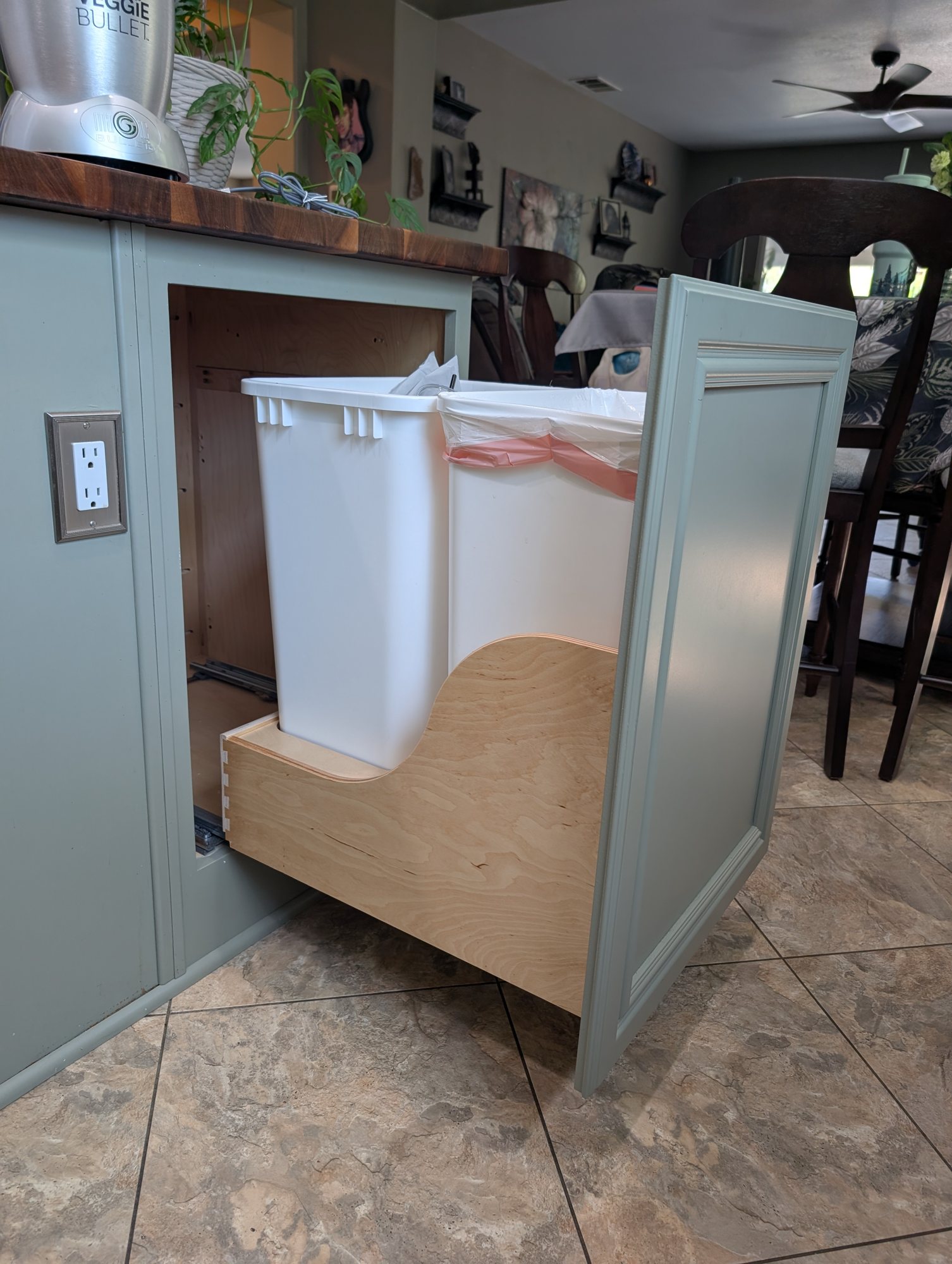
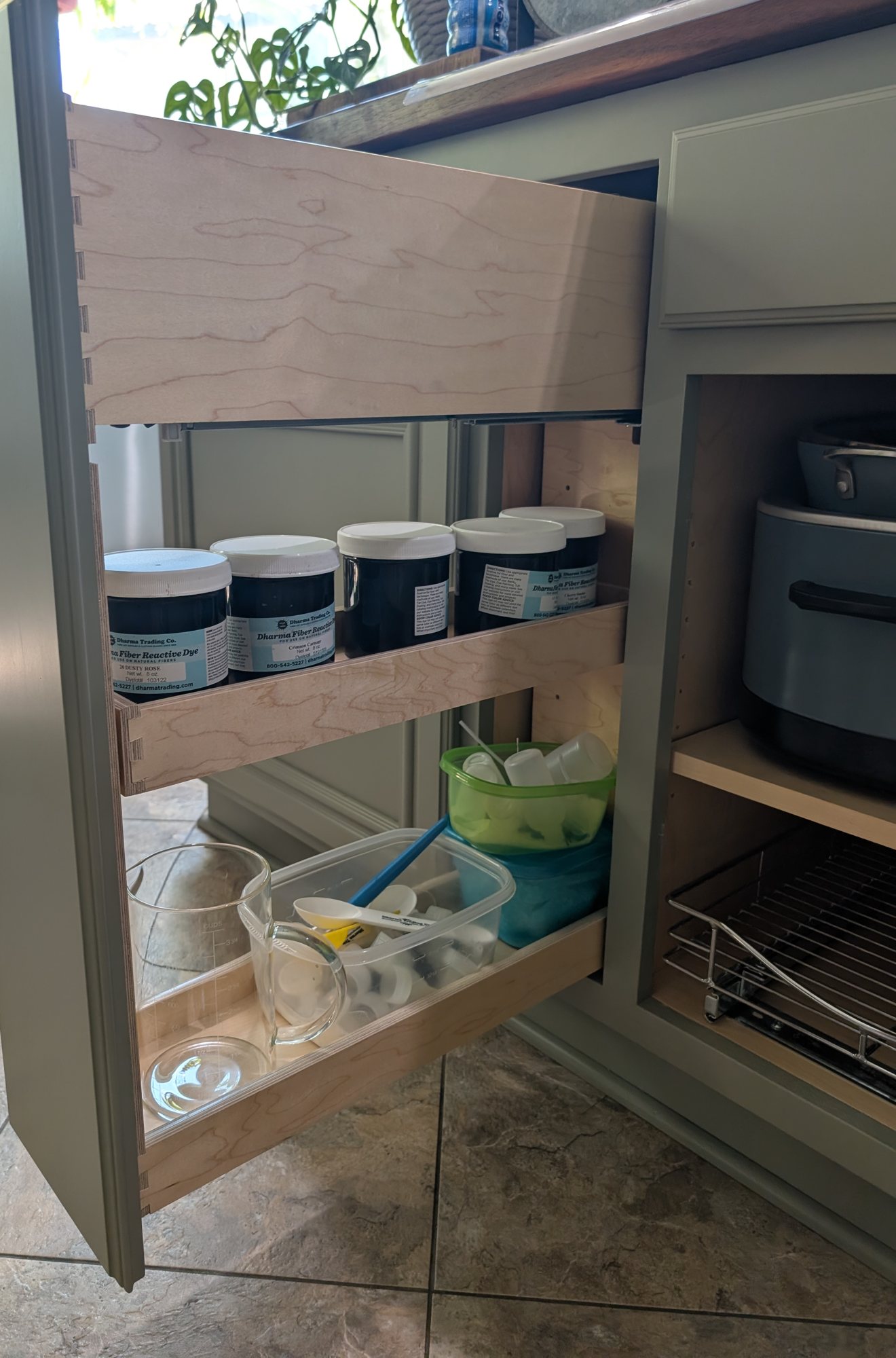
Here's what good looks like: pull the drawer with one finger and it rolls all the way out, even full. Let go near the end and it closes on its own, quietly. Look at the front and the gaps around it match the doors beside it. Look underneath and the slides are mounted to something solid.
That's the standard. Whoever you hire, whether a national franchise, a cabinet shop, or a finish carpenter like us, should be able to tell you exactly how they'll hit it. This guide gives you the checklist, the questions, and the paperwork to make sure they can.
What Excellent Looks Like
Use this as a checklist when you look at finished work, whether it's in your kitchen, a showroom, or a contractor's photos.
-
Full extension under load. The drawer pulls out far enough to reach the back, even with pots in it
-
Soft, even close. No slam, no bounce, no drift open
-
Square and level. The drawer doesn't rub, tilt, or rack (twist out of square) as it travels
-
Even gaps. New fronts line up with existing doors and drawers, with consistent spacing all around
-
Solid mounting. In face-frame cabinets, slides mount to blocking flush with the opening or to manufacturer rear brackets
-
Drawer boxes matched to the load. A named material and joinery suited to what goes in the drawer. Dovetailed Baltic birch is our preference for heavy pot drawers; a well-made lighter box can be fine for light use
-
A true color match. New fronts match your existing cabinets in daylight and at night
-
Clean finish on every face. Edges and backs of new fronts finished, not just the faces
What Adequate Looks Like — and Why It Isn't Enough
Adequate work opens and closes on day one. It just doesn't stay that way. Here's what minimum-effort retrofits tend to have in common.
-
Organizers sized to the nearest stock width, leaving gaps or rubbing the hinges
-
Slides screwed into the face frame or a thin cabinet side with no blocking
-
3/4-extension slides that leave the back of the drawer out of reach
-
Light-duty boxes on the heavy pot drawer, where the joints and bottom can loosen under load
-
New fronts finished in a close-enough color, with no matching method
None of those choices is automatically defective; the question is whether each one suits the load and the look you need. Where they don't, it doesn't show up in the photos. It shows up in year two, when the pot drawer sags and the color looks off under kitchen lights. For a broader look at telling real custom work from marketing, see our guide: Is Your Custom Built-In Really Custom?
The Installer Scorecard
Score each criterion 1 (red flag), 2 (vague or partial), or 3 (good answer).
| What to Evaluate | Ask This Directly | Good Answer vs. Red Flag |
|---|---|---|
| License | What's your CSLB license number? | Good: a number you can look up, active and in good standing. Red flag: "we don't need one for this." |
| Measuring | How do you measure each opening? | Good: in person, opening by opening, including hinges and obstructions. Red flag: "just send the cabinet sizes." |
| Drawer box | What is the box made of, and how are the corners joined? | Good: named material and joinery. Red flag: "standard boxes." |
| Slides | Which slide model, what extension, what load rating? | Good: brand, model, full extension, rated for the load. Red flag: "heavy-duty slides" with no specifics. |
| Mounting | How do you mount slides in a face-frame cabinet? | Good: blocking flush with the opening or rear brackets. Red flag: confusion about the question. |
| Fronts and finish | If doors become drawers, how do you match the profile and color? | Good: matched to your actual door, with a stated finish product and method. Red flag: "we'll get close." |
| Timeline | How long in the shop, and how long in my kitchen? | Good: separate numbers for each. Red flag: one vague total. |
| Exclusions | What isn't included? | Good: a written list. Red flag: "we'll figure it out." |
| Warranty | What's covered, for how long, and how do I get service? | Good: written terms with clear exclusions. Red flag: big promises, nothing in writing. |
Scoring: 9 criteria, 27 points possible. 24–27: a strong candidate. 18–23: ask follow-up questions in writing before you sign. Below 18: keep looking.
Questions to Ask Any Pull-Out Installer
-
What's your CSLB license number, and what classification is it?
-
Will you measure every opening in person before building anything?
-
What are the drawer boxes made of, and how are they joined?
-
Which slide brand and model are you using, and what's its load rating?
-
How will you mount slides in my face-frame cabinets?
-
If I convert doors to drawers, how will you match my door profile and paint?
-
Where is the finishing done, and what product is it?
-
How long is shop fabrication, and how long will you be in my kitchen?
-
What happens if you find water damage or a problem behind a cabinet?
-
What does your warranty cover, what does it exclude, and how do I request service?
What a Complete Quote and Contract Should Include
California's Contractors State License Board says a contract should contain all project details agreed upon by you and your contractor, including the work description, the contract price, the payment schedule, who pulls permits, start and completion dates, and the contractor's license number, address, and phone (CSLB Home Improvement Contracts guide). For a pull-out retrofit, make sure the quote also names:
-
Number and location of every pull-out or drawer
-
Drawer box material, thickness, and joinery
-
Slide brand, model, extension, and soft-close
-
Whether doors stay, or new fronts are built, and how they'll be matched
-
Finish product, color-match method, and where finishing happens
-
Exclusions: plumbing, electrical, countertop work, and repair of hidden damage
-
Shop fabrication time and on-site installation time, listed separately
-
Warranty length, coverage, exclusions, and service process
Two California rules worth knowing. The down payment "should never exceed 10 percent of the contract price or $1,000, whichever is less" (CSLB). And a home improvement contract must give you three business days to cancel, or five business days if you're 65 or older (CSLB guide). For a closer look at comparing line items, see how to compare quotes accurately
Red Flags
-
No license number, or a claim that the job is too small to need one. California requires a license for projects of $1,000 or more (CSLB)
-
A down payment request above CSLB limits
-
Quotes built from cabinet sizes without anyone measuring the openings
-
Generic hardware descriptions with no brand or rating
-
Finish described as "paint to match" with no method
-
No written exclusions
-
Pressure to sign the same day
-
A warranty promise that isn't in the contract
Many of the problems a good installer prevents are covered in the most common mistakes to watch for
Your Questions, Answered in Full
Franchise pull-out company or independent finish carpenter?
Both can do good work, and they're built differently. National pull-out franchises typically offer an in-home design consultation, field measuring, and organizers custom-manufactured to your openings, often in tiered product lines, with availability and specifications varying by local franchise (ThePricer). Their focus is pull-outs installed in your existing cabinets.
An independent finish carpenter builds drawer boxes, fronts, and cabinets in their own shop. That matters when the job goes beyond the box: converting doors to drawers with matched fronts, building new cabinets, or matching a custom paint color. Whichever you call, run the same scorecard. The questions don't change.
Do pull-outs come with a lifetime warranty?
Some products and companies advertise long warranties, but a longer warranty doesn't automatically mean better work. Read what it actually covers. The FTC's advice applies: a warranty must be available for you to read before you buy, and if a situation isn't listed, "assume they aren't covered" (FTC). Hardware brands often warrant the part separately from the installer's workmanship. Blum, for example, covers its products under "a limited warranty for the original homeowner against defects in materials and workmanship" (Blum).
Here's ours, straight. Holland & Sons warrants drawer and pull-out work for 2 years. Not lifetime. The reason is the use these drawers see. A deep pot drawer is the hardest-working box in the kitchen. Over the years, it gets loaded with cast iron, stacked mixing bowls, and small appliances, often well past what it was built for, and yanked open dozens of times a week. We build those drawers with dovetailed boxes and rated slides so they last. We just won't put a lifetime promise on a drawer we can't control the load on.
Does the consultation cost anything?
It depends on the company, so ask before you book. At Holland & Sons, estimates are free. When a project makes sense to move forward, the on-site visit is scheduled as a consult, where we measure every opening and check what's behind each cabinet.
How long does a pull-out installation take?
Separate the shop time from the time in your kitchen. Shop fabrication and finishing happen first, away from your home. Installation comes after. On Sapphire Rollouts, a project that included a new cabinet bank plus two retrofit drawers, the shop work took 2.5 days, 1.5 days building and 1 day finishing, and the on-site install took about six hours. A simple retrofit of existing cabinets typically installs in a few hours once the drawers are built. Every kitchen is different, so get both numbers in writing.
Do pull-out companies replace cabinets?
Pull-out retrofit companies generally work inside your existing cabinets rather than replacing them. If a cabinet box is damaged, or you need new cabinetry where none exists, you'll need someone who builds cabinets. Ask up front which kind of work the company does.
How do I know if the cabinets themselves are well built?
Ask whether they meet a recognized test standard. Cabinets certified through the KCMA program, for example, have drawers loaded at 15 pounds per square foot and cycled 25,000 times, and doors opened through a full 90-degree swing 25,000 times (KCMA). Custom shop work isn't usually certified, so ask the builder to explain the materials and joinery instead.
See This In Action — Sapphire Rollouts
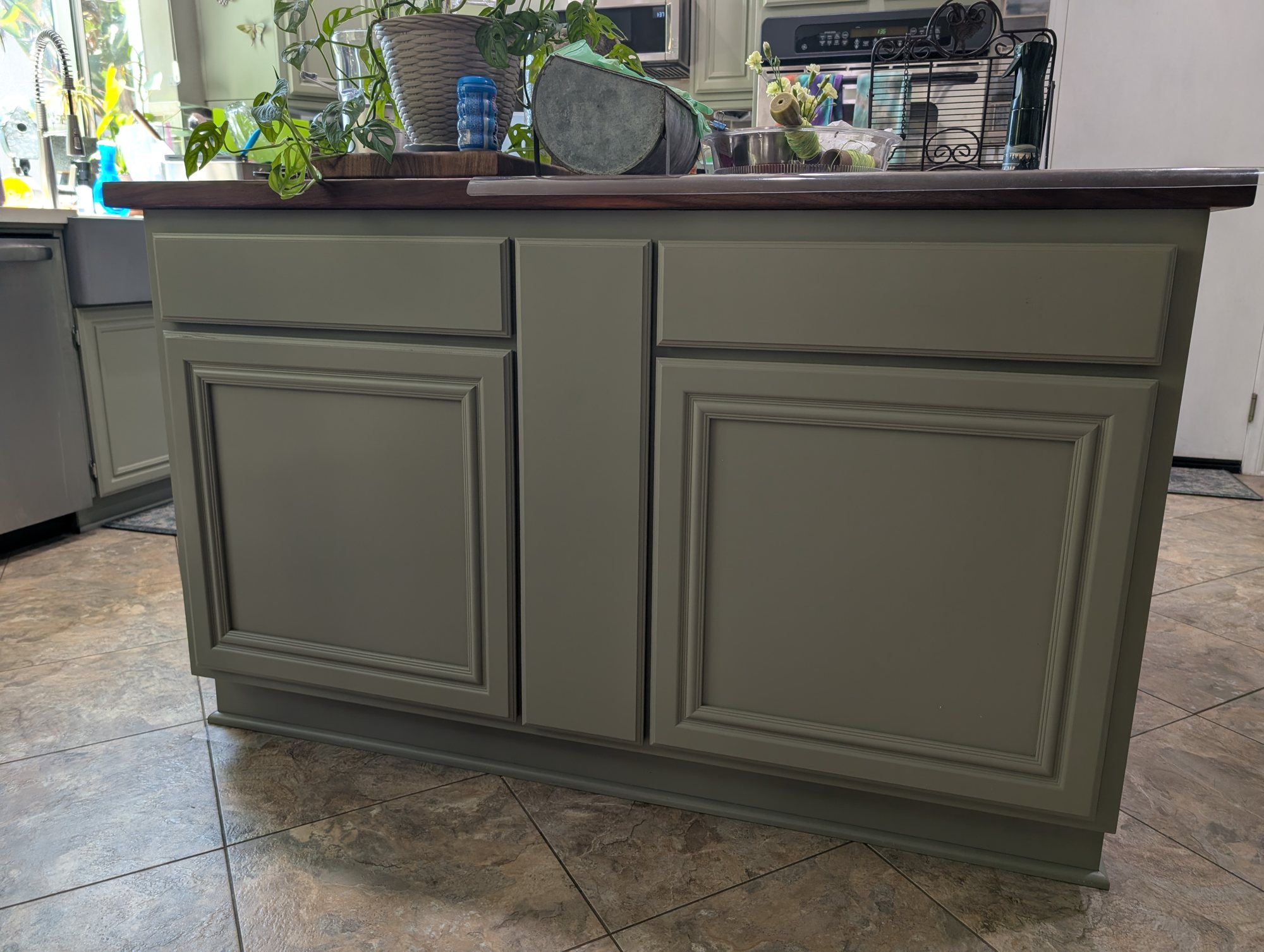
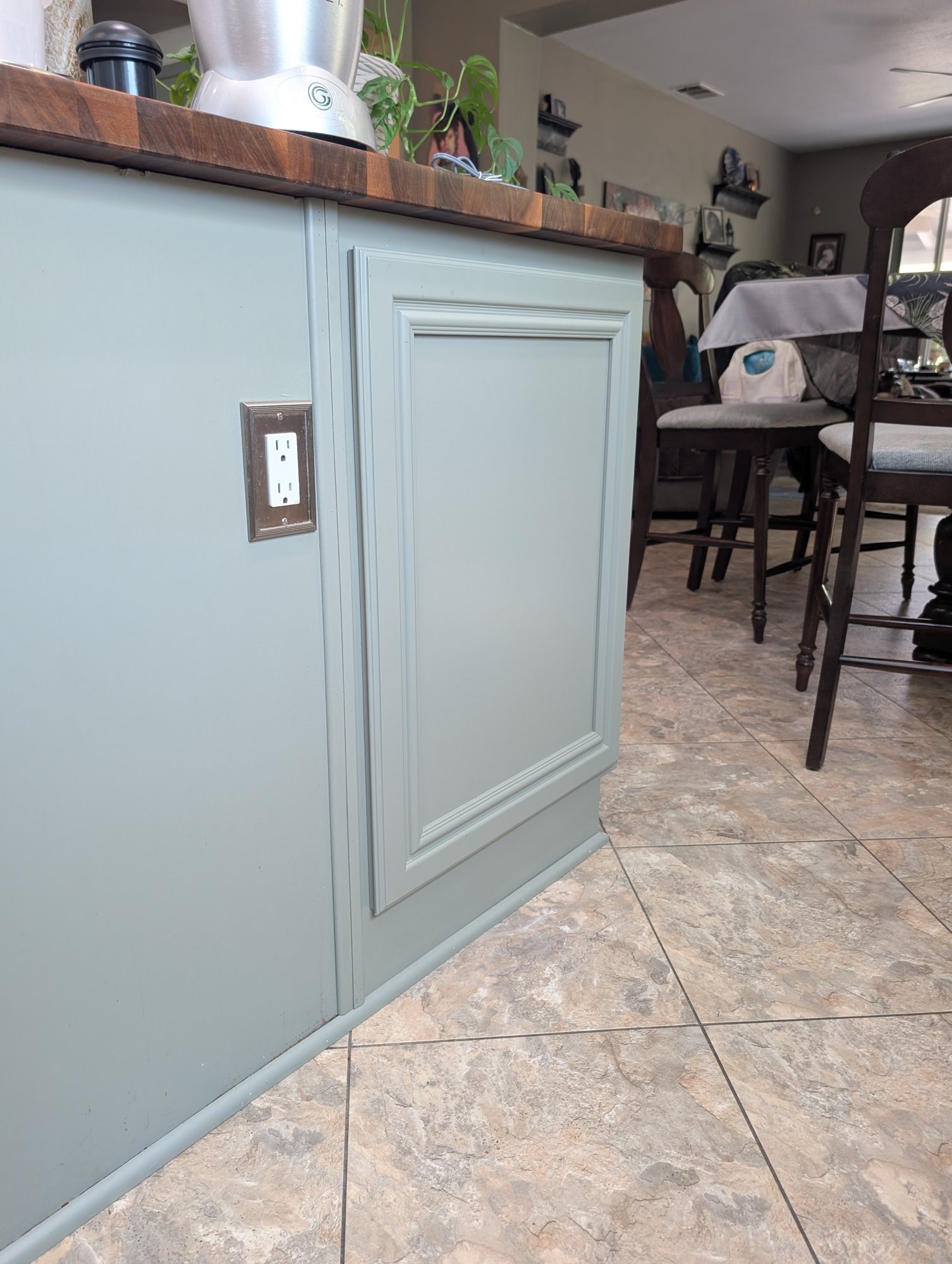
Every door, drawer front, and drawer box on Sapphire Rollouts in Menifee was drawn by hand at Brian's drafting table, sized to the island and matched to the existing kitchen before anything went to the shop. The paint color was matched to one of the homeowner's actual cabinet doors, borrowed and returned.
What we used on this project:
-
A hand-drawn layout specifying every front, box size, and door spec
-
Shop fabrication: 1.5 days building and 1 day finishing, all off site
-
About six hours on site for installation
-
Sherwin-Williams Emerald Urethane Trim Enamel, color-matched to the borrowed door
The project post shows the design sketch, photos, and the full scope. Link: the Sapphire Rollouts project in Menifee
New painted fronts also need time to cure before heavy use. Our guide on why painted built-ins chip covers what to expect in the first weeks.
The Holland & Sons Angle
On Sapphire Rollouts, every front and drawer box was drawn by hand before a single cut, and the paint was matched to a door borrowed from the homeowner's own kitchen. That's what we mean by built right: the decisions happen before the shop, so install day is just install day. You can check our license yourself on the CSLB website. When the company carries your family's name and your sons are learning the trade beside you, a written warranty is a promise the next generation inherits too.
Related Resources — Kitchen Cabinet Pull-Out Guide
This post is one part of a complete guide to adding pull-out storage in Inland Empire kitchens, built around a real Menifee project.
-
Sapphire Rollouts — Kitchen Cabinet Pull-Outs in Menifee, CA (project post) — The full project: photos, line-item investment, and timeline.
-
How Much Do Pull-Out Drawers for Existing Kitchen Cabinets Cost in Menifee and the Inland Empire? — Real investment numbers for retrofits, packages, and custom conversions — and what drives them.
-
Will Pull-Outs Work in My Existing Cabinets? What Goes Wrong and How to Know Before You Buy — A measurement checklist and the conditions that make or break a retrofit.
-
Roll-Out Shelves Behind Doors vs. Converting to Deep Drawers: Which Is Better for Your Base Cabinets? — A straight answer on which configuration fits how you cook.
-
Best Kitchen Cabinet Pull-Out Organizers: Which Type Is Right for Your Storage Problem? — Match the organizer and hardware to the storage problem you actually have.
-
Should You Turn an Unused Kitchen Island Overhang Into Cabinets? — When to trade island seating for storage, and when to keep the stools.
Choosing a Pull-Out Installer FAQ
Is a pull-out franchise or an independent carpenter better?
Neither is automatically better; they work differently. Pull-out franchises focus on custom-manufactured organizers installed in existing cabinets. Independent finish carpenters build boxes, fronts, and cabinets in their own shop, which matters for door-to-drawer conversions, new cabinetry, or custom color matching. Use the same scorecard for both.
Do pull-out drawers come with a lifetime warranty?
Some products and companies advertise long or lifetime warranties, but coverage is what matters. Read the written terms, including exclusions and how service works; the FTC advises assuming anything not listed isn't covered. Holland & Sons warrants drawer and pull-out work for 2 years, because heavy-use pot drawers often get loaded well beyond their design over time.
Does a pull-out consultation cost anything?
It depends on the company, so ask before booking. At Holland & Sons, estimates are free, and the on-site visit is scheduled as a consult where every opening gets measured and checked.
How long does a pull-out installation take?
On-site installation is usually short, but shop fabrication comes first. On Sapphire Rollouts in Menifee, which included a new cabinet bank plus two retrofit drawers, shop work took 2.5 days and the on-site install took about six hours. A simple retrofit of existing cabinets typically installs in a few hours once built. Ask for both numbers separately.
Do pull-out companies replace cabinets?
Pull-out retrofit companies generally work inside existing cabinets rather than replacing them. If a box is damaged or you need new cabinetry, you need a builder who makes cabinets. Ask which kind of work a company does before scheduling.
Do I need a licensed contractor for a pull-out retrofit in California?
Yes, if the project is $1,000 or more, under AB 2622, effective January 1, 2025. A license is also required for smaller jobs that need permits or workers. Look up any license at the CSLB website before signing.
How much can a contractor ask for as a down payment in California?
A down payment on a California home improvement contract should never exceed 10 percent of the contract price or $1,000, whichever is less, according to the CSLB. Be cautious of anyone asking for more.
Put Us Through the Scorecard
We'd rather earn the job by answering every question above than by talking fast. Start at hsconstruct.com/contact, tell us about your kitchen, and send a few photos if you have them. Estimates are free. If it's a fit, we'll schedule an on-site consult and give you the box material, slides, finish, timeline, exclusions, and warranty in writing.
Want to see this advice applied to a real project? Here's the full breakdown: the Sapphire Rollouts project in Menifee
We work in Menifee, Murrieta, Temecula, Perris, Riverside, and the greater Inland Empire. Follow Holland & Sons on our social channels for more finished projects, and see our custom cabinetry page for everything we build.
951-338-8058 | brian@hsconstruct.com | hsconstruct.com | CSLB #1123738
More Than Just Pull-Out Retrofits
Pull-out retrofits done right are a point of pride for us, and they're one small part of what Holland & Sons builds. Brian has been a finish carpenter since 1991, and his sons now work alongside him, which means every room in your home is fair game.
If your space needs more than a pull-out retrofit, here's what else we build:
-
Kitchen and bathroom remodels — full custom cabinetry, tile work, and finish carpentry from demo to done
-
Coffered ceilings — grid beam systems that add architectural depth to any room, sized and proportioned to the space
-
Wainscoting and wall paneling — classic raised panel, flat panel, board-and-batten, and shiplap applications
-
Reclaimed wood accents — feature walls, fireplace surrounds, and detail work using salvaged material with real character
-
Beam wraps — hollow wood wraps that give exposed beams the look of solid timber without the structural engineering
-
Crown molding, baseboards, and trim carpentry — the details that make a house feel finished, from a single room to a whole home
-
Cased openings and interior door replacements — clean transitions between spaces that most contractors overlook
-
Custom built-in entertainment walls and bookshelves — designed by hand, built in the shop, installed to last
Wood, proportion, and rooms that feel right — that's what we do.
hsconstruct.com
About the Author
Brian Holland is the owner and lead carpenter of Holland & Sons Construction, a family-run finish carpentry and general contracting company serving Riverside County and the Inland Empire. He entered the trade at 17, learned on the job, and has spent 35 years building the kind of work that makes rooms feel right — often before a homeowner can articulate why. His sons now apprentice alongside him on every project. Holland & Sons is based in Perris, CA and licensed by the CSLB (#1123738).
This guide is part of our custom built-ins & cabinetry series.
Learn more about Custom Built-Ins & CabinetryHave a project in mind? Let's start a conversation.
Tell us what you are thinking about and we will give you a straight answer about scope, timeline, and investment.
Start a Conversation