Roll-Out Shelves Behind Doors vs. Converting to Deep Drawers: Which Is Better for Your Base Cabinets?
Quick Answer
For the base cabinets you use every day in an Inland Empire kitchen, deep drawers with their own fronts are the better choice: one motion opens them, no hinges get in the way, and you lose less width than you do with roll-outs behind doors. Roll-out shelves behind doors make sense when you want to keep the existing doors, hold the investment down, or store lighter items in a cabinet you use less often.
Key Takeaways
-
Deep drawers win for heavy, daily-use cabinets: one pull, no door, no hinge clearance
-
Roll-outs behind doors keep your kitchen's look and avoid matching new fronts
-
Drawer conversions are a larger investment mainly because of the new fronts and finishing, not the drawer itself
-
Accessibility guidance from NKBA and AARP favors drawers for pots and pans
-
See this in action: Sapphire Rollouts, Menifee
If it's the cabinet you open ten times a day, convert it to a drawer. That's the short answer.
Roll-out shelves behind a door are a real improvement over a fixed shelf. But you still open the door, then pull the shelf, and on a double-door cabinet you open two doors first. Woodworkers have been saying it for years. One put it plainly on the WOODWEB knowledge base: "It never made sense to me to have to open two doors so you could pull out a sliding shelf."
That doesn't make roll-outs wrong. There are kitchens in Menifee, Temecula, and Murrieta where keeping the doors is exactly the right call. Here's how to tell which one you have.
The Direct Answer
For the most common Inland Empire situation, a production kitchen with door-and-shelf base cabinets holding pots, pans, and small appliances, Brian recommends converting the busiest cabinets to deep drawers with matching fronts. A drawer opens in one motion and pulls the whole load to you. Doors with roll-outs add a step, a hinge to clear, and a little more lost width.
Roll-outs behind doors are the right call when the doors need to stay: you love the look, you don't want to match new fronts to an older finish, the cabinet holds lighter things, or the budget is tight. They're also common in sink bases, where plumbing makes a full drawer harder.
Side-by-Side Comparison
| Factor | Roll-Out Shelves Behind Doors | Deep Drawers With Their Own Fronts |
|---|---|---|
| Investment | Lower. Existing doors stay; no new fronts or finishing | Higher. New matched fronts and finishing on top of the drawer |
| Access | Two steps: open door, pull shelf. Two doors on wider cabinets | One step: pull the front |
| Usable width | Less. Slides plus hinge clearance and spacers | More. No hinges to clear |
| Installation complexity | Moderate. Must clear hinges and face frame | Higher. Box, slides, and a front that lines up with the doors around it |
| Maintenance | Hinges and slides both need occasional adjustment; shelves can scuff door backs | Slides only; fronts may need minor alignment over time |
| Longevity | Good with rated slides and real drawer boxes | Good with rated slides and real drawer boxes |
| Dry inland climate | Plywood boxes stay stable; hinges are one more moving part | Plywood boxes stay stable; fronts must be finished on all sides |
| Best home style | Kitchens where the existing door look should stay untouched | Any style; reads like furniture-grade drawer banks |
| Resale appeal | No reliable data either way; a daily-use upgrade, not a resale strategy | No reliable data either way; a daily-use upgrade, not a resale strategy |
Why This Question Comes Up So Often
Most tract kitchens in the Inland Empire, the early-2000s communities and the newer DR Horton, Lennar, and Richmond American neighborhoods, came with doors and an adjustable shelf in nearly every base cabinet. Contractors on the Fine Homebuilding forum describe the door-and-shelf cabinet as having started as a cost-saving measure. It works fine until you're on your knees digging for the lid behind the stockpot.
The generic advice online usually stops at "drawers are more convenient." What it skips is that converting a door cabinet in an existing kitchen means building a front that matches doors that are already there, in a color that's already there. That's where the drawer option's added investment really lives, and it's why the decision is closer than it looks.
Are Drawers Really Better Than Doors in Base Cabinets?
For heavy, frequently used storage, yes, and accessibility guidance backs it up. An NKBA article on accessible kitchen design recommends "large, deep drawers in base cabinets instead of shelves" (NKBA). AARP's HomeFit guide notes that storing pots and pans in drawers is "friendlier to backs and knees" (AARP), and Texas A&M AgriLife Extension advises using drawers to hold pots, pans, and even dishes (Texas A&M AgriLife).
The honest counterpoint: drawers aren't automatically easier for everyone. A New Zealand building research guide notes drawers are easier for wheelchair users "but may not be for elderly or ambulant people with a disability" (BRANZ). Pull-out shelves are also widely recommended for easier reach (University of Kentucky Extension). Either one beats a fixed shelf.
Which Holds More: Roll-Out Shelves or Drawers?
In the same face-frame cabinet, a drawer usually holds more. Roll-outs behind doors have to clear the hinges, which typically means spacers on each side. One cabinetmaker on WOODWEB estimates that with roll-outs in face-frame cabinets, you "lose an additional four inches of storage per pull out" (WOODWEB). That's one cabinetmaker's observation, not a standard allowance. Your number depends on your hinges, how the slides mount, and how the drawer box is built. In common face-frame setups, though, the direction holds: no hinges to clear usually means a wider drawer.
A worked example (hypothetical cabinet)
Here's how the math works on one representative cabinet. These numbers are illustrative, not measurements from a real kitchen.
| Step | Deep Drawer Conversion | Roll-Out Behind Doors |
|---|---|---|
| Clear opening between face frame stiles | 15 inches | 15 inches |
| Hinge clearance (spacers so the shelf clears the hinges) | None, the doors come off | Assume 1 inch per side = 2 inches |
| Space left for drawer and slides | 15 inches | 13 inches |
| Slide clearance, Blum TANDEM plus (opening minus 42 mm, about 1-5/8 inches) | About 1-5/8 inches | About 1-5/8 inches |
| Approximate inside drawer width | About 13-3/8 inches | About 11-3/8 inches |
Hypothetical example. Hinge clearance varies by hinge type and door overlay, and slide clearance varies by slide model. Slide figure from Blum's TANDEM plus BLUMOTION installation instructions.
Why Would Anyone Pay More for a Drawer Conversion?
Because the drawer you use ten times a day should take one motion, not two or three. Over years of cooking, that adds up to real convenience. The added investment is mostly the outside of the cabinet: a new front matched to your door profile and color, finished to blend in. If those fronts aren't matched well, the conversion looks like a patch. If they are, it looks like the kitchen came that way. For real pricing examples for each option, see our investment guide: Pull-Out Drawer Retrofit Cost in Menifee
Other Options Worth Knowing About
| Option | What It Solves | What It Does Not Solve | Right For |
|---|---|---|---|
| Wire basket pull-outs | Light items, airflow, visibility | Heavy loads; small items fall through | Pantry goods, cleaning supplies |
| Retail bolt-in organizers | Quick, low-investment upgrade | Custom fit, hinge clearance, heavy loads | Standard openings, light use, handy homeowners |
| Specialty organizers (trash, narrow, corner) | One specific storage job | General pot and pan storage | A known problem cabinet |
| Full cabinet replacement | Every box, door, and layout at once | Keeps nothing you already paid for | Boxes that are damaged or a full remodel |
The organizer types have their own tradeoffs. See how organizer selection differs between these options. If you're comparing a retrofit to replacing the cabinets, our guide to custom vs. semi-custom vs. stock cabinets explains the replacement side.
The Decision Framework
Keep the doors and add roll-outs when
-
You like the look of your kitchen and don't want new fronts in it
-
The cabinet stores lighter items you use a few times a week
-
It's a sink base or a cabinet with plumbing you'd rather not build around
-
You want the lower-investment option in a cabinet you use less
-
Your existing finish would be hard to match, like an aged stain
Convert to deep drawers with matching fronts when
-
It's the pot, pan, or appliance cabinet you open every day
-
You're tired of opening doors to reach a shelf
-
Hinge clearance would take too much width with roll-outs
-
Your fronts are paint-grade and can be color-matched
-
Kneeling or bending is getting harder
Before you choose either, make sure the cabinets themselves are good candidates. Our checklist in the most common retrofit mistakes to watch for walks through it: Will Pull-Outs Fit My Existing Cabinets?
See This In Action — Sapphire Rollouts
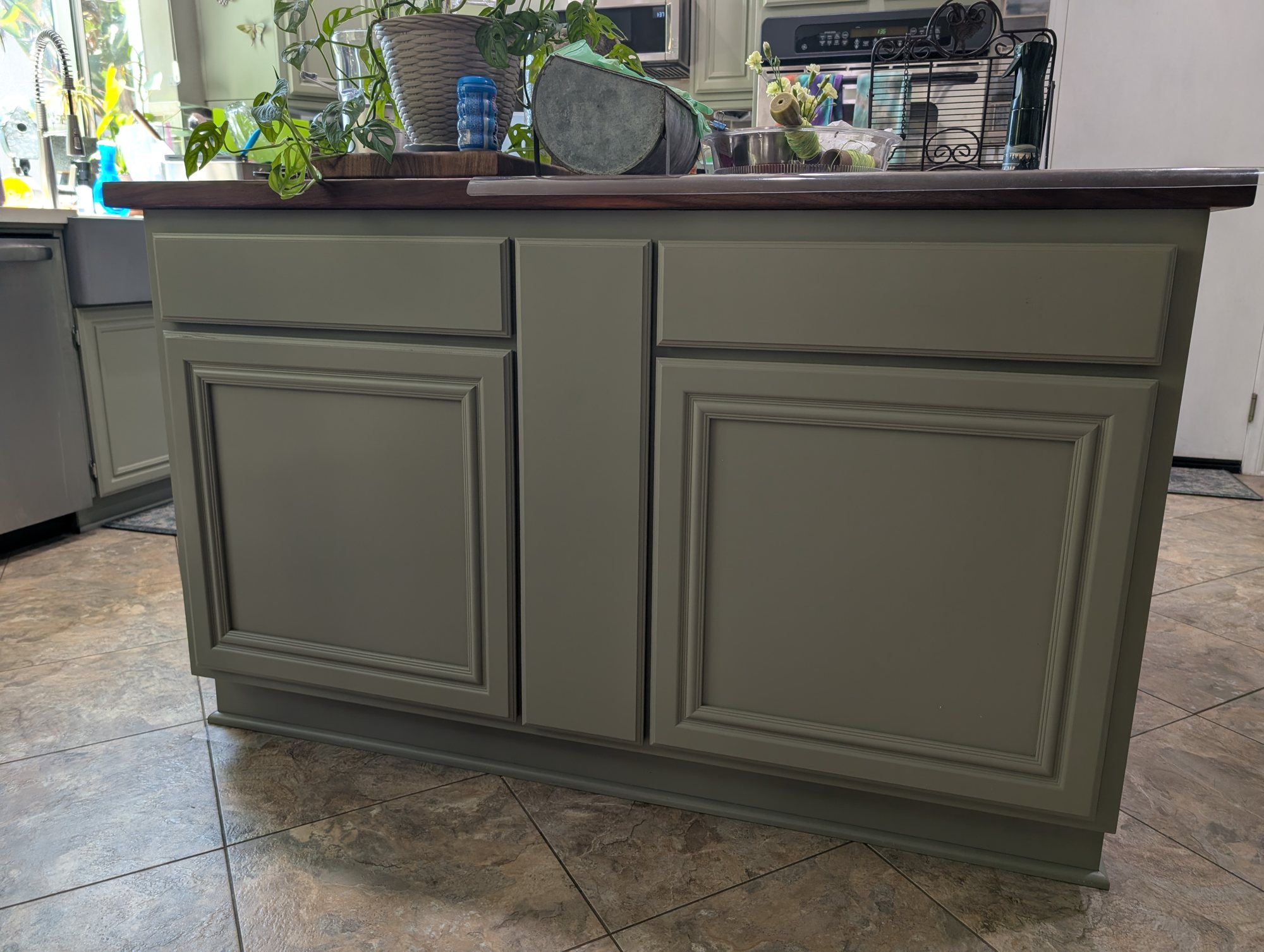
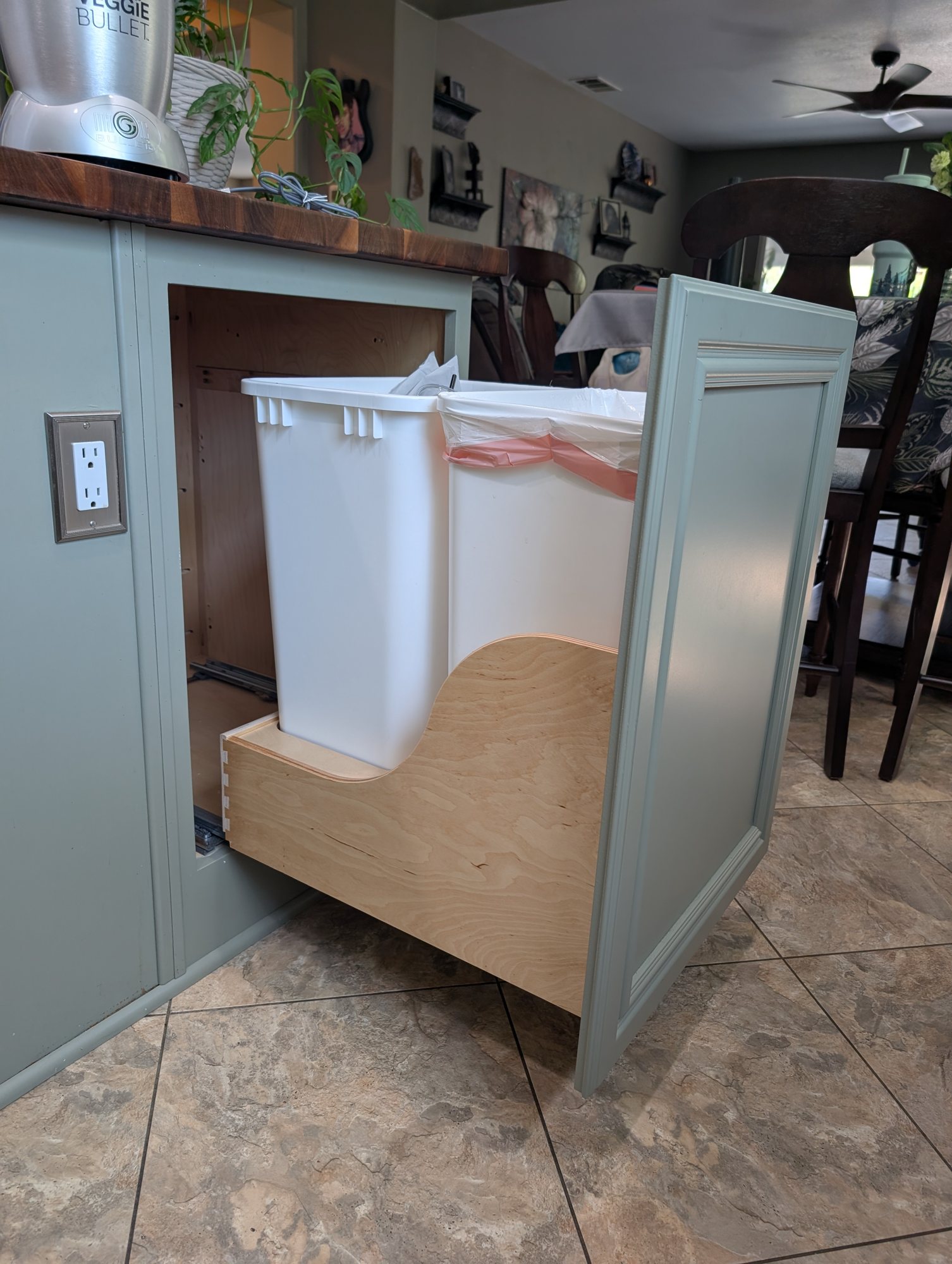
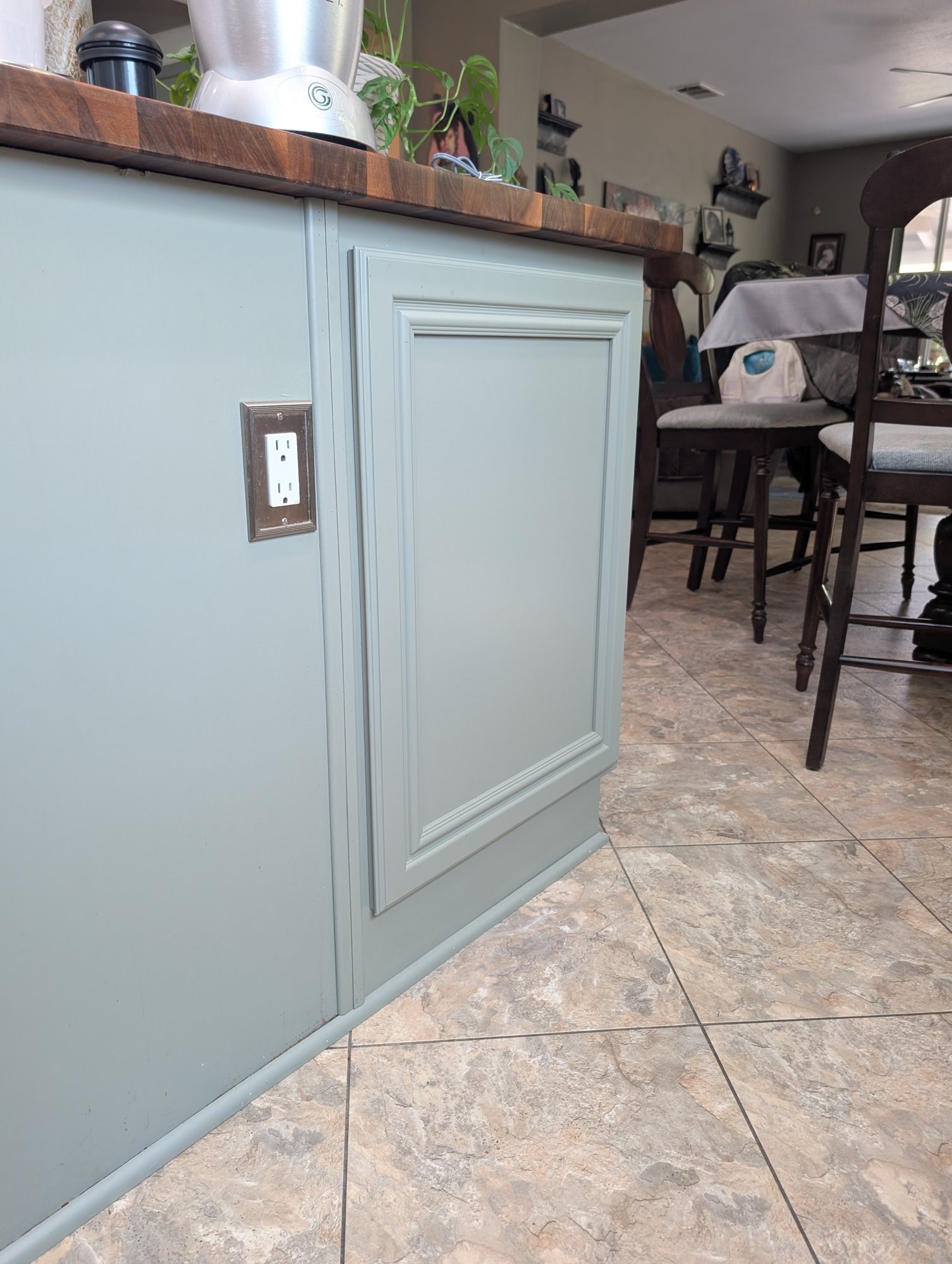
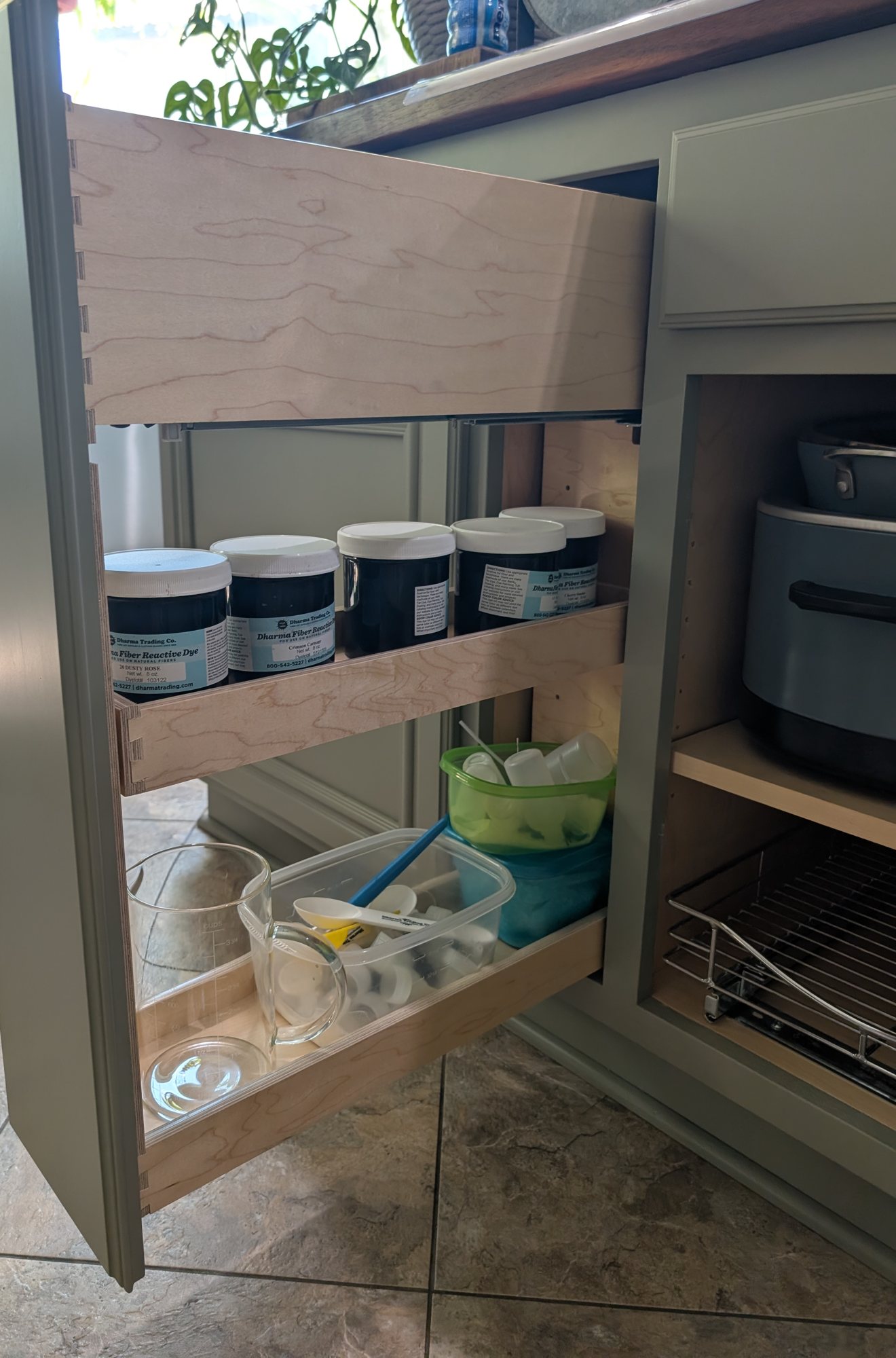
On one side of the Sapphire Rollouts island in Menifee, two swinging-door cabinets with adjustable shelves became two tall, deep drawers. The row of small drawer fronts above them stayed exactly where it was, so the kitchen still looks familiar, just without the kneeling.
What we used on this project:
-
Doors removed and replaced with paint-grade drawer fronts matched to the existing door style
-
Dovetailed 5/8-inch Baltic birch drawer boxes for heavy pots, pans, and lids
-
Blum TANDEM full-extension, soft-close undermount slides
-
Sherwin-Williams Emerald Urethane Trim Enamel, custom color-matched to the existing cabinets
The project post has photos of both drawers open, the full scope, and the investment breakdown. Link: the Sapphire Rollouts project in Menifee
How Each Option Holds Up in the Inland Empire
Our summers are hot and dry, and plenty of kitchens in Perris, Menifee, and Temecula swing with the air conditioning. That matters more for what the drawer is made of than for which option you pick. Multi-ply plywood drawer boxes like Baltic birch stay stable through those swings. Solid-wood boxes move more with the seasons.
For drawer conversions, the new fronts need to be finished on every face, back and edges included, so they don't take on and give off moisture unevenly. For roll-outs behind doors, the extra moving parts are the hinges, which loosen with heavy daily use and need an occasional turn of a screwdriver. Neither option is fragile here. Both just need to be built for the conditions.
The Holland & Sons Angle
On Sapphire Rollouts, the swinging doors on the busy side of the island came off, and two deep drawers went in under the original row of small drawers. That choice wasn't about style. It came from how the homeowner actually used that cabinet. That's the question that should drive this decision in every kitchen, In a family shop, it's the question that gets handed down before any technique does: watch how a family really cooks before you decide what the cabinets should do.
Related Resources — Kitchen Cabinet Pull-Out Guide
This post is one part of a complete guide to adding pull-out storage in Inland Empire kitchens, built around a real Menifee project.
-
Sapphire Rollouts — Kitchen Cabinet Pull-Outs in Menifee, CA (project post) — The full project: photos, line-item investment, and timeline.
-
How Much Do Pull-Out Drawers for Existing Kitchen Cabinets Cost in Menifee and the Inland Empire? — Real investment numbers for retrofits, packages, and custom conversions — and what drives them.
-
Will Pull-Outs Work in My Existing Cabinets? What Goes Wrong and How to Know Before You Buy — A measurement checklist and the conditions that make or break a retrofit.
-
Best Kitchen Cabinet Pull-Out Organizers: Which Type Is Right for Your Storage Problem? — Match the organizer and hardware to the storage problem you actually have.
-
How to Tell If a Kitchen Cabinet Pull-Out Retrofit Is Built Right — and How to Choose an Installer — A scorecard, quote checklist, and warranty questions for any installer.
-
Should You Turn an Unused Kitchen Island Overhang Into Cabinets? — When to trade island seating for storage, and when to keep the stools.
Roll-Outs vs. Drawers FAQ
Are drawers better than doors in base cabinets?
For heavy, frequently used items, yes. Drawers open in one motion, pull the entire load to you, and avoid hinge clearance problems. NKBA and AARP accessibility guidance both favor drawers for pots and pans. Doors with roll-outs are still a strong choice for lighter items or when you want to keep your existing doors.
Do roll-out shelves or drawers hold more?
In face-frame cabinets, drawers usually hold more because they don't have to clear door hinges. Roll-outs behind doors often need spacers on each side, and one cabinetmaker on the WOODWEB knowledge base estimates that gives up about four inches of width per pull-out. Your actual loss depends on your hinges and frame.
Why are drawer conversions a bigger investment than roll-outs?
Converting a door cabinet to a drawer adds a new front that has to match your existing door profile and paint color, plus finishing. Roll-outs behind doors keep the existing doors, so that work disappears. The drawer box and slides themselves are similar in both.
Should I use wire baskets or solid roll-outs?
Wire baskets suit light items like pantry goods and cleaning supplies, where airflow and visibility help. Solid drawer boxes suit heavy pots and small appliances and don't let small items fall through. Many kitchens use both, matched to each cabinet's job.
Should I retrofit my cabinets or replace them?
Retrofit when the cabinet boxes are sound, square, and dry, and you like the kitchen's layout. Replace when the boxes are damaged, the layout doesn't work, or you're remodeling anyway. A retrofit keeps the cabinets, counters, and backsplash you already paid for.
Do roll-out shelves scratch cabinet doors?
They can, if they're installed too close to the door or the hinges aren't cleared properly. Contractors on the Fine Homebuilding forum report seeing scratches on the back of doors from roll-out shelves. Proper spacers and careful slide placement prevent it, and drawer conversions avoid the issue entirely.
Not Sure Which Way to Go?
Tell us which cabinets frustrate you and what goes in them. Start at hsconstruct.com/contact, describe your kitchen, and send a few photos if you have them. Estimates are free. If it makes sense, we'll schedule an on-site consult and help you decide cabinet by cabinet.
Want to see this advice applied to a real project? Here's the full breakdown: the Sapphire Rollouts project in Menifee
We work in Menifee, Murrieta, Temecula, Perris, Riverside, and the greater Inland Empire. Follow Holland & Sons on our social channels for more finished work, and see our custom cabinetry page for everything we build.
951-338-8058 | brian@hsconstruct.com | hsconstruct.com | CSLB #1123738
More Than Just Drawers and Roll-Outs
Drawer conversions and roll-outs are everyday work for us, and they're one small part of what Holland & Sons builds. Brian has been a finish carpenter since 1991, and his sons now work alongside him, which means every room in your home is fair game.
If your space needs more than better base cabinets, here's what else we build:
-
Kitchen and bathroom remodels — full custom cabinetry, tile work, and finish carpentry from demo to done
-
Coffered ceilings — grid beam systems that add architectural depth to any room, sized and proportioned to the space
-
Wainscoting and wall paneling — classic raised panel, flat panel, board-and-batten, and shiplap applications
-
Reclaimed wood accents — feature walls, fireplace surrounds, and detail work using salvaged material with real character
-
Beam wraps — hollow wood wraps that give exposed beams the look of solid timber without the structural engineering
-
Crown molding, baseboards, and trim carpentry — the details that make a house feel finished, from a single room to a whole home
-
Cased openings and interior door replacements — clean transitions between spaces that most contractors overlook
-
Custom built-in entertainment walls and bookshelves — designed by hand, built in the shop, installed to last
Wood, proportion, and rooms that feel right — that's what we do.
hsconstruct.com
About the Author
Brian Holland is the owner and lead carpenter of Holland & Sons Construction, a family-run finish carpentry and general contracting company serving Riverside County and the Inland Empire. He entered the trade at 17, learned on the job, and has spent 35 years building the kind of work that makes rooms feel right — often before a homeowner can articulate why. His sons now apprentice alongside him on every project. Holland & Sons is based in Perris, CA and licensed by the CSLB (#1123738).
This guide is part of our custom built-ins & cabinetry series.
Learn more about Custom Built-Ins & CabinetryHave a project in mind? Let's start a conversation.
Tell us what you are thinking about and we will give you a straight answer about scope, timeline, and investment.
Start a Conversation