How to Vet a Cabinet Maker for a Custom Built-In in the Inland Empire
| Quick Answer: To vet a cabinet maker in Menifee, judge specifics over adjectives. Ask what the boxes and doors are made of by name, whether the unit is shop-built, who finishes it, what hardware they use, and what the quote excludes. A strong shop answers every question without hesitating and puts the scope in writing. The uncomfortable truth: most states don’t license cabinetmakers, so "custom" is not a quality guarantee — which is exactly why knowing what good looks like protects your investment. |
Key Takeaways
• Evaluate a cabinet maker by named materials, real joinery, shop fabrication, and a written quote — not vague adjectives.
• Most states don’t license cabinetmakers, so a CSLB license is a floor, not a quality guarantee — verify it, then evaluate the work.
• A complete quote names material, fabrication, finish, hardware, timeline, exclusions, and warranty.
• Shop-finished cabinetry generally outlasts on-site brushed finishes.
• Holland & Sons (CSLB #1123738) shop-builds, scribes to the wall, and installs to last — the standard this post describes.
The best way to protect yourself when hiring for a custom built-in isn’t to find the lowest bid — it’s to learn what good looks like, so you can recognize it (or its absence) in any quote you read. That’s the whole game. A homeowner who knows the difference between a void-free plywood box and a particle-core one, between a shop finish and a brushed one, between a real exclusions list and a vague handshake, can vet a contractor in a single conversation.
And you need that skill more than you might think, because of an uncomfortable fact: most states don’t require a license to build cabinets, and "custom" is not a regulated standard. The quality of your built-in comes down to the skill and integrity of the person building it. A CSLB license is a real and necessary floor in California — always verify it — but it doesn’t certify craftsmanship.
So this post teaches you what excellent work actually looks like, the exact questions to ask, what a real quote contains, and the red flags that should make you slow down. Use it to evaluate anyone — us included.
What Excellent Looks Like
A truly well-built mudroom built-in shares a set of visible and structural traits you can use as a checklist when you look at finished work:
-
Void-free plywood boxes — the structural casework is built from a high-layer, gap-free core that stays flat and holds fasteners.
-
Solid-wood face frames and doors — a real hardwood frame, with paint-grade panels held inside it, not a slab of MDF.
-
A shop-applied finish — even, hard, and durable, with no brush marks or dust nibs.
-
Scribed-tight fit — the unit meets the walls with no gaps, looking original to the house even though the walls aren’t square.
-
Quality hardware — named, full-extension soft-close slides and soft-close hinges that operate smoothly every time.
-
Real millwork — details like a miter-folded bench or custom dividers that a stock unit never includes.
If a finished unit has all of these, you’re looking at excellent. If it’s missing several, you’re looking at adequate — which is a different thing.
What Adequate Looks Like — and Why It Isn’t Enough
Adequate is what gets delivered when a contractor does the minimum. It looks fine in the showroom and in the first listing photo. The trouble shows up over time. Adequate uses lighter boxes that sag under a few years of household load, slab MDF doors that chip and swell, a brushed finish that wears at every touch point, and stock sizing that leaves filler gaps where the unit meets an out-of-square wall.
The long-term cost is the catch. Adequate work often needs replacing in a handful of years, which means you pay twice — and the second time includes tearing out the first. This isn’t a knock on any specific shop; it’s honest consumer education. The point is to know what you’re buying, because "custom" and "cheap" can both appear on the same quote while describing very different builds.
The Contractor Scorecard
Use this to evaluate any cabinet maker. Ask each question directly, and score the answer 1 to 3: 3 for a confident, specific answer; 2 for partial; 1 for vague or evasive. Six criteria, 18 points possible.
| What to Evaluate | Ask This Directly | Good Answer vs. Red Flag |
| Box material | What are the cabinet boxes made of? | Good: a named void-free plywood. Red flag: "good wood" or MDF for structure. |
| Door construction | How are the doors built? | Good: solid hardwood frame, panel named. Red flag: slab MDF, no frame. |
| Fabrication | Is it shop-built or built in place? | Good: shop-built, then installed. Red flag: stick-built in the room. |
| Finishing | Who finishes it, and where? | Good: controlled shop spray, process explained. Red flag: brushed on site, vague. |
| Hardware | What slides and hinges do you use? | Good: brand named (e.g., Blum), soft-close. Red flag: "quality hardware," unnamed. |
| Scope in writing | What does the quote exclude? | Good: a written exclusions list. Red flag: "don’t worry about it." |
Scoring: 15–18 means a shop that knows the work and stands behind it. 10–14 means ask more questions before committing. Below 10 means keep looking — the gaps will become your problem.
Questions to Ask Before You Hire
Beyond the scorecard, these separate a shop that knows custom built-ins from one that’s guessing.
-
How long have you been building custom cabinetry, and can you show work similar to mine?
-
Are you licensed, and what is your CSLB number?
-
Do you provide shop drawings before fabrication?
-
How do you handle an out-of-square wall — do you scribe the unit?
-
What is your payment structure, milestone to milestone?
-
What warranty do you offer, and how do you handle issues after install?
-
Who is my point of contact, and does it change during the project?
A great shop welcomes every one of these. The best professionals want informed clients, because informed clients lead to better outcomes for everyone. For the build-side problems good vetting helps you avoid, see the most common mistakes to watch for.
What a Complete Quote Should Include
If a quote is missing any item on this checklist, ask for it in writing before you sign.
-
Material specification — box, frame, door, and panel materials named.
-
Fabrication method — shop-built versus in-place stated.
-
Finish system — the product and where it’s applied.
-
Hardware — brand and type for slides, hinges, and pulls.
-
Timeline — a realistic minimum-to-maximum window.
-
Exclusions list — a written statement of what’s not covered.
-
Warranty — what’s covered, for how long, and how claims are handled.
On the money side, don’t just chase the lowest figure — ask how pricing is structured so you can compare quotes accurately. The cheapest quote is often the one that quietly excludes the most.
Red Flags to Watch For
-
Vague material answers — "good wood," "quality plywood" — with no names.
-
Pressure to sign immediately or make quick decisions.
-
A request for full payment upfront instead of milestone-based progress payments.
-
No written exclusions list.
-
No shop drawings before fabrication.
-
Reluctance to show previous work or provide references.
-
Stick-building in place when shop fabrication is the standard.
-
A disorganized shop — if they don’t keep their own space in order, why expect care with yours?
See This In Action — Rhapsody Ct. Mudroom
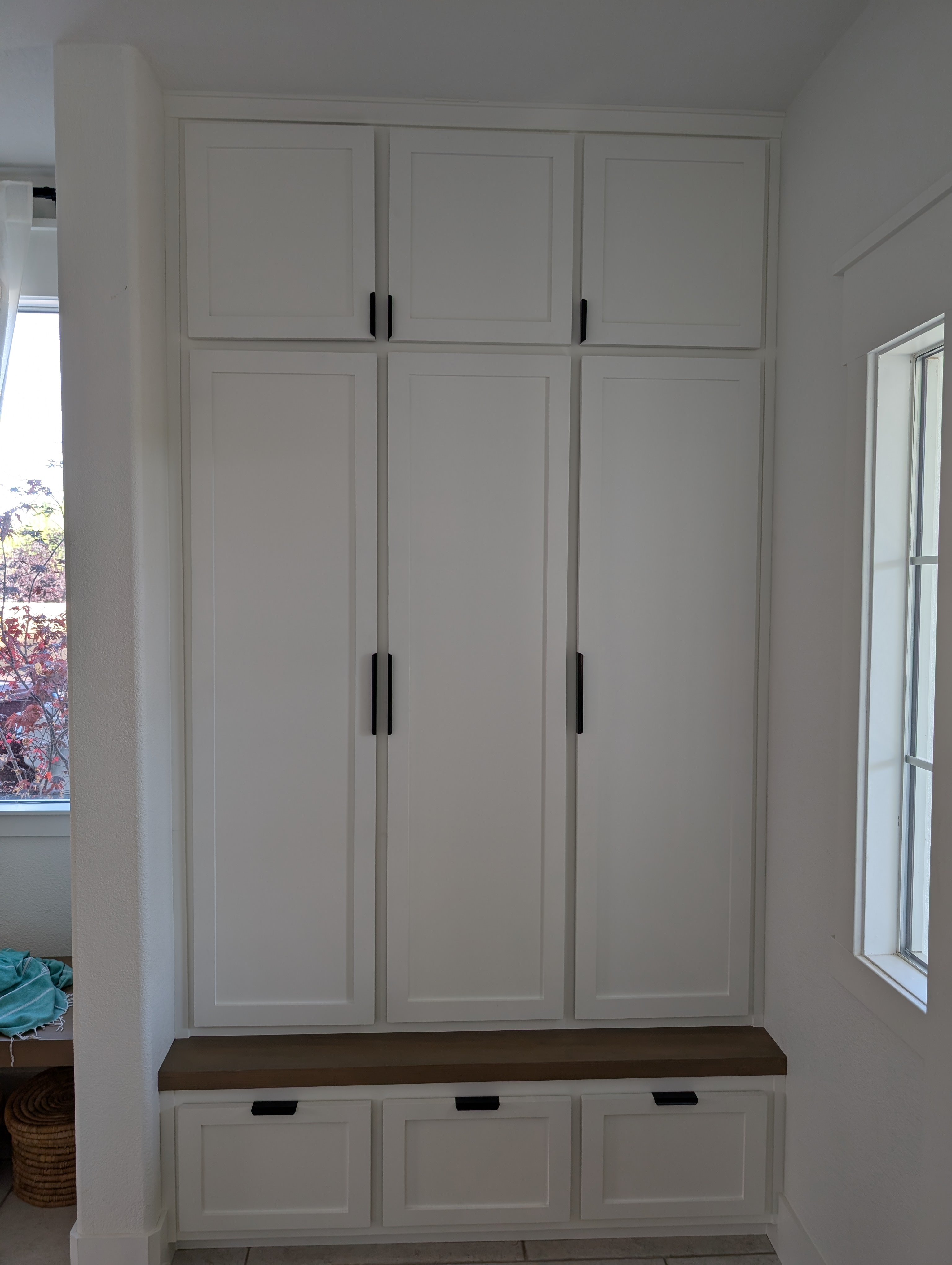
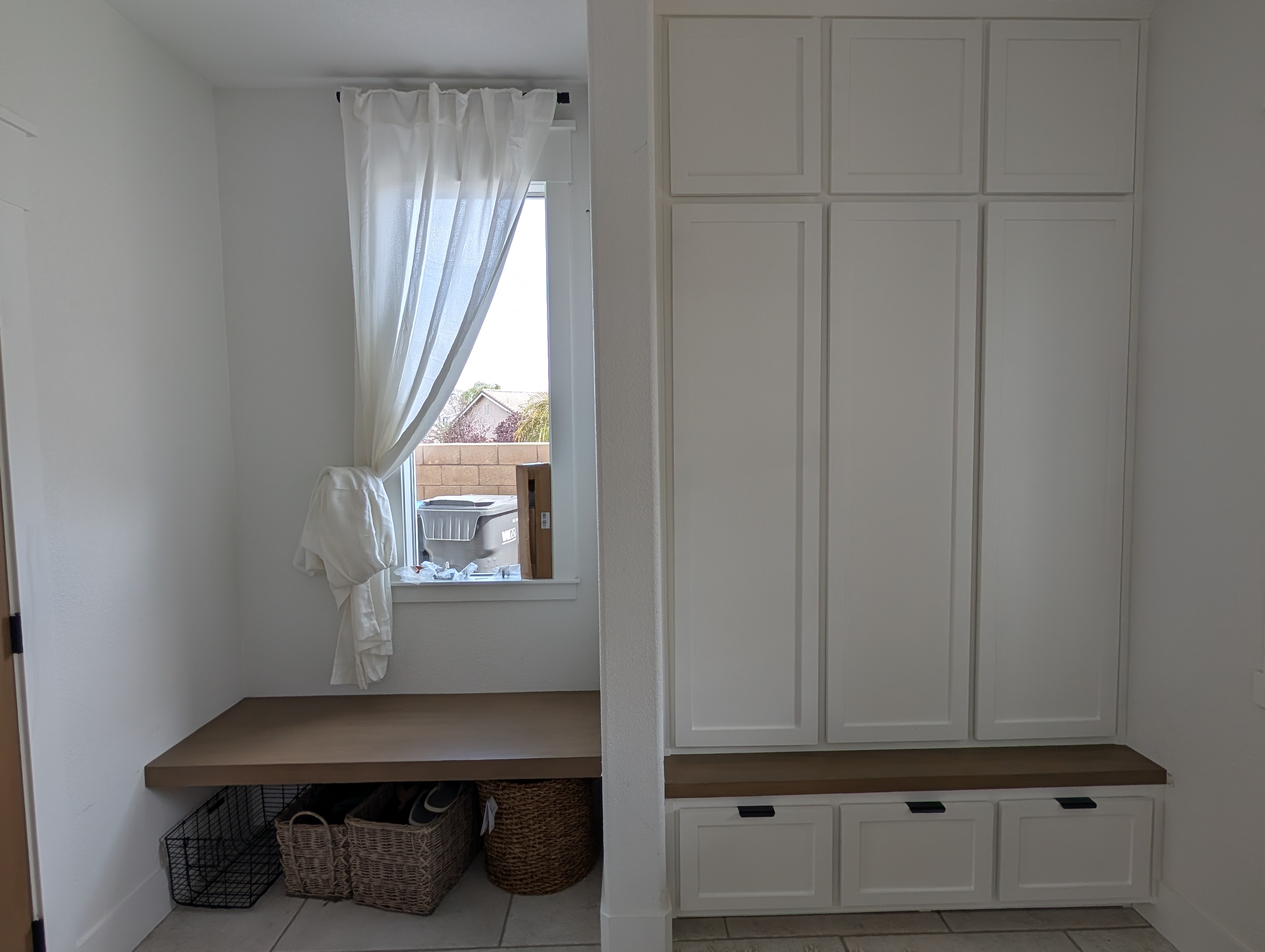
What separates excellent execution from adequate isn’t just the wood — it’s the planning, fabrication, and logistics behind it. The Rhapsody Ct. unit came in at an estimated 500 to 600 pounds. A quarter-ton, 9-foot cabinet can’t simply be carried in and stood up. We engineered it as two stacked boxes — a lower drawer box with an upper box set on top — specifically so a piece that size could go into the room and stand plumb in a single day. That’s what excellent looks like upstream of the finish: a shop thinking about install-day reality before the first board is cut.
What we used on this project:
-
A two-part stacked carcass engineered for installability
-
Baltic birch boxes, glued, screwed, and dadoed
-
Blum full-extension soft-close hardware throughout
-
A single-day, scribed-tight install — CSLB #1123738
At the link: photos of the stacked carcass and install, the full investment, and the build timeline.
The Holland & Sons Angle
The Rhapsody Ct. cabinet weighed an estimated 500 to 600 pounds, and that number drove a decision most homeowners never see: we built it as two stacked boxes instead of one monolith. A single 9-foot, quarter-ton carcass is a beautiful idea and an impossible install — you can’t get it through a door, around a corner, or standing plumb without wrecking either the cabinet or the house. Two components solved all of it, and the finished unit went in plumb in one day. That’s the part of "excellent" that lives in planning, not finish. On this job, one of Brian’s sons helped set the upper box onto the base and bring it plumb — learning that great cabinetry isn’t only built in the shop, it’s built to be installed, and the smartest decisions happen long before install day.
Related Resources — Mudroom Built-In Guide
This vetting guide is one piece of a full Holland & Sons mudroom cluster. Here’s where to go next.
-
How Much Does a Custom Mudroom Built-In Cost? — real ranges and a $12,912 line-item breakdown.
-
What Goes Wrong With Mudroom Built-Ins — the build-side problems good vetting helps you avoid.
-
Custom Built-In vs. IKEA/Prefab Lockers — when prefab is fine and when it isn’t.
-
The Best Materials for a Mudroom Built-In — which woods and finishes a good shop specifies.
-
How to Plan a Mudroom Layout Around Your Routine — zoning storage for how your family actually moves.
Frequently Asked Questions
What questions should I ask a cabinet maker before hiring?
Ask what the boxes and doors are made of by name, how they’re assembled, whether the unit is shop-built or stick-built in place, who does the finishing, what hardware they use, and what the quote excludes. A strong cabinet maker answers each without hesitating and explains why those choices affect durability and cost. Vague answers — "good wood," "quality hardware" — are the warning sign. The goal is to separate a shop that knows the work from one that’s guessing, and the specifics are how you tell them apart.
Do cabinet makers need a license in California?
Here’s the uncomfortable truth: most states don’t require a specific license to build cabinets, and the building code rarely covers cabinetry, so quality comes down to the individual’s skill and integrity. In California, work above a dollar threshold generally requires a licensed contractor, and you should always verify a CSLB license number — Holland & Sons is CSLB #1123738. But "custom" is not a regulated quality standard. That’s exactly why vetting matters so much: the license is a floor, not a guarantee, and you have to evaluate the work itself.
What should a custom cabinet quote include?
A complete quote should specify material by name, fabrication method, the finish system and where it’s applied, hardware brand, a timeline, a written exclusions list, and warranty terms. If any of those is missing, ask for it in writing before signing. Quotes that look cheaper often are cheaper because they quietly exclude installation, hardware, or finishing. The exclusions list is the single most revealing line — a shop that tells you upfront what isn’t covered is a shop that won’t surprise you with change orders later.
Should cabinets be finished in a shop or on site?
Shop-finished cabinetry is generally preferred because the finish is applied in a controlled environment, producing a harder, more durable, more even result than brushing on site amid dust and uneven conditions. A spray-applied catalyzed or urethane finish in a shop outlasts a hand-brushed one. The exception is on-site work like a custom stain match, which sometimes has to happen in the home against existing furniture. The right answer is a shop that controls its finishing process and explains exactly how and where it’s done.
How do I know if a cabinet maker is actually good?
You judge a cabinet maker by specifics, not adjectives: named materials, real joinery, shop fabrication, a clear process, a written quote with exclusions, and a portfolio of similar completed work. Watch how they answer questions — a good one welcomes detailed questions because informed clients lead to better outcomes. Watch the small signals too: do they show up on time, keep their own shop organized, and treat your project as interesting rather than an inconvenience? Skill plus process plus communication is the combination that predicts a great result.
What are the red flags when hiring a cabinet maker?
The biggest red flags are vague material answers, pressure to sign immediately, no written exclusions, a request for full payment upfront, and reluctance to show previous work. A normal payment structure is a deposit, progress payments tied to milestones, and a final payment on completion — not everything before the first cut. Other warning signs include no shop drawings, an unwillingness to name hardware brands, and stick-building in place when shop fabrication is the standard. Any one of these is reason to slow down and ask more.
How much of my budget should custom cabinetry be?
Cabinetry is typically the single largest line in a custom build, so it deserves the most scrutiny, not the least. Rather than chasing the lowest number, ask how pricing is structured and what each quote includes, so you’re comparing like for like. One quote can look cheaper only because it omits installation, hardware, or finishing. A reputable shop explains its cost drivers — material grade, finish complexity, hardware, customization — in plain language and puts the scope in writing. For real ranges, see our mudroom cost guide.
Hold Us to This Standard
Everything in this post is the bar we build to, and we’d invite you to hold any contractor — us included — to it. If you’d like to talk through your project with a shop that answers every one of these questions without hesitating, start at hsconstruct.com/contact. Fill out the form, describe your space, and upload any inspiration photos. We’ll walk through the build, the materials, and the details most contractors never mention before any work begins.
Holland & Sons serves Menifee, Murrieta, Temecula, Perris, Riverside, and the greater Inland Empire. Follow our work on social media to see the standard in action.
951-338-8058 | brian@hsconstruct.com | hsconstruct.com | CSLB #1123738
More Than Just a Cabinet Maker
Custom mudroom and entry built-ins are a signature project at Holland & Sons — but they’re one chapter in a much longer story. Brian and his sons have been finish carpenters since 1991, which means every room in your home is fair game.
If your space needs more than a built-in, here’s what else we build:
-
Kitchen and bathroom remodels — full custom cabinetry, tile work, and finish carpentry from demo to done
-
Coffered ceilings — grid beam systems that add architectural depth to any room, sized and proportioned to the space
-
Wainscoting and wall paneling — classic raised panel, flat panel, board-and-batten, and shiplap applications
-
Reclaimed wood accents — feature walls, fireplace surrounds, and detail work using salvaged material with real character
-
Beam wraps — hollow wood wraps that give exposed beams the look of solid timber without the structural engineering
-
Crown molding, baseboards, and trim carpentry — the details that make a house feel finished, from a single room to a whole home
-
Cased openings and interior door replacements — clean transitions between spaces that most contractors overlook
-
Custom built-in entertainment walls and bookshelves — designed by hand, built in the shop, installed to last
Wood, proportion, and rooms that feel right — that’s what we do.
hsconstruct.com
About the Author
Brian Holland is the owner and lead carpenter of Holland & Sons Construction, a family-run finish carpentry and general contracting company serving Riverside County and the Inland Empire since 1991. He entered the trade at 17, learned on the job, and has spent 35 years building the kind of work that makes rooms feel right — often before a homeowner can articulate why. His sons now apprentice alongside him on every project. Holland & Sons is based in Perris, CA and licensed by the CSLB (#1123738).
Related project
This guide is part of our mudrooms & storage series.
Learn more about Mudrooms & StorageHave a project in mind? Let's start a conversation.
Tell us what you are thinking about and we will give you a straight answer about scope, timeline, and investment.
Start a Conversation