
How to Hire a Finish Carpenter for Custom Wood Walls and Built-Ins in the Inland Empire
| Quick Answer: To hire a finish carpenter for custom wood walls and built-ins in the Inland Empire, verify their CSLB license, review photos of similar completed work, and judge their quote on specifics — material grade, fabrication method, fitting approach, and a clear exclusions list. Excellent work shows up in the details you can't see: balanced layout, templated cuts with no cover trim, and clean joinery. On expensive material, hiring genuine skill isn't a premium — it's insurance against a costly failure. |
Key Takeaways
-
Excellent custom wood work shows in invisible details: balanced layout, templated cuts with no filler trim, and tight joinery.
-
A complete quote names material grade, species, fabrication method, fitting approach, finish system, timeline, and exclusions.
-
The cheapest bid is often a warning sign — on expensive material, a low-bidder who fails frequently can't afford to make it right.
-
Verify any contractor's license free through the CSLB; Holland & Sons holds license #1123738 and has worked Riverside County since 1991.
The best way to hire a finish carpenter is to learn what excellent work actually looks like — because once you can recognize it, evaluating a contractor becomes straightforward. This guide is built to teach you exactly that. Not which company to call, but what good looks like, what to ask, and what should make you walk away. If a contractor meets that standard, you've found your person, whoever it is.
Custom wood walls and built-ins are unusual among home projects because so much of the quality is hidden. A finished feature wall looks effortless. What you can't see from across the room is whether the courses were planned to balance, whether the cuts were templated or covered with trim, whether the shelves are solid wood fitted with a scribe gauge or a hollow box stuck to drywall. The difference is enormous, and it's invisible until something goes wrong — or until you know what to look for.
Brian Holland has been a finish carpenter in Riverside County since 1991, and the standards below are the ones he holds his own work to. Use them to evaluate anyone — including us.
What Excellent Looks Like
A truly well-executed custom wood wall or built-in has these marks, every one of which you can check on finished work:
-
Courses run dead-level and continuous across the whole wall — including across cabinets and openings, where the lines align across separate zones so the eye reads one continuous board.
-
The top and bottom courses are close to the same width — proof the layout was planned, not started with a full board and ended with a sliver.
-
Wood meets cabinets, shelves, and trim cleanly with no cover molding hiding rough cuts — each board was templated and scribed to fit.
-
Floating shelves are solid stock that meet adjacent surfaces tight, with no caulk or filler fudging the joint, and no visible bracket.
-
Fasteners are hidden — blind-nailed where possible, and the rare face nail tucked into a knot or weathered streak.
-
Built-ins are shop-built to fit the exact space, with solid hardwood faces and crown, not stock boxes shimmed into place.
What Adequate Looks Like — and Why It Isn't Enough
Here's what gets delivered when a contractor does the minimum, so you can spot it. The courses drift slightly because no laser line was set. The bottom board is full width and the top is a thin ripped sliver, because the layout wasn't planned. Strips of cover trim or scribe molding appear wherever the wood meets a cabinet or a corner — that trim is hiding rough cuts. Shelves are hollow boxes or thin stock, with a bead of caulk where they meet the wall. Fasteners show as a row of filled nail holes across clean boards.
None of this fails immediately, which is the trap. It looks acceptable on handover day. But it reads as 'off' even to people who can't say why, it cheapens an expensive material, and the shortcuts that were taken to hit a low price tend to surface as problems later. Adequate is what you get when price was the only thing that mattered. On a feature that's meant to be the centerpiece of a room for years, adequate is a poor bargain.
The Contractor Scorecard
Score each contractor 1 to 3 on every criterion — 1 for a weak or evasive answer, 2 for acceptable, 3 for a strong, specific answer. A perfect score is 18. Anything 15 or above is a strong candidate; 10–14 means proceed with caution and get specifics in writing; below 10, keep looking.
| What to Evaluate | Ask This Directly | Good Answer vs. Red Flag |
| Relevant experience | Have you done reclaimed wood walls or built-ins like mine? | Good: shows photos of similar work. Red flag: 'wood is wood, we'll figure it out.' |
| Layout method | How do you plan the course layout? | Good: describes balancing top to bottom with a laser line. Red flag: no method mentioned. |
| Fitting approach | How do you fit boards around cabinets and outlets? | Good: templating and scribing, no cover trim. Red flag: 'we trim it out.' |
| Material honesty | Is the wood authentic, aged, or faux — and how is it treated? | Good: names it exactly, confirms fumigation. Red flag: vague 'reclaimed.' |
| Quote completeness | What does the quote include and exclude? | Good: itemized scope and exclusions. Red flag: lump sum, no detail. |
| License & insurance | What's your CSLB number, and are you insured? | Good: provides it, checks out. Red flag: hesitates or it's inactive. |
Questions to Ask a Contractor
Beyond the scorecard, these questions quickly separate the carpenters who know reclaimed and custom work from those who are guessing:
-
Can I see photos of reclaimed wood walls or built-ins you've actually completed?
-
How will you keep the courses level across the whole wall, including around the cabinets?
-
How will you balance the top and bottom courses so the wall doesn't end in a sliver?
-
How is the wood being treated against insects, and how long will it acclimate?
-
Are the shelves solid wood, and how do they mount?
-
How will you fit the wood around the cabinets and outlets — templated, or trimmed out?
-
What exactly is included in this quote, and what's excluded?
-
What's your CSLB license number?
What a Complete Quote Should Include
Use this as a checklist. If a quote is missing any of these, ask for it in writing before you sign:
-
Material grade and species named explicitly (authentic reclaimed, aged, or new; walnut, oak, maple).
-
Fabrication method — shop-built versus assembled on site, and how built-ins are constructed.
-
Fitting approach — templated and scribed, or trimmed out.
-
Mounting method for any shelves or cabinets.
-
Finish or paint system, including who supplies and applies it.
-
Timeline, including any material acclimation period.
-
A clear exclusions list — what's not in the price (electrical, flooring, owner-provided items).
-
Any warranty on the work.
7 Red Flags in a Carpentry Quote
These are the specific warning signs that should give you pause. Any one of them is worth a direct question; several together is a reason to look elsewhere:
-
No material specifications. The quote says 'reclaimed wood' but never names the grade, source, or species. You can't compare it, and you don't know what you're getting.
-
No wood species listed. For shelves and built-ins, species drives both cost and performance. Its absence means the contractor hasn't specified the job.
-
No mounting method specified. Solid shelves and built-ins need real support. A quote silent on how things attach is hiding a structural question.
-
No shop-fabrication detail. Custom built-ins should be shop-built to fit. If the quote doesn't say how cabinets or shelves are made, expect stock boxes.
-
Vague allowance language. 'Material allowance: TBD' is where overruns hide. Allowances should be specific numbers tied to specific selections.
-
A lump sum with no breakdown. One number for the whole job means you can't tell what's included or compare it fairly to another bid.
-
A price well below every other bid. On expensive material, the lowest bid usually signals cut corners or a contractor who can't actually execute the work.
Red Flags Beyond the Quote
Watch how a contractor communicates, too. These behavioral signals matter as much as the paperwork:
-
Reluctance to provide a license number or references.
-
Pressure to sign quickly or pay a large deposit up front.
-
Vague, hand-wavy answers to specific process questions.
-
No photos of similar completed work.
-
Dismissiveness about layout, acclimation, or material treatment — the things that actually matter.
See This In Action — The Broken Twig Project, Norco
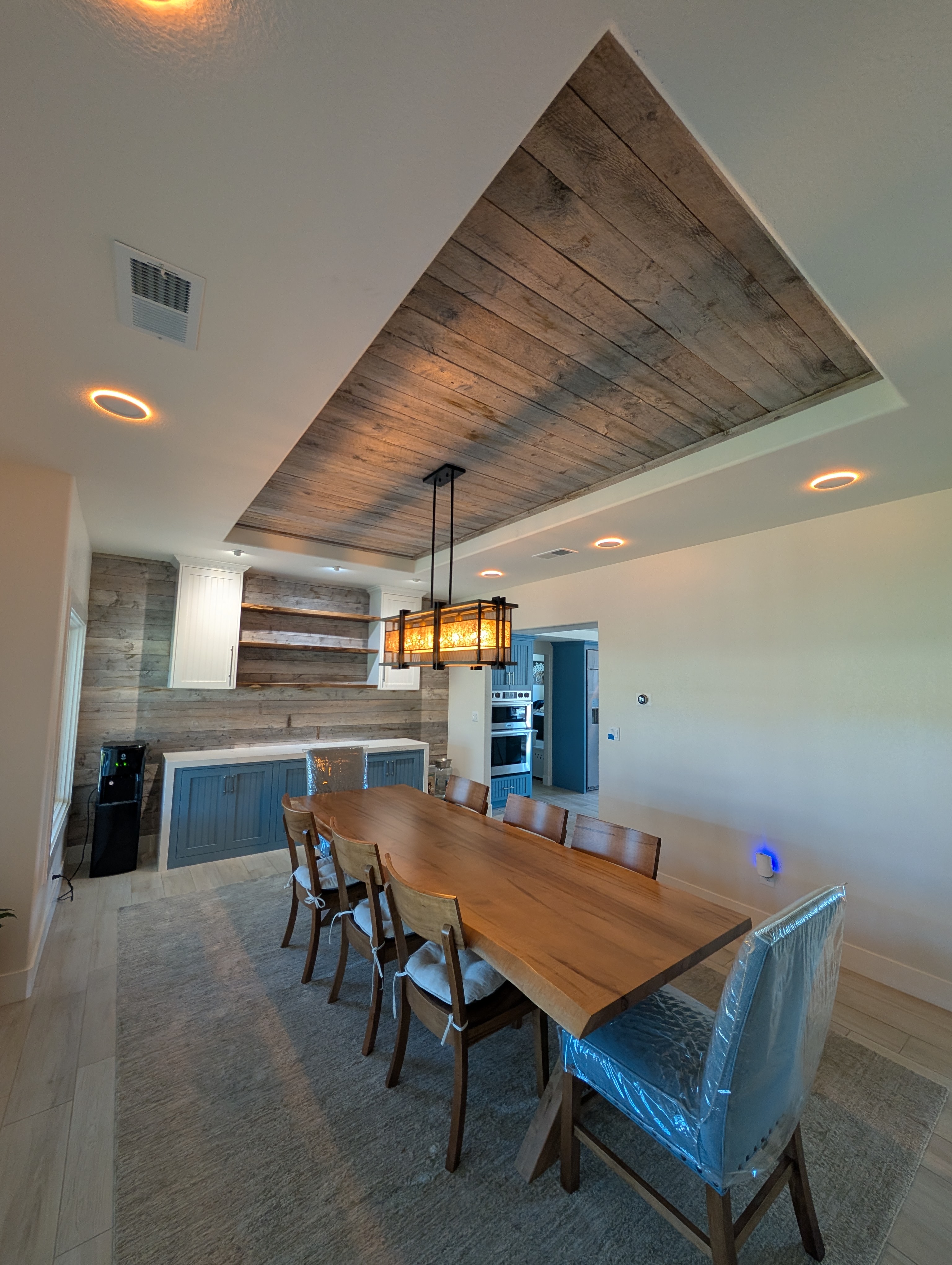
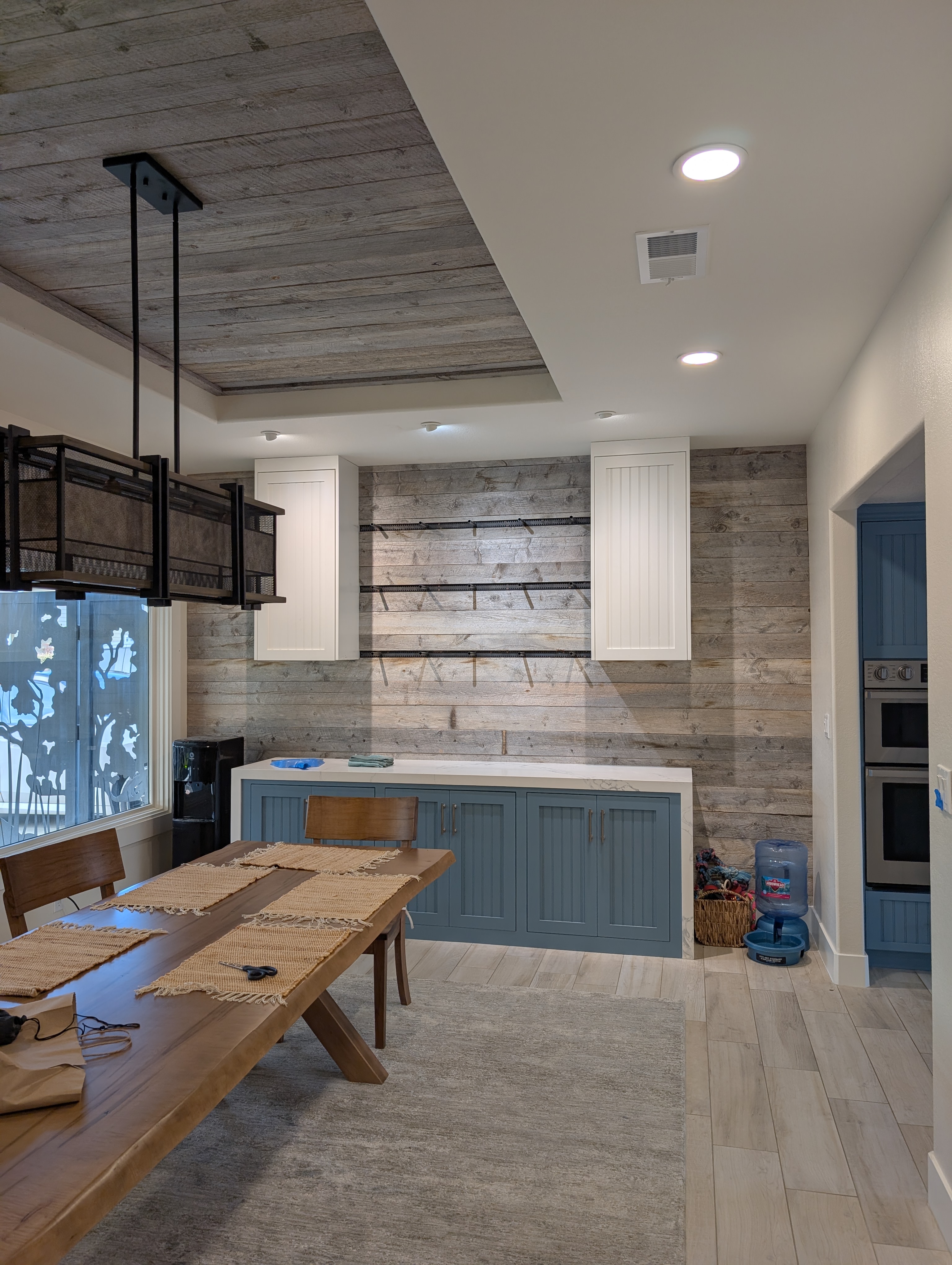
On the Broken Twig project, the live-edge walnut shelves worked out to roughly $1,000 each as solid, one-piece slabs — and material like that is completely unforgiving. One bad cut and somebody's out a thousand dollars. Here's the part homeowners don't think about until it's too late: the low-bid contractor who botches a slab like that usually can't afford to make it right, so he disappears. You're left with a ruined piece, a half-finished wall, and a guy who stopped answering his phone. When the material is this expensive, hiring skill isn't a premium — it's insurance. That single dynamic is the strongest argument against simply taking the lowest bid.
What this project demonstrated about excellent work:
-
Solid live-edge walnut slabs handled with zero margin for error — the kind of material that punishes inexperience.
-
Shop-built maple cabinets fitted to the exact space, not stock boxes.
-
Templated and scribed cuts throughout — no cover trim anywhere.
-
A licensed contractor (CSLB #1123738) standing behind the work.
The Holland & Sons Angle
The $1,000 walnut slab is the clearest illustration of why Brian thinks about hiring the way he does. When a single piece of material costs that much and can't be replaced, the entire economics of the job change. A contractor who underbid to win the work has no cushion to absorb a mistake — so when the saw slips, his only options are to eat a loss he can't afford or to vanish. Holland & Sons carries that risk so the homeowner never has to. That's what you're actually buying when you hire genuine skill on expensive material: not just the cuts, but the financial stability to stand behind them.
This is the lesson Brian is most deliberate about passing to his sons, because it's about judgment under pressure as much as technique. On a recent build, before letting one of them make a cut on an expensive solid slab, Brian had him slow down, check the measurement twice, and think through the cut completely before the blade touched the wood — learning in his hands what 'no margin for error' actually means. Teaching a young carpenter to respect irreplaceable material, to feel the weight of a cut that can't be undone, is how the next generation earns the right to be trusted with it. One careful cut at a time.
Related Resources — Reclaimed Wood Feature Guide
This hiring guide is part of a full series on planning a reclaimed wood feature in the Inland Empire. The companion guides cover the rest:
-
How Much a Reclaimed Wood Accent Wall Costs — how to compare quotes accurately on real numbers.
-
What Goes Wrong With Reclaimed Wood Walls — the most common mistakes to watch for in the work itself.
-
Authentic vs. Aged & Faux Reclaimed Wood — so you can tell whether a contractor is being honest about material.
-
Best Wood for Floating Shelves & Feature Walls — what species a good quote should specify.
-
The Hidden Layer Behind a Reclaimed Wood Wall — the construction methods a quote should account for.
Frequently Asked Questions
What questions should I ask before hiring a finish carpenter?
Ask whether they've done your specific type of project before, how they plan the layout, what wood grade and species they'll specify, how they fit boards around obstacles, and what their quote includes and excludes. The answers reveal whether someone knows reclaimed and custom work or is guessing. A strong finish carpenter will talk specifically about balanced layout, templating around cabinets, treated material, and acclimation without you prompting them. Also confirm they're licensed and insured, ask to see photos of similar finished work, and request references. The questions that separate pros from pretenders are about process — how they'll handle the hard parts — not just price and timeline. If a contractor can't describe how they'll keep courses level or fit wood cleanly around built-ins, they haven't done enough of this work.
How do I know if a contractor is good?
A good contractor shows it through specifics: a detailed written quote, photos of similar completed projects, references who'll actually talk to you, a valid license, and clear answers about process rather than vague reassurances. Watch how they handle the hard questions — a pro welcomes questions and explains their approach to layout, materials, and fitting work cleanly, while a weaker contractor deflects or oversimplifies. Transparency about what's included and excluded is a strong signal. So is a realistic timeline that accounts for steps like material acclimation. The clearest tell is whether they treat your project as a known process they can describe in detail or as something they'll figure out as they go. Good contractors have a method and will walk you through it before you sign anything.
What should a finish carpentry quote include?
A complete finish carpentry quote should specify the material grade and species, the fabrication method, the scope and coverage, the finish or paint system, the timeline, an exclusions list, and any warranty. For custom wood walls and built-ins, it should also name how the wood is fitted — templated and scribed versus trimmed — and how shelves or cabinets are mounted. If a quote is a single lump sum with no breakdown, you can't compare it fairly against another, and you can't tell what's actually being delivered. Vague allowance language ('material allowance: TBD') is a place where surprises hide. The more specific the quote, the more the contractor has actually thought through the job. Ask for anything missing in writing before you sign — a professional will provide it without friction.
Should I hire a finish carpenter or a general handyman for a wood feature wall?
For a custom wood feature wall or built-in, hire a finish carpenter rather than a general handyman, because the difference is precisely the skill that makes or breaks this kind of project. A handyman handles a broad range of basic repairs competently, but custom wood walls and built-ins demand specialized skills — balanced layout, templating and scribing around obstacles, clean joinery, and fitting irregular material without filler trim. Those are finish-carpentry skills built over years, not general-trade skills. The work that looks effortless in a finished room is the result of techniques most handymen simply haven't developed. For a simple, uniform peel-and-stick wall, a handyman or capable DIYer may be fine. For authentic reclaimed wood, built-ins, or anything fitted around cabinets and shelves, a finish carpenter is the right call.
Is the cheapest contractor bid a red flag?
The cheapest bid is often a red flag on custom wood work, because the savings usually come from cut corners you won't see until later — cheaper material, skipped layout planning, filler trim hiding rough cuts, or a contractor underbidding work they can't actually execute. On projects with expensive, irreplaceable material, the risk is sharpest: a low-bid contractor who ruins a costly piece frequently can't afford to make it right, so they disappear, leaving you with a half-finished wall and a phone that goes unanswered. That doesn't mean the highest bid is automatically best, either. The goal is the bid that's specific, complete, and from someone who can prove they've done the work. When material is expensive, hiring genuine skill isn't a premium — it's insurance against a far costlier failure.
How do I check a contractor's license in California?
You can verify any California contractor's license for free through the Contractors State License Board (CSLB) online license-check tool, using either the license number or the business name. The check confirms the license is active, shows the classification, and reveals any bond or workers' compensation status and disciplinary history. Always verify before signing a contract — a valid, active license means the contractor has met the state's requirements and gives you recourse if something goes wrong. Holland & Sons holds CSLB license #1123738. Be cautious of anyone who hesitates to provide a license number or whose number doesn't check out. Licensing is the baseline; it doesn't guarantee craftsmanship, but its absence is a hard stop. Verifying takes two minutes and protects a project worth thousands.
Let's Talk About Your Project
Now that you know what good looks like, put it to the test — including with us. Head to our contact page, fill out the form, describe your project, and upload any inspiration photos. We'll walk you through our process, show you similar completed work, and give you a quote specific enough to measure against everything in this guide. Hold us to the same standard you'd hold anyone.
We serve Norco, Corona, Eastvale, Riverside, Temecula, Murrieta, Menifee, Perris, and the wider Inland Empire. Follow our latest work on social media, and reach out whenever you're ready.
951-338-8058 | brian@hsconstruct.com | hsconstruct.com | CSLB #1123738
More Than Just Custom Wood Walls
Hiring the right finish carpenter matters for every kind of custom work in your home. Brian and his sons have been finish carpenters since 1991, which means every room in your home is fair game.
If your space needs more than that, here's what else we build:
-
Kitchen and bathroom remodels — full custom cabinetry, tile work, and finish carpentry from demo to done
-
Coffered ceilings — grid beam systems that add architectural depth to any room, sized and proportioned to the space
-
Wainscoting and wall paneling — classic raised panel, flat panel, board-and-batten, and shiplap applications
-
Reclaimed wood accents — feature walls, fireplace surrounds, and detail work using salvaged material with real character
-
Beam wraps — hollow wood wraps that give exposed beams the look of solid timber without the structural engineering
-
Crown molding, baseboards, and trim carpentry — the details that make a house feel finished, from a single room to a whole home
-
Cased openings and interior door replacements — clean transitions between spaces that most contractors overlook
-
Custom built-in entertainment walls and bookshelves — designed by hand, built in the shop, installed to last
Wood, proportion, and rooms that feel right — that's what we do.
hsconstruct.com
About the Author
Brian Holland is the owner and lead carpenter of Holland & Sons Construction, a family-run finish carpentry and general contracting company serving Riverside County and the Inland Empire since 1991. He entered the trade at 17, learned on the job, and has spent 35 years building the kind of work that makes rooms feel right — often before a homeowner can articulate why. His sons now apprentice alongside him on every project. Holland & Sons is based in Perris, CA and licensed by the CSLB (#1123738).
This guide is part of our accent walls series.
Learn more about Accent WallsHave a project in mind? Let's start a conversation.
Tell us what you are thinking about and we will give you a straight answer about scope, timeline, and investment.
Start a Conversation