How to Evaluate a Wall Paneling Contractor in the Inland Empire
By Brian Holland, Owner and Lead Carpenter, Holland & Sons Construction · Carpenter since 1991 · CSLB #1123738 · NARI Member · NAHB Member
Published
Quick Answer
The clearest sign of a real wall paneling contractor is how they answer questions about corners and backing before you ask. Excellent work means the field is backed with MDF for a dead-flat surface, corners are planned as miter-folded or capped rather than improvised, and the board layout is calculated for the whole run before a single piece is cut. A contractor who can’t answer those questions specifically — or answers them the same way they’d answer for any general remodel — probably hasn’t done much paneling work.
Key Takeaways
-
Ask about corner treatment and backing before you ask about price — the answers tell you more.
-
A complete paneling quote specifies material, corner treatment, backing, and layout planning in writing.
-
California requires a CSLB license for any project valued at $1,000 or more in labor and materials combined.
-
The gap between adequate and excellent paneling work is almost entirely invisible until you look closely at the corners.
The fastest way to tell a real wall paneling contractor from someone with a nail gun and confidence is to ask about corners and backing before you ask about price. Anyone can quote you a number for boards and labor. Far fewer can tell you, specifically, how they’ll handle the two things that actually separate finished millwork from trim stuck on drywall: the corner treatment and whether the field gets backed.
This isn't a generic contractor-vetting checklist — you can find those anywhere. This is what to ask specifically when the job is wall paneling, based on what we look for in our own crews and what we’d want to know if we were hiring someone else for this exact work.
What Excellent Looks Like
A well-executed nickel-gap or wall paneling job has a few things in common regardless of the specific style. The field is backed with MDF where a dead-flat surface matters, so the paint finish reads as high-end instead of showing the wall texture underneath. Corners are either miter-folded — the boards wrap continuously with no seam — or intentionally capped with trim as a design choice, not a workaround. The board layout is planned for the whole wall before installation starts, so widths land evenly on both ends instead of a full board on one side and a sliver on the other. And the reveal — the gap between boards — is consistent from the first board to the last.
What Adequate Looks Like — and Why It Is Not Enough
Adequate paneling work is trim applied directly to existing drywall, with corners butted into a corner trim piece wherever the wall turns, and boards installed one wall at a time without a full-run layout plan. It photographs fine. It’s not necessarily unsafe or dishonest work — it’s simply a lower tier, and it should be priced and sold as one. The problem shows up over time: unbacked trim over textured builder-grade drywall telegraphs that texture through the paint, and unplanned layouts often leave an odd-width board somewhere obvious. Neither of those is a defect a homeowner can easily point to on day one — they show up once the light hits the wall at the wrong angle.
The Contractor Scorecard
Score each criterion 1 (red flag) to 3 (excellent) as you talk to a contractor. A total of 12–15 signals a contractor who genuinely specializes in this work; 8–11 suggests competent general remodeling experience without paneling-specific depth; below 8 is a reason to keep looking.
| What to Evaluate | Ask This Directly | Good Answer vs. Red Flag |
| Corner treatment | How will you handle outside corners — miter-fold, cap, or trim? | Good: a specific method with a reason. Red flag: "we’ll figure it out on site." |
| Backing | Will the field be backed with MDF or applied directly to the wall? | Good: explains when backing matters and why. Red flag: never mentions backing at all. |
| Board layout planning | How will you calculate the board module for this wall? | Good: describes measuring the full run before cutting. Red flag: plans to start at one end and see how it lands. |
| Material specification | What material are you specifying, and why this one? | Good: names MDF, pine, or hardwood and explains the tradeoff. Red flag: "whatever’s cheapest" with no reasoning. |
| License and insurance | Can you provide your CSLB license number and proof of insurance? | Good: number provided immediately, verifiable at cslb.ca.gov. Red flag: hesitation or "I work under someone else’s license." |
Questions to Ask a Contractor
-
How will you calculate the board module so widths land evenly at both ends of the wall?
-
How will you handle outside corners — miter-folded, capped, or trimmed — and why that method for this room?
-
Will the field be backed with MDF, or applied directly over the existing wall?
-
What material are you specifying, and what’s the reasoning — MDF, paint-grade pine, or hardwood?
-
How will you handle outlets, switches, casing, and ceiling transitions in the layout?
-
Is painting included in this quote, or handled separately?
-
What happens to the schedule if long-length material is delayed?
-
Can I see photos of a paneling job you’ve completed, specifically — not general remodeling work?
What a Complete Quote Should Include
-
Material specification — species or product, and grade (paint-grade vs. stain-grade)
-
Corner treatment method, stated explicitly
-
Whether the field will be backed, and with what
-
Linear footage and how it was measured
-
Timeline, including any known material lead-time risk
-
An exclusions list — what’s not included, such as paint labor or electrical work
-
Warranty terms covering workmanship
If a quote is missing any item on this list, ask for it in writing before signing.
Red Flags to Watch For
-
A quote with no mention of corner treatment or backing at all
-
Pressure to sign quickly, or a price that seems dramatically lower than every other quote with no clear reason why
-
Reluctance to provide a CSLB license number or proof of insurance
-
No written timeline or no acknowledgment of material lead-time risk
-
A portfolio with no paneling-specific work — only general remodeling or unrelated trades
The Secondary PAA Questions — Addressed in Full
What questions should I ask a contractor before hiring for paneling or trim work?
Start with corner treatment and backing — how they’ll handle outside corners, and whether the field gets backed with MDF. Those two answers tell you more about paneling-specific experience than a general contractor interview ever will. Follow with material specification, layout planning method, and what happens if material is delayed.
How do I know if a contractor is licensed and insured in California?
Ask for their CSLB license number directly, then verify it yourself at cslb.ca.gov using the "Check a License" tool, or by calling 800-321-CSLB. California requires a contractor license for any project where combined labor and materials reach $1,000, and the CSLB record will show license status, bond, and workers’ compensation coverage.
What should be included in a paneling or millwork quote?
A complete quote specifies material, corner treatment, whether the field is backed, linear footage, timeline, an exclusions list, and warranty terms. If a quote skips the corner and backing details, that’s a sign the contractor hasn’t thought through the hardest parts of the job yet.
What’s the difference between a handyman and a licensed finish carpenter?
In California, any project valued at $1,000 or more in combined labor and materials legally requires a CSLB-licensed contractor — a handyman operating below that threshold is limited in scope by law. Beyond the legal line, a licensed finish carpenter typically carries paneling-specific experience with layout math, corner joinery, and backing decisions that a general handyman may not have encountered at the same depth.
What red flags should I watch for when hiring a contractor?
Watch for a quote that never mentions corners or backing, pressure to sign quickly, reluctance to share a license number, and a portfolio with no paneling-specific examples. Any one of these alone isn’t automatically disqualifying, but two or more together are a reason to keep looking.
See This In Action — Ballast Rd.
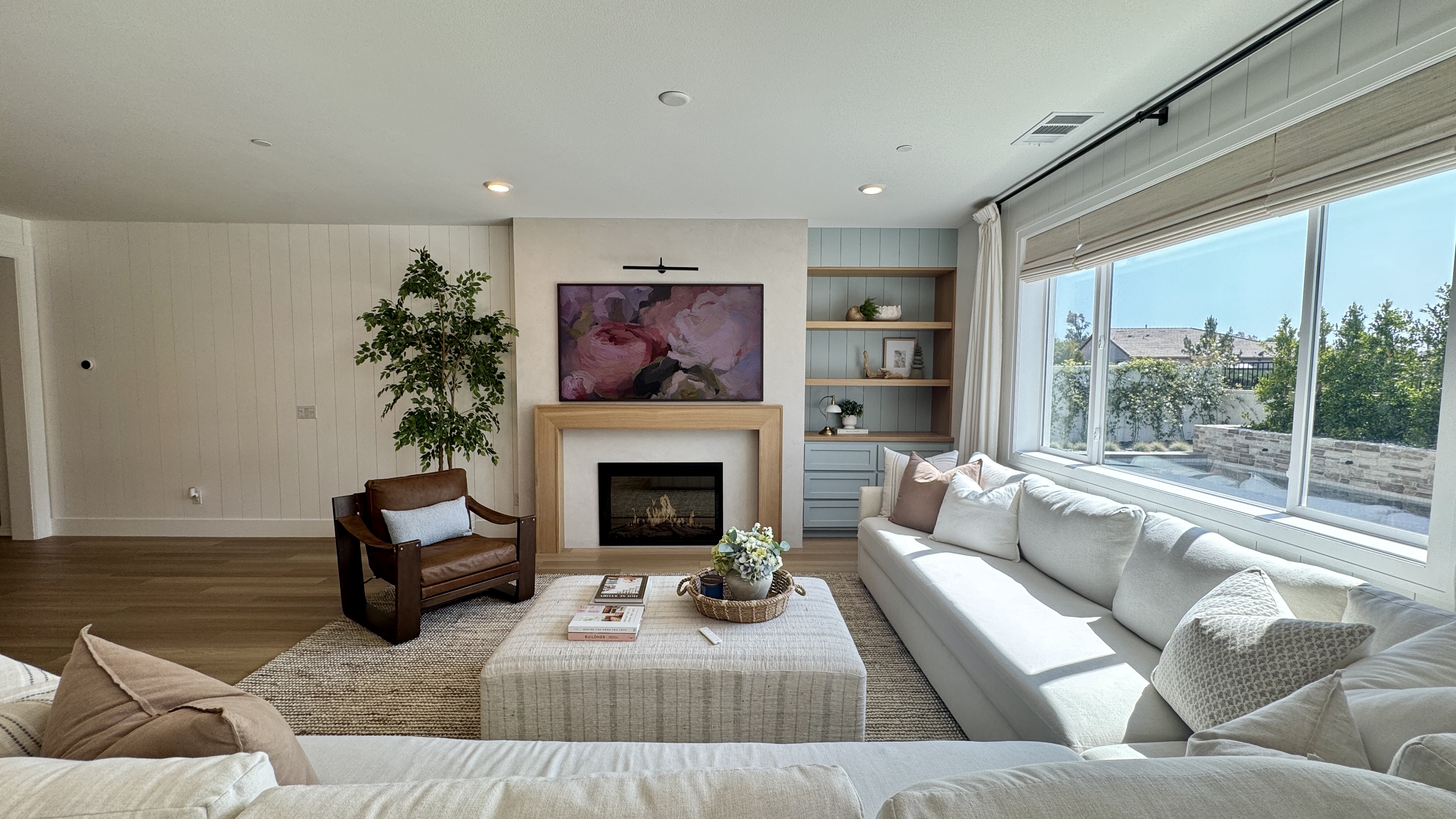
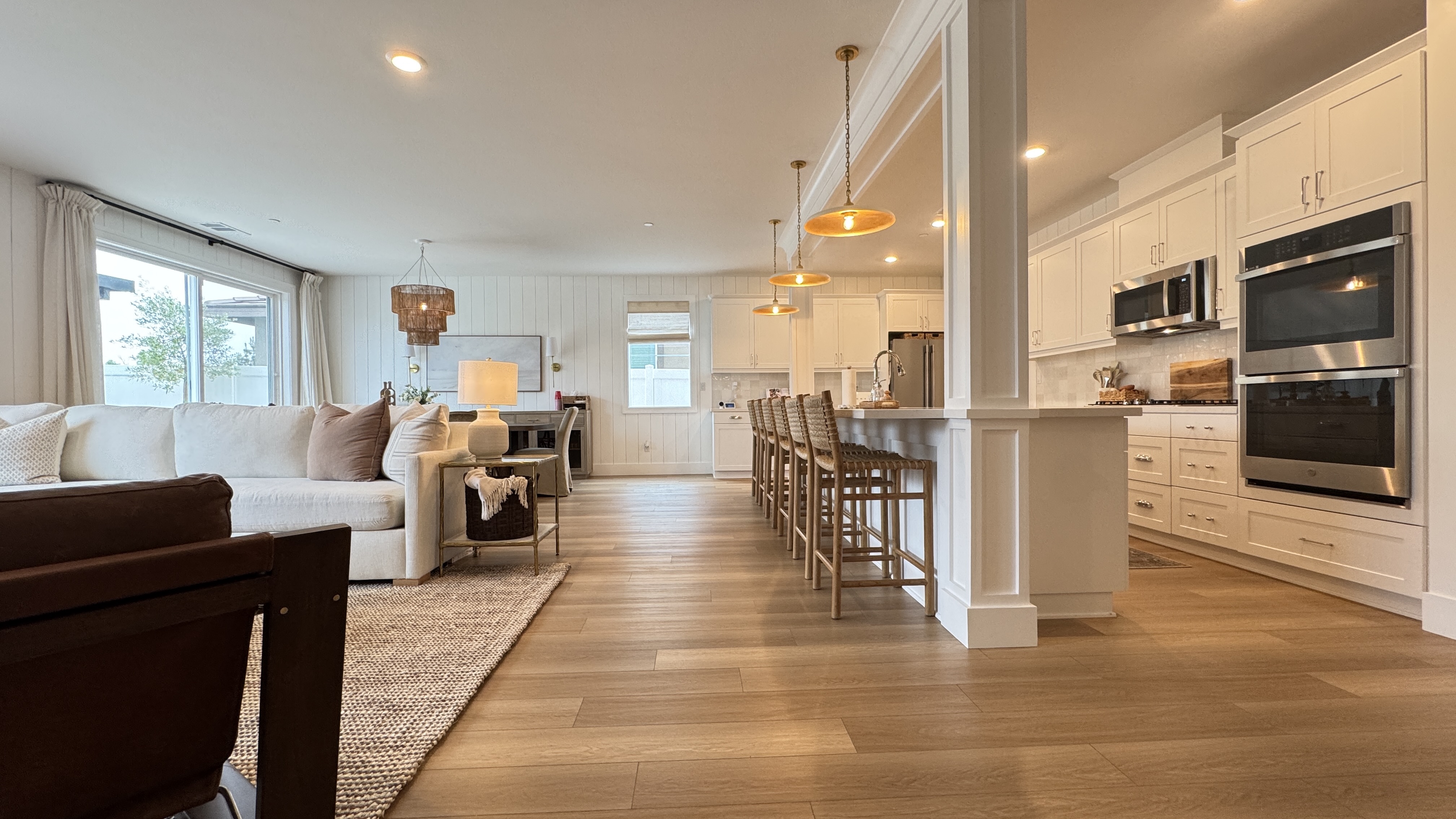
This project was designed entirely by the homeowner, a professional designer by trade, who delivered complete renderings for every element of the downstairs. Our job wasn’t to design it — it was to execute her spec exactly, board for board, with zero shortcuts. That’s a different skill than creative design, and it’s the same discipline a homeowner should look for when hiring: someone who executes a demanding spec precisely, whether that spec comes from a designer’s renderings or a homeowner’s Pinterest board.
What we delivered on this project:
-
Every corner in the downstairs miter-folded, with zero corner trim
-
The kitchen island wainscoting backed with MDF — a decision we made, not the designer
-
A full-run layout plan executed to a professional designer’s exact spec
The Holland & Sons Angle
Ballast Rd. was designed entirely by the homeowner, who delivered complete renderings for the whole downstairs. Our job was execution, not design — hitting her spec dead-on in real wood, in a real room, with no detail lost in translation. That kind of disciplined execution is exactly what separates excellent contractor work from adequate work: it’s not about creative flair, it’s about the discipline to build precisely what was specified, corner by corner.
Brian brought both of his sons through that discipline on this job — showing them that following someone else’s exact spec, without cutting a corner or improvising a shortcut, is its own kind of craft. His older son helped verify measurements against the designer’s renderings before fabrication started in the shop, catching small discrepancies before they became expensive mistakes on site.
Related Resources — Nickel-Gap Paneling Guide
This post is part of a full guide to nickel-gap paneling in the Inland Empire. Here’s the rest of the cluster:
How Much Does Nickel-Gap Paneling Cost in Menifee, CA? — real per-linear-foot and per-room pricing from an actual Menifee project.
Nickel-Gap Paneling Mistakes: What to Know Before You Panel Your Walls — the failure modes to plan around before you start.
Nickel-Gap Paneling vs. Shiplap: Which Is Right for Your Menifee Home? — a straight answer on the most-confused comparison in wall paneling.
Best Materials for Nickel-Gap Paneling in Menifee, CA — MDF vs. paint-grade pine vs. solid hardwood, and when each makes sense.
Can You Panel a Kitchen Island? Wainscoting Over MDF Backing Explained — the same backed-vs-applied decision, scaled down to a single island.
Frequently Asked Questions
What questions should I ask a contractor before hiring for paneling or trim work?
Start with corner treatment and backing — how outside corners will be handled and whether the field gets backed with MDF. Follow with material specification and reasoning, how the board layout will be planned, and what happens if material is delayed. These paneling-specific questions reveal far more than a generic contractor interview.
How do I know if a contractor is licensed and insured in California?
Ask for their CSLB license number and verify it yourself at cslb.ca.gov using the "Check a License" tool, or call 800-321-CSLB. Any California project with combined labor and materials of $1,000 or more legally requires a licensed contractor, and the CSLB record shows license status, bond, and insurance coverage.
What should be included in a paneling or millwork quote?
A complete quote specifies the material, the corner treatment method, whether the field is backed, the linear footage and how it was measured, the timeline, an exclusions list, and warranty terms. Missing corner and backing details in particular is a sign the harder parts of the job haven’t been planned yet.
What’s the difference between a handyman and a licensed finish carpenter?
California law requires a CSLB license for any project with combined labor and materials of $1,000 or more, which limits what an unlicensed handyman can legally take on. Beyond the legal threshold, a licensed finish carpenter typically brings deeper paneling-specific experience with layout math, corner joinery, and backing decisions.
What red flags should I watch for when hiring a contractor?
Watch for a quote that never mentions corners or backing, pressure to sign quickly, reluctance to provide a license number, and a portfolio without paneling-specific examples. Any single item may have an innocent explanation, but two or more together are worth a second look elsewhere.
Is a written warranty standard for wall paneling work?
A clear written warranty covering workmanship is a reasonable expectation on any custom millwork project, and its absence from a quote is worth asking about directly. It should specify duration and scope, and typically covers installation-related issues rather than normal wear and tear.
Can a handyman get me a good result on wall paneling instead of a licensed contractor?
For a very small, simple job below California’s $1,000 licensing threshold, possibly. For anything beyond that — which covers most real paneling projects — California law requires a licensed contractor, and the layout, corner, and backing decisions in this guide are exactly the kind of paneling-specific expertise that separates a strong result from a disappointing one.
Ready to Compare Quotes the Right Way?
If you’re getting quotes for a paneling project in Menifee, Murrieta, Temecula, Perris, Riverside, or anywhere in the Inland Empire, use this scorecard on every contractor you talk to — including us. Start at hsconstruct.com/contact and we’ll walk you through exactly how we’d approach corners, backing, and layout on your space.
Follow our work and see more transformations on our social channels.
951-338-8058 | brian@hsconstruct.com | hsconstruct.com | CSLB #1123738
More Than Just Nickel-Gap Paneling
A whole-downstairs paneling job like Ballast Rd. is one chapter in a much longer story. Brian has been a finish carpenter since 1991, and his sons now build alongside him, which means every room in your home is fair game.
If your space needs more than that, here's what else we build:
-
Kitchen and bathroom remodels — full custom cabinetry, tile work, and finish carpentry from demo to done
-
Coffered ceilings — grid beam systems that add architectural depth to any room, sized and proportioned to the space
-
Wainscoting and wall paneling — classic raised panel, flat panel, board-and-batten, and shiplap applications
-
Reclaimed wood accents — feature walls, fireplace surrounds, and detail work using salvaged material with real character
-
Beam wraps — hollow wood wraps that give exposed beams the look of solid timber without the structural engineering
-
Crown molding, baseboards, and trim carpentry — the details that make a house feel finished, from a single room to a whole home
-
Cased openings and interior door replacements — clean transitions between spaces that most contractors overlook
-
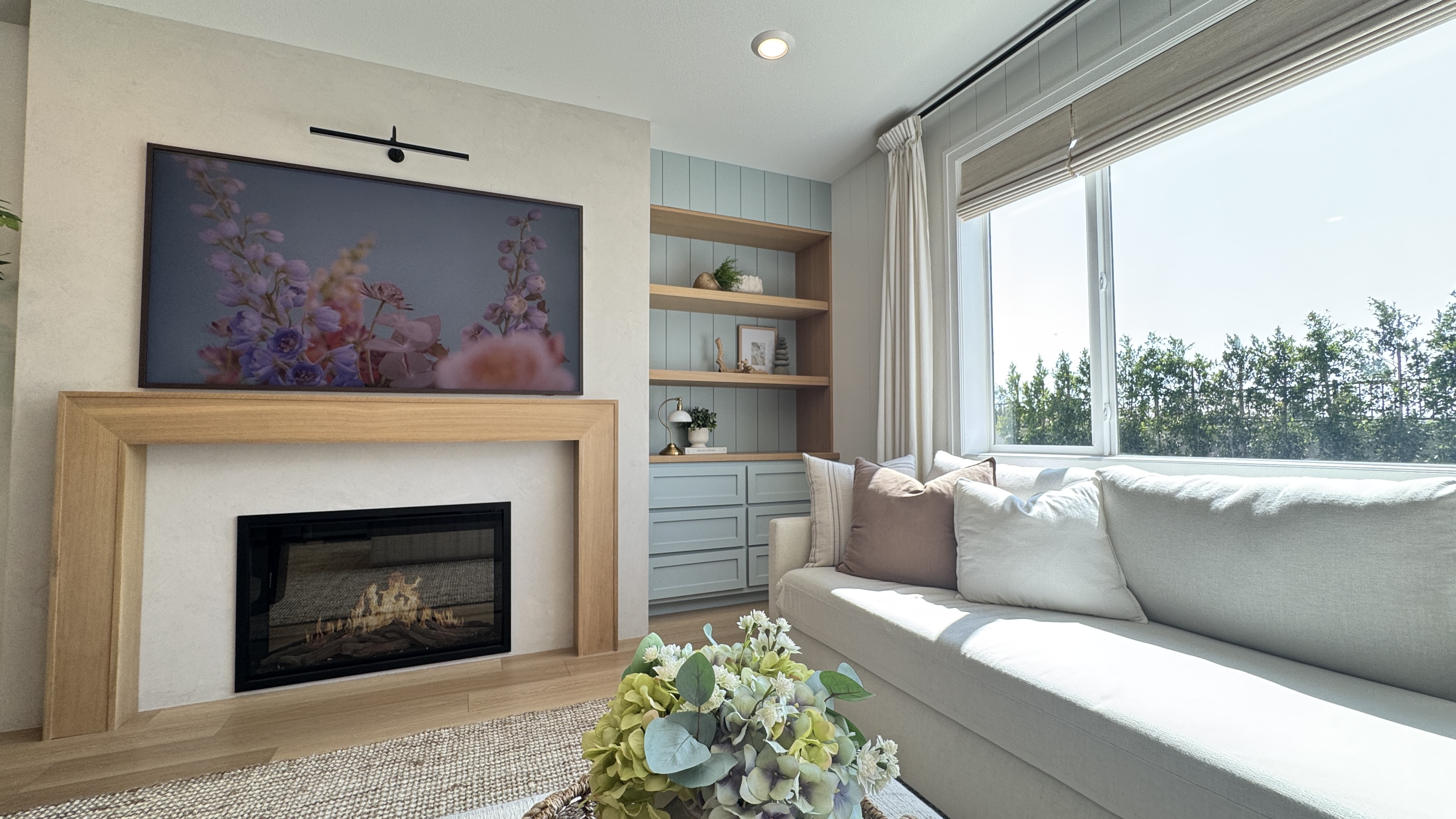
Custom built-in entertainment walls and bookshelves — designed by hand, built in the shop, installed to last
Wood, proportion, and rooms that feel right — that's what we do.
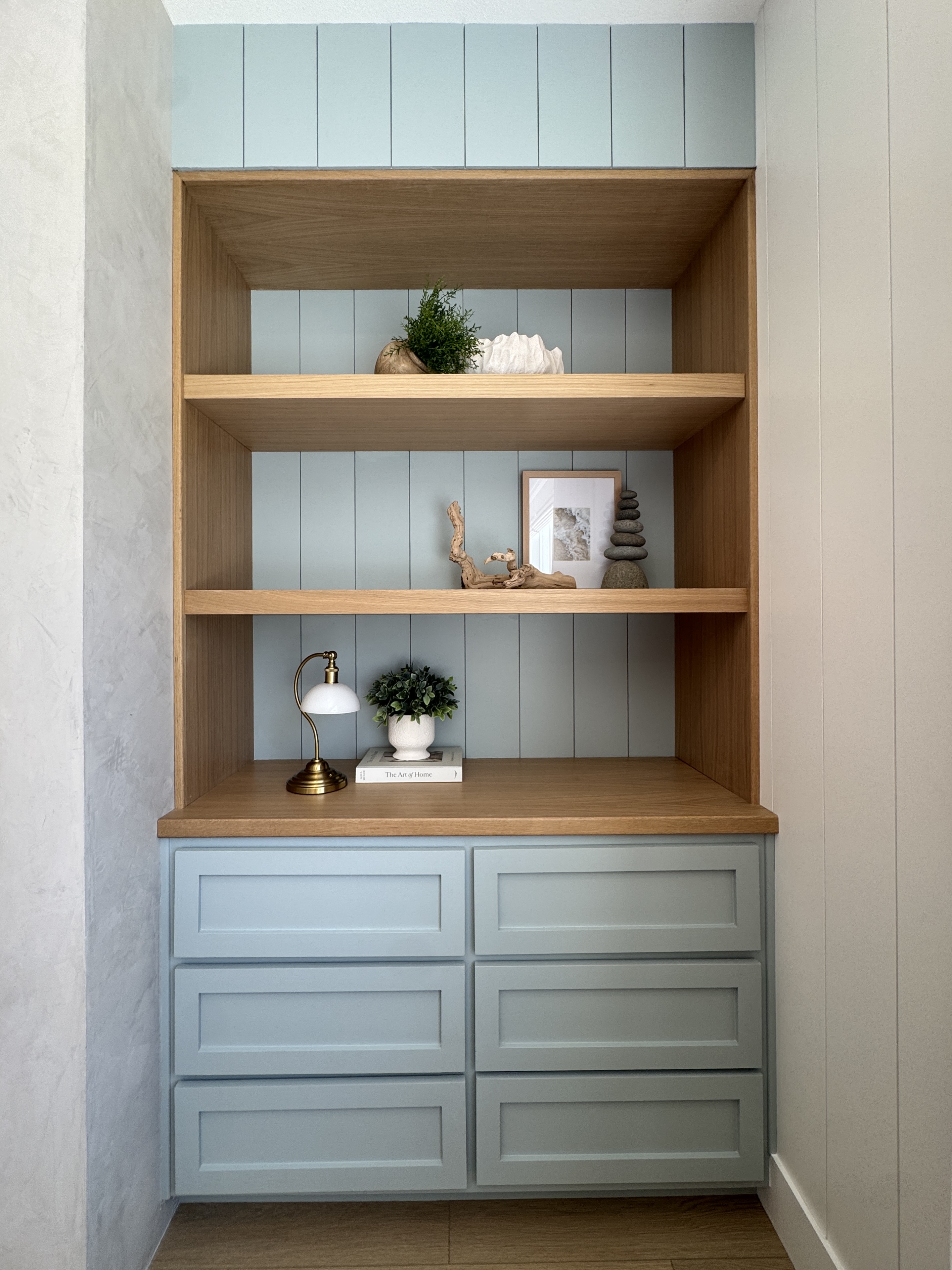
This guide is part of our wainscoting & paneling series.
Learn more about Wainscoting & PanelingHave a project in mind? Let's start a conversation.
Tell us what you are thinking about and we will give you a straight answer about scope, timeline, and investment.
Start a Conversation