
Best Materials for Nickel-Gap Paneling in Menifee, CA: MDF vs. Paint-Grade Pine vs. Solid Hardwood
Quick Answer
For a painted, full-height nickel-gap wall in a Menifee or Inland Empire home, MDF is our default recommendation — it stays dead flat on long vertical runs, paints out perfectly with no grain telegraphing, and doesn’t move with the seasons the way solid wood does. Paint-grade primed pine is the right call when you want real wood underneath a painted finish, typically for slightly better dent resistance. Solid hardwood is for stain-grade work where you want the grain to show and you’re willing to plan for seasonal movement — that’s a different job than most nickel-gap walls.
Key Takeaways
-
MDF is the right material for most painted, full-height nickel-gap runs — it stays flatter than solid wood over long spans.
-
Paint-grade pine is a reasonable middle ground when a homeowner wants real wood under paint.
-
Solid hardwood belongs on stain-grade, feature-piece applications, not full-wall painted runs.
-
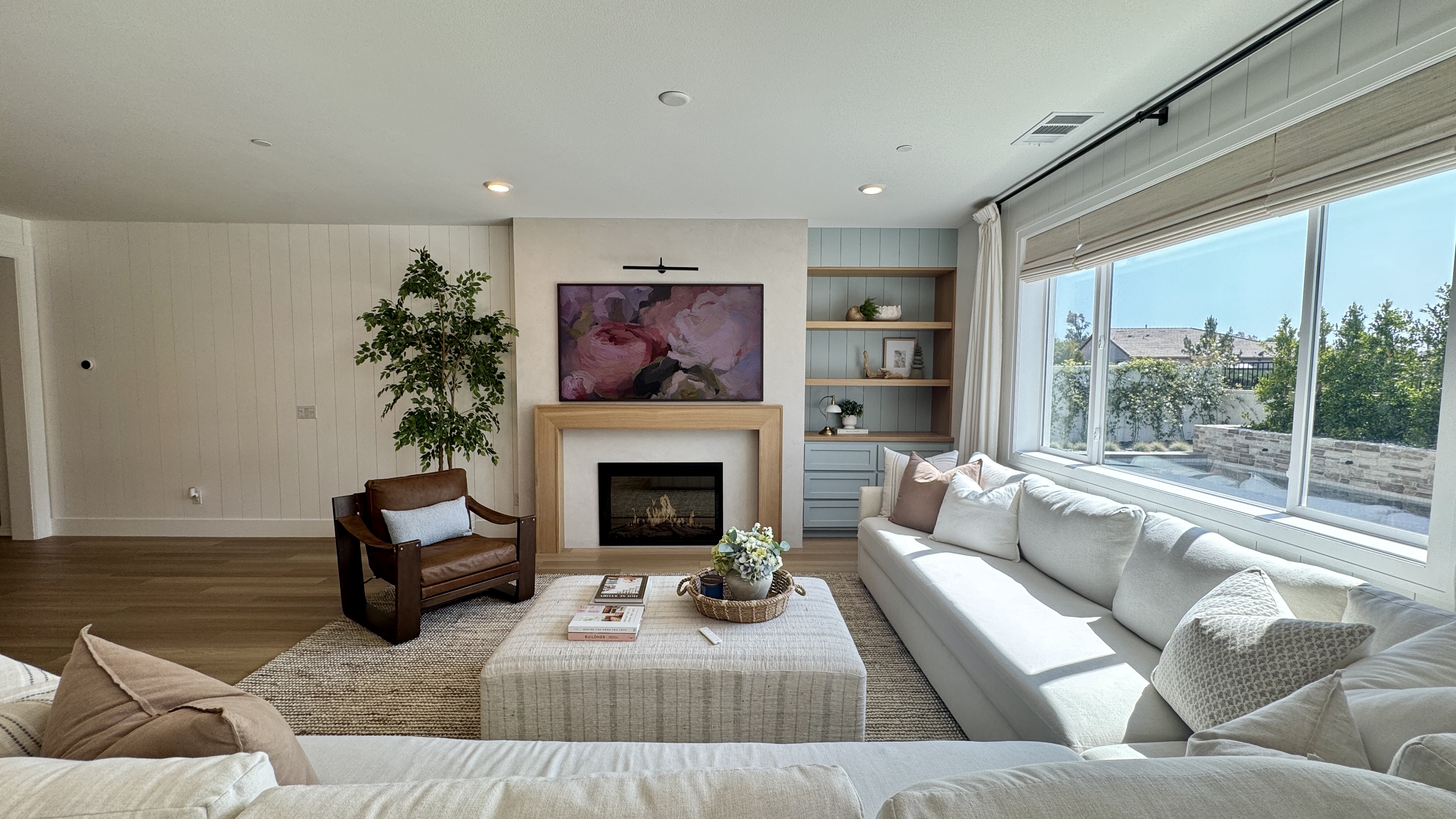
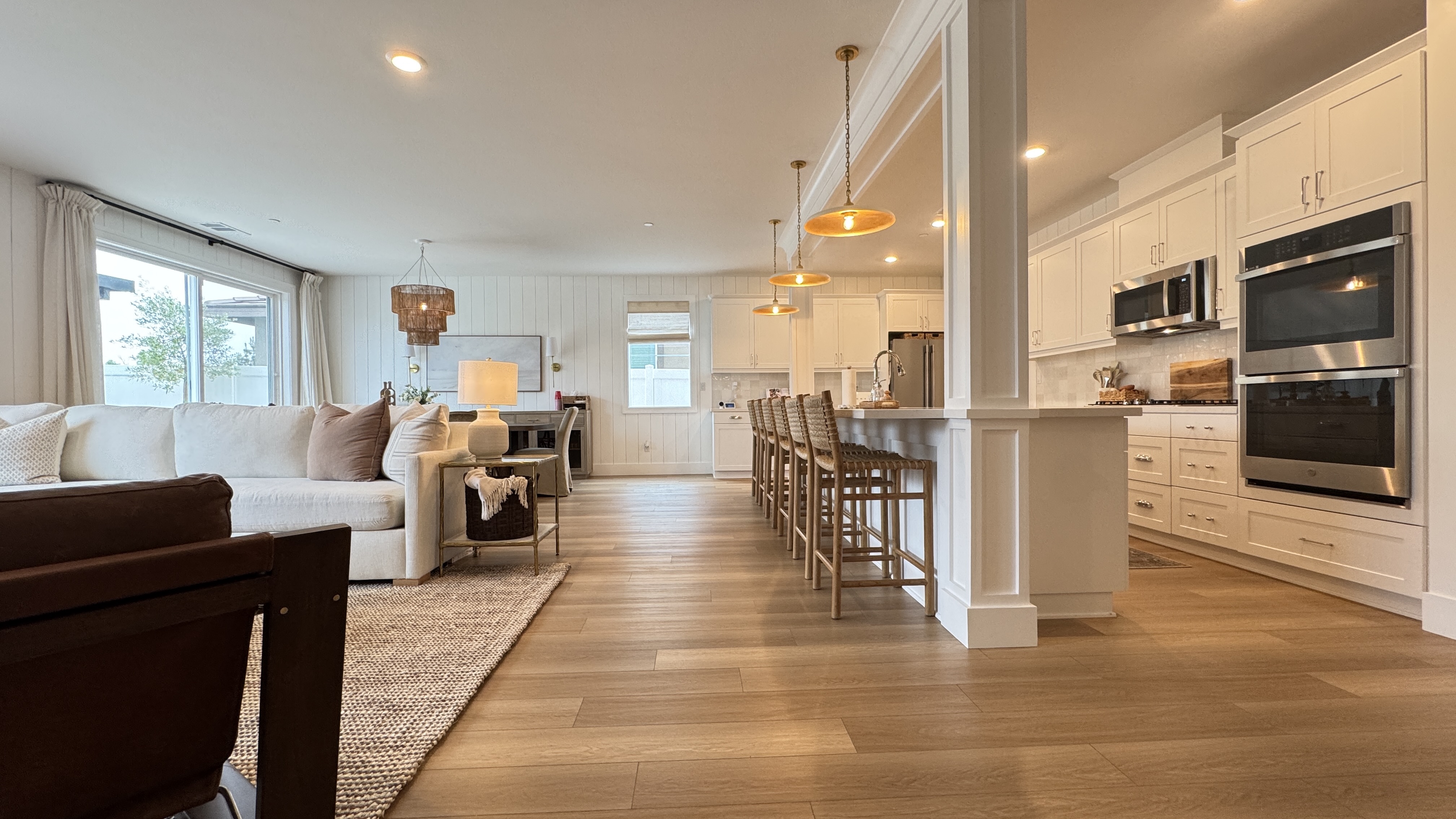
We used MDF nickel-gap throughout our Ballast Rd. project specifically because it holds a flat, consistent reveal across a long run.
For a painted nickel-gap wall, MDF is the material we reach for most often, and that surprises some homeowners who assume solid wood is automatically the better choice. It isn’t, once you look at what actually happens to a long vertical run of solid boards through a California summer and winter. MDF holds flat, paints out with zero grain telegraphing, and gives you the exact consistent reveal that makes nickel-gap look intentional instead of assembled.
That's not a blanket rule, though. We specify paint-grade pine and solid hardwood on plenty of jobs too — the right call depends on the finish, the application, and how much movement the wall can tolerate. Here's how we make that call after 35 years in the trade.
The Full Evaluation
MDF (Medium-Density Fiberboard)
What it is: an engineered wood panel made from wood fibers bonded under heat and pressure — no grain, no knots, a uniform surface.
Where it performs best: painted, full-height vertical runs, especially in open-concept great rooms and hallways where a long, unbroken reveal matters.
Where it falls short: sustained moisture exposure — standard MDF will swell if water gets behind the surface, so it’s the wrong call for bathrooms or laundry rooms unless you specify a moisture-resistant version.
Who it’s right for: homeowners painting the wall, wanting a crisp modern reveal, in a dry living space.
Brian’s field assessment: this is our default for whole-room and whole-house paneling. On Ballast Rd., it’s the material that let us run a consistent 1/8" reveal through an entire downstairs with zero grain showing through the paint.
Paint-Grade Pine
What it is: solid wood, typically primed at the mill, milled specifically to take paint cleanly with minimal visible grain or knots.
Where it performs best: painted applications where a homeowner wants real solid wood under the paint, often for a slightly harder, more dent-resistant surface than MDF.
Where it falls short: it still moves seasonally, even under paint — small joints can open slightly in a dry inland climate over time, more than MDF would.
Who it’s right for: homeowners who specifically want solid wood for durability reasons, and who understand the seasonal movement tradeoff.
Brian’s field assessment: a reasonable middle ground, and a common approach in the trim and casing industry more broadly. We specify it when a client asks for solid wood specifically, but for a long painted vertical run, we still steer most homeowners toward MDF for the flatness.
Solid Hardwood
What it is: true solid wood — oak, maple, walnut — milled from a single board with the natural grain visible.
Where it performs best: stain-grade feature pieces where the grain is the point — a mantel, a small accent panel, anywhere the wood itself is meant to be seen and touched.
Where it falls short: on a full painted wall, hardwood is expensive overkill, and it moves the most of any of these three options — real expansion gaps need to be engineered into the design.
Who it’s right for: stain-grade, small-scale, high-touch elements — not full-room painted paneling.
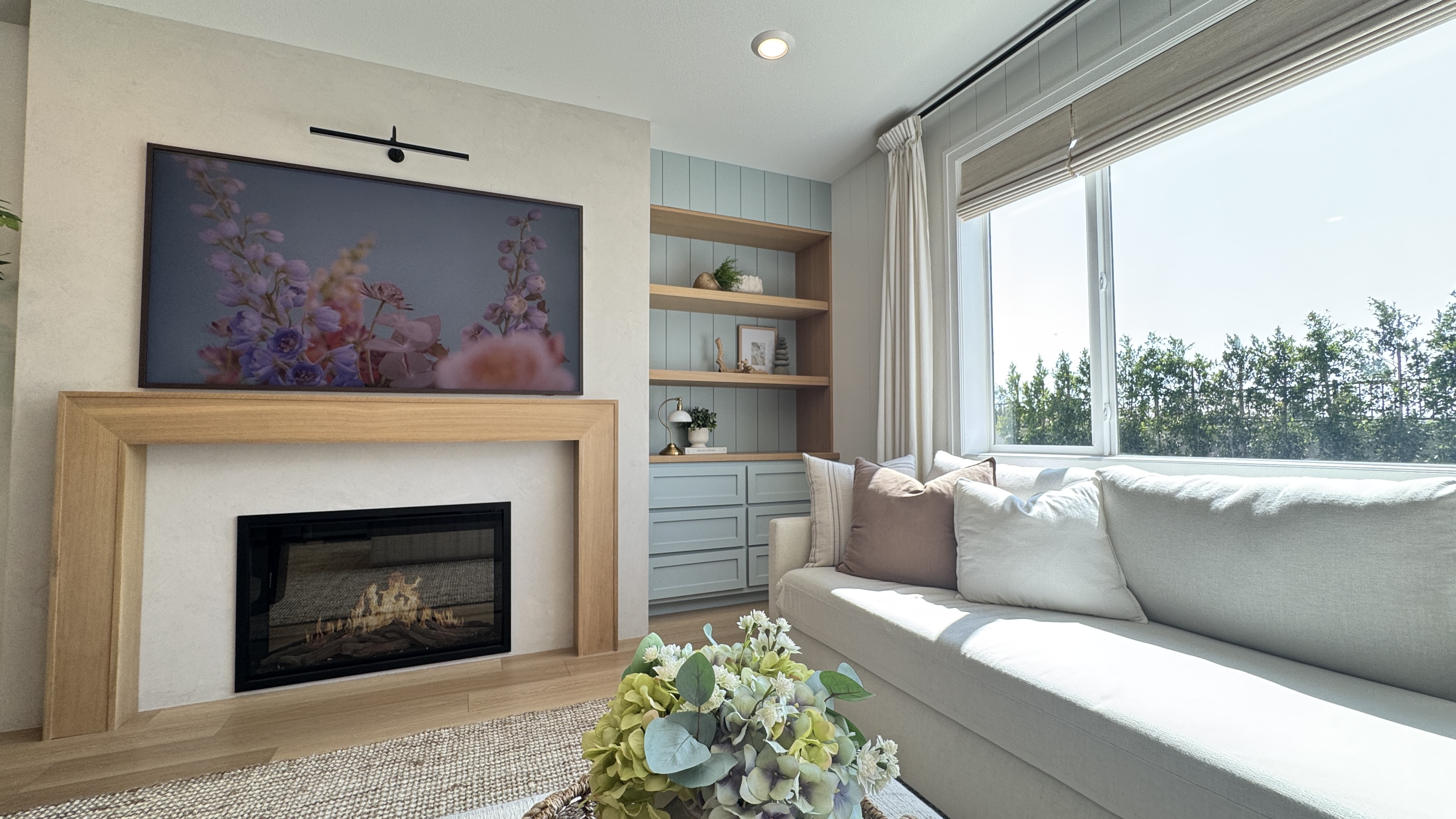
Brian’s field assessment: we used 100% solid rift-sawn white oak on the Ballast Rd. mantel, with hidden expansion gaps built into the back specifically to let the wood move seasonally without ever opening a visible joint on the face. That’s the right application for solid hardwood — a stain-grade feature piece, not a full painted wall.
Comparison Table
| Material | Best For | Pros | Considerations |
| MDF | Painted, full-height vertical runs | Stays flat over long spans; paints smooth; consistent reveal | Not moisture-resistant unless specified; heavier than pine |
| Paint-Grade Pine | Painted applications wanting real wood | Solid wood durability; mills and paints cleanly | Moves seasonally more than MDF; costs more than MDF |
| Solid Hardwood | Stain-grade feature pieces | Real depth and grain; takes a clear finish beautifully | Moves the most seasonally; must be engineered for expansion |
The Secondary PAA Questions — Addressed in Full
Is MDF or solid wood better for wall paneling?
For a painted, full-height run, MDF is usually the better technical choice — it stays flatter across long spans and doesn’t telegraph grain through the paint. The instinct that solid wood is "always better" makes sense for furniture or stain-grade work, but for a long painted vertical wall, that instinct works against you. Solid wood earns its place on stain-grade, smaller-scale pieces instead.
Does MDF paneling swell or get damaged by moisture?
Standard MDF will swell if water gets behind the surface or sits against it for extended periods, which is why it’s the wrong call for bathrooms or laundry rooms unless you specify a moisture-resistant version. In a dry living space — a great room, hallway, or bedroom — this isn’t a practical concern.
Can MDF paneling be repaired if damaged?
Minor damage can often be filled and repainted, but MDF doesn’t sand and refinish the way solid wood does — once the surface is significantly compromised, the affected section typically needs to be replaced rather than restored. This is a genuine tradeoff against solid wood, which can be sanded and refinished repeatedly.
Is solid wood paneling worth the extra cost?
It’s worth it when the application calls for it — a stain-grade feature piece where the grain is meant to be seen, or a high-touch element like a mantel. For a full painted wall, the extra cost of solid wood buys you very little, since the paint hides the grain that’s the whole reason to choose solid wood in the first place.
What’s the most durable material for nickel-gap paneling?
For resistance to dents and everyday impact, paint-grade pine and solid hardwood outperform MDF. For long-term dimensional stability — staying flat and gap-free over years in a dry inland climate — MDF outperforms both solid wood options. "Durable" depends on which failure mode you’re trying to avoid.
The Decision Framework
Ask yourself three questions. Is the wall being painted or stained? Painted points toward MDF or paint-grade pine; stained requires solid wood. Is this a full-room run or a small feature? Full runs favor MDF for flatness; small features can carry solid hardwood’s cost and movement. Is the room dry or moisture-prone? Standard MDF needs a dry space; moisture-resistant MDF or sealed solid wood is required anywhere near sustained humidity.
See This In Action — Ballast Rd.
The Ballast Rd. mantel is 100% solid rift-sawn white oak, milled to dimension with hidden expansion gaps built into the back specifically to let the wood breathe through summer and winter without ever opening a visible joint on the face. That’s the material decision working exactly as it should: solid hardwood, engineered for its movement, on a stain-grade feature piece — while the surrounding walls used MDF nickel-gap for the flat, consistent, painted look.
What we used on this project:
-
MDF vertical nickel-gap paneling for the entire painted downstairs
-
100% solid rift-sawn white oak for the mantel, with hidden expansion gaps
-
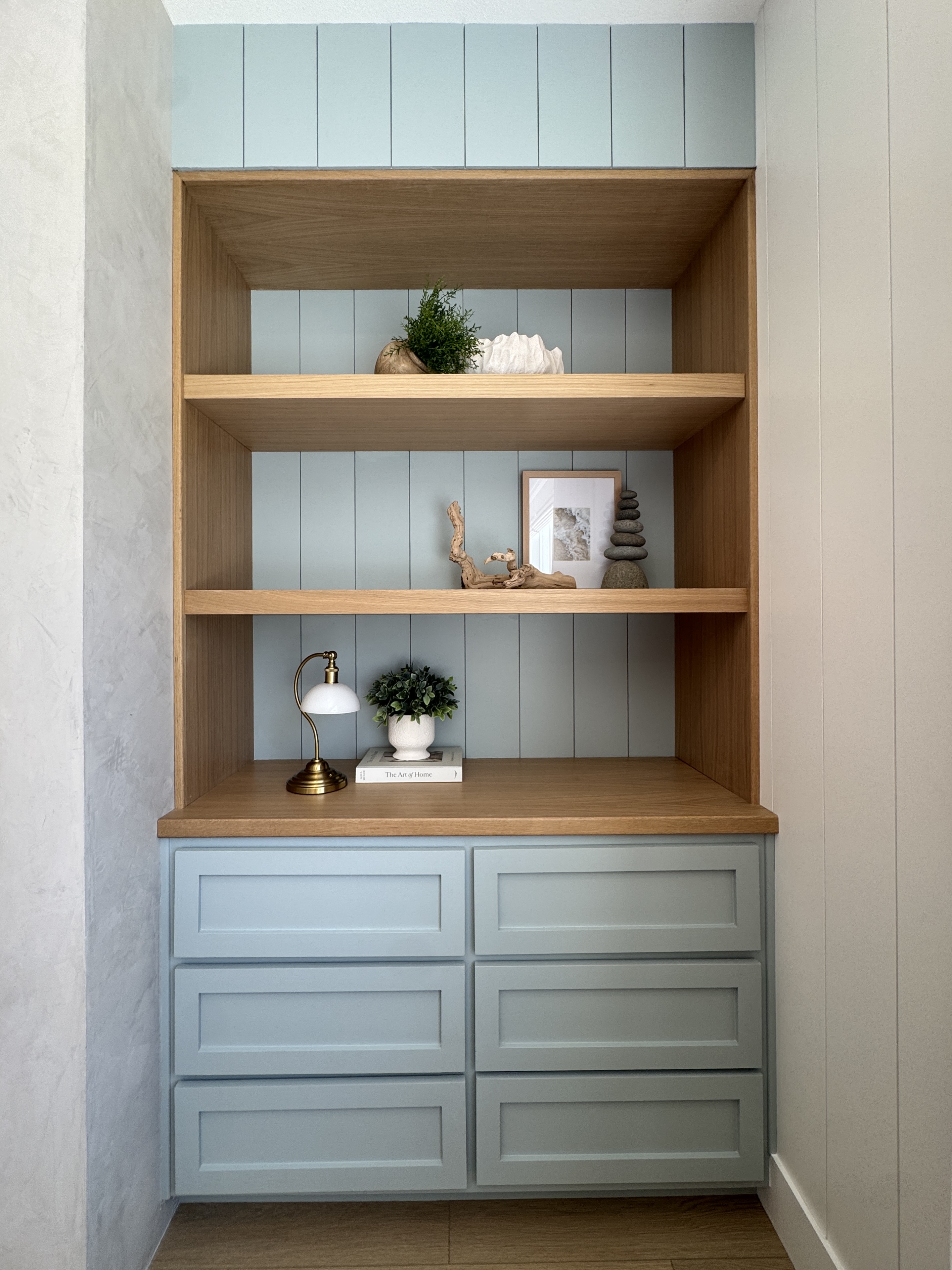
Rift-sawn white oak plywood for the shelves and niche wrap, with solid oak nosing
Regional Performance Note
The dry inland climate across Menifee, Murrieta, and Temecula makes material choice more consequential than it would be in a coastal or humid region. Solid wood moves more here through seasonal swings than it would somewhere with steadier humidity, which is exactly why we build expansion allowances into any solid-wood element and lean on MDF for long painted runs where dimensional stability matters more than grain character.
The Holland & Sons Angle
The Ballast Rd. mantel took real time to get right — not because the milling was hard, but because solid rift white oak demands respect for how it moves. We built small expansion gaps into the hidden back side of the mantel, giving the wood room to breathe through the seasons without ever opening a visible seam on the face anyone would see.
That’s the kind of detail that separates a mantel that looks good on install day from one that still looks good five years later. Brian’s younger son helped lay out those expansion gaps on this piece — measuring where they needed to sit and why, learning that the parts of a project nobody sees are often the parts that matter most.
Related Resources — Nickel-Gap Paneling Guide
This post is part of a full guide to nickel-gap paneling in the Inland Empire. Here’s the rest of the cluster:
How Much Does Nickel-Gap Paneling Cost in Menifee, CA? — real per-linear-foot and per-room pricing from an actual Menifee project.
Nickel-Gap Paneling Mistakes: What to Know Before You Panel Your Walls — the failure modes to plan around before you start.
Nickel-Gap Paneling vs. Shiplap: Which Is Right for Your Menifee Home? — a straight answer on the most-confused comparison in wall paneling.
How to Evaluate a Wall Paneling Contractor in the Inland Empire — the questions that separate a real millwork contractor from a handyman with a nail gun.
Can You Panel a Kitchen Island? Wainscoting Over MDF Backing Explained — the same backed-vs-applied decision, scaled down to a single island.
Frequently Asked Questions
Is MDF or solid wood better for wall paneling?
For a painted, full-height run, MDF is usually the better technical choice — it stays flatter across long spans and won’t telegraph grain through paint. Solid wood earns its place on stain-grade or small-scale feature work, where the grain and depth are the point. Neither is universally "better" — it depends on the finish and the scope.
Does MDF paneling swell or get damaged by moisture?
Standard MDF can swell if water gets behind the surface or sits against it for an extended time, which makes it the wrong material for bathrooms or laundry rooms unless a moisture-resistant version is specified. In a dry living space, this isn’t a practical concern.
Can MDF paneling be repaired if damaged?
Minor damage can often be filled and repainted, but MDF doesn’t sand and refinish like solid wood does. Once a section is significantly damaged, replacing that section is usually more practical than trying to restore it.
Is solid wood paneling worth the extra cost?
It’s worth it for stain-grade feature pieces where the grain is meant to show, like a mantel or an accent panel. For a full painted wall, the extra cost buys very little, since paint hides the grain that’s the main reason to choose solid wood in the first place.
What’s the most durable material for nickel-gap paneling?
It depends on the failure mode you’re avoiding. Paint-grade pine and solid hardwood resist dents and impact better than MDF. MDF holds its flat shape and stays gap-free longer in a dry climate than solid wood, which moves seasonally.
What material did Holland & Sons use on the Ballast Rd. project?
MDF vertical nickel-gap paneling throughout the painted downstairs, and 100% solid rift-sawn white oak for the mantel, with hidden expansion gaps built into the back to allow for seasonal wood movement without opening a visible joint.
Can nickel-gap paneling be made from paint-grade pine instead of MDF?
Yes. Paint-grade, typically primed pine is a common alternative to MDF for painted nickel-gap runs. It offers slightly better dent resistance as solid wood, at the cost of somewhat more seasonal movement than MDF, which can show as minor joint changes over time in a dry inland climate.
Not Sure Which Material Is Right for Your Project?
If you’re planning a paneling project in Menifee, Murrieta, Temecula, Perris, Riverside, or anywhere in the Inland Empire and want a material recommendation grounded in 35 years of field experience — not a guess — let’s talk. Start at hsconstruct.com/contact and tell us about your space and finish goals.
Follow our work and see more transformations on our social channels.
951-338-8058 | brian@hsconstruct.com | hsconstruct.com | CSLB #1123738
More Than Just Nickel-Gap Paneling
A whole-downstairs paneling job like Ballast Rd. is one chapter in a much longer story. Brian and his sons have been finish carpenters since 1991, which means every room in your home is fair game.
If your space needs more than that, here's what else we build:
-
Kitchen and bathroom remodels — full custom cabinetry, tile work, and finish carpentry from demo to done
-
Coffered ceilings — grid beam systems that add architectural depth to any room, sized and proportioned to the space
-
Wainscoting and wall paneling — classic raised panel, flat panel, board-and-batten, and shiplap applications
-
Reclaimed wood accents — feature walls, fireplace surrounds, and detail work using salvaged material with real character
-
Beam wraps — hollow wood wraps that give exposed beams the look of solid timber without the structural engineering
-
Crown molding, baseboards, and trim carpentry — the details that make a house feel finished, from a single room to a whole home
-
Cased openings and interior door replacements — clean transitions between spaces that most contractors overlook
-
Custom built-in entertainment walls and bookshelves — designed by hand, built in the shop, installed to last
Wood, proportion, and rooms that feel right — that's what we do.
About the Author
Brian Holland is the owner and lead carpenter of Holland & Sons Construction, a family-run finish carpentry and general contracting company serving Riverside County and the Inland Empire since 1991. He entered the trade at 17, learned on the job, and has spent 35 years building the kind of work that makes rooms feel right — often before a homeowner can articulate why. His sons now apprentice alongside him on every project. Holland & Sons is based in Perris, CA and licensed by the CSLB (#1123738).
This guide is part of our wainscoting & paneling series.
Learn more about Wainscoting & PanelingHave a project in mind? Let's start a conversation.
Tell us what you are thinking about and we will give you a straight answer about scope, timeline, and investment.
Start a Conversation